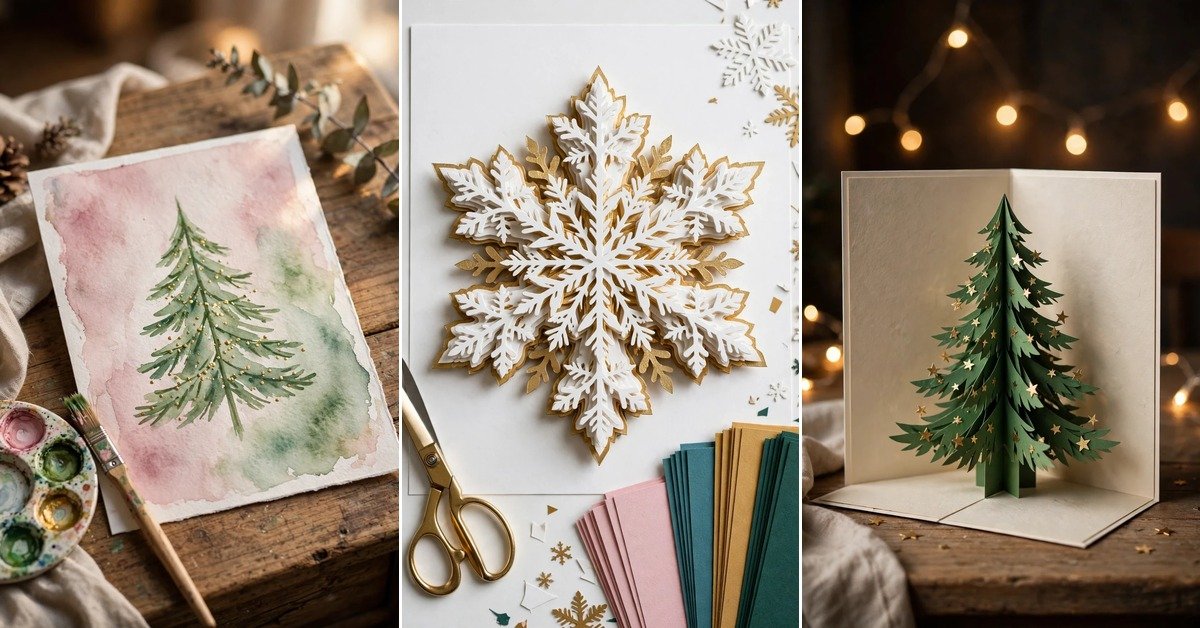
There is something quietly magical about a handmade Christmas card. In a season of group chats and quick texts, a card someone actually made — with paint on their fingers, a stamp pressed a little crooked, or a sprig of dried rosemary tucked inside — feels like a small gift in itself. The best christmas card ideas do not need professional skills or expensive supplies; they need a little time, a few good materials, and a design that suits the person receiving it.
In this guide you will find 15 christmas card ideas for 2026, from soft watercolour washes and hand-carved lino prints to pressed botanicals, photo collages, washi tape trees, shaker snow globes and pop-up cards — plus ideas the kids can make, cards that double as keepsakes, and a simple batch-making and mailing timeline so every card arrives before Christmas Day.
If you are planning the whole festive season, pair your cards with our christmas gift wrapping ideas so the present matches the card, our handmade christmas gift ideas for more make-it-yourself inspiration, and our christmas party games for the evening you finally hand them out. Now, gather your paper, scissors and glue — here are 15 beautiful ways to say Merry Christmas.
1. Watercolour Wash Christmas Cards
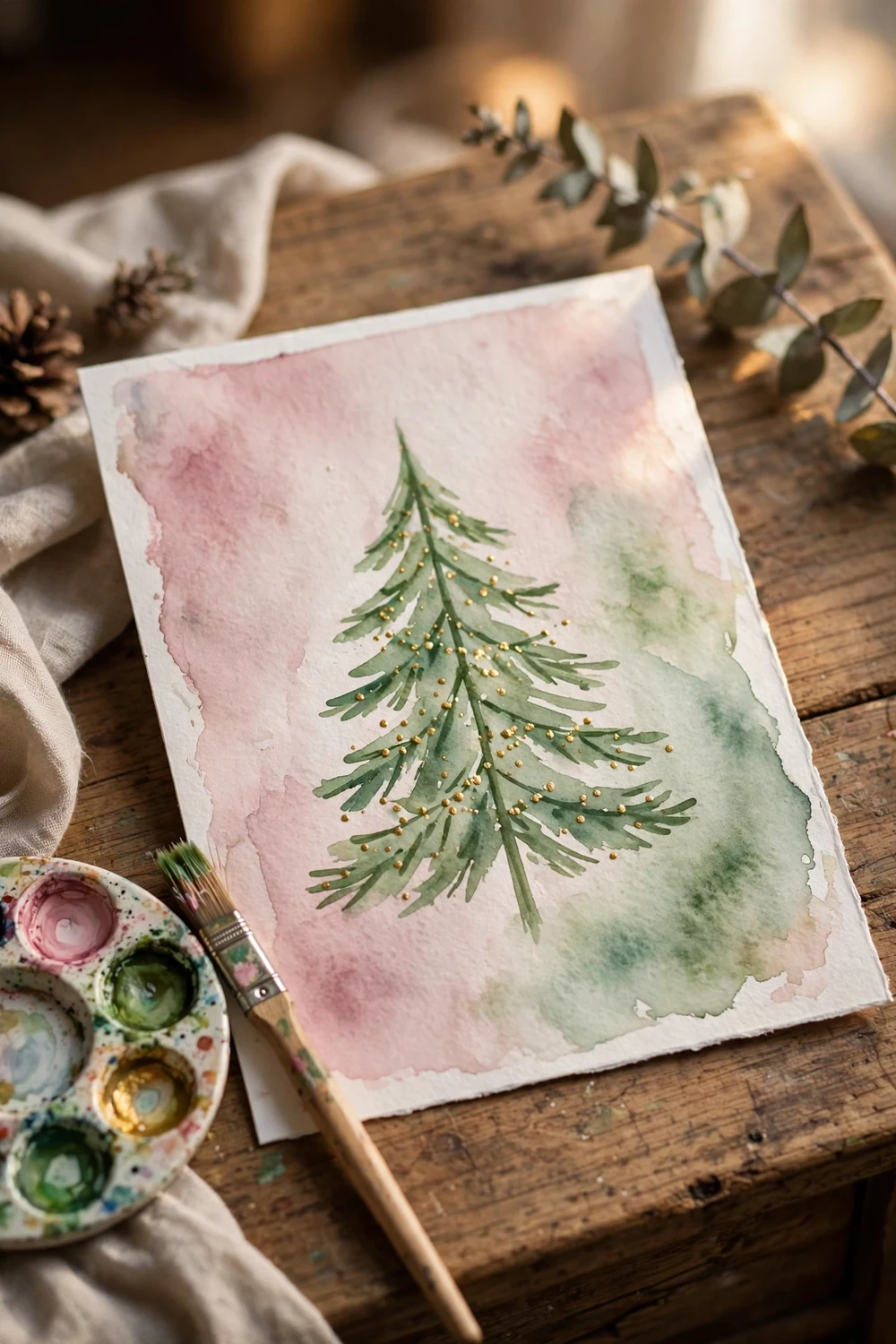
A watercolour wash card is the easiest way to make something that looks like art. Wet a small square of watercolour paper, drop in a little green, blue or dusty pink paint, and let the colours bleed together into a soft, dreamy wash. Once it dries, add a simple painted tree, a few gold dots like fairy lights, and a hand-lettered greeting — and you have a card that looks like it came from a boutique stationery shop.
The beauty of this style is that no two cards ever turn out the same, which is exactly the point. Use the same wash for a whole batch, then vary the details: a tiny tree on one, a wreath on another, a single star on a third. Keep a fine brush for details and a gold pen for the greeting, and let the paint do most of the work. It is one of the most forgiving christmas card ideas, because even a wobbly wash looks intentional.
2. Rubber Stamp and Lino Print Cards
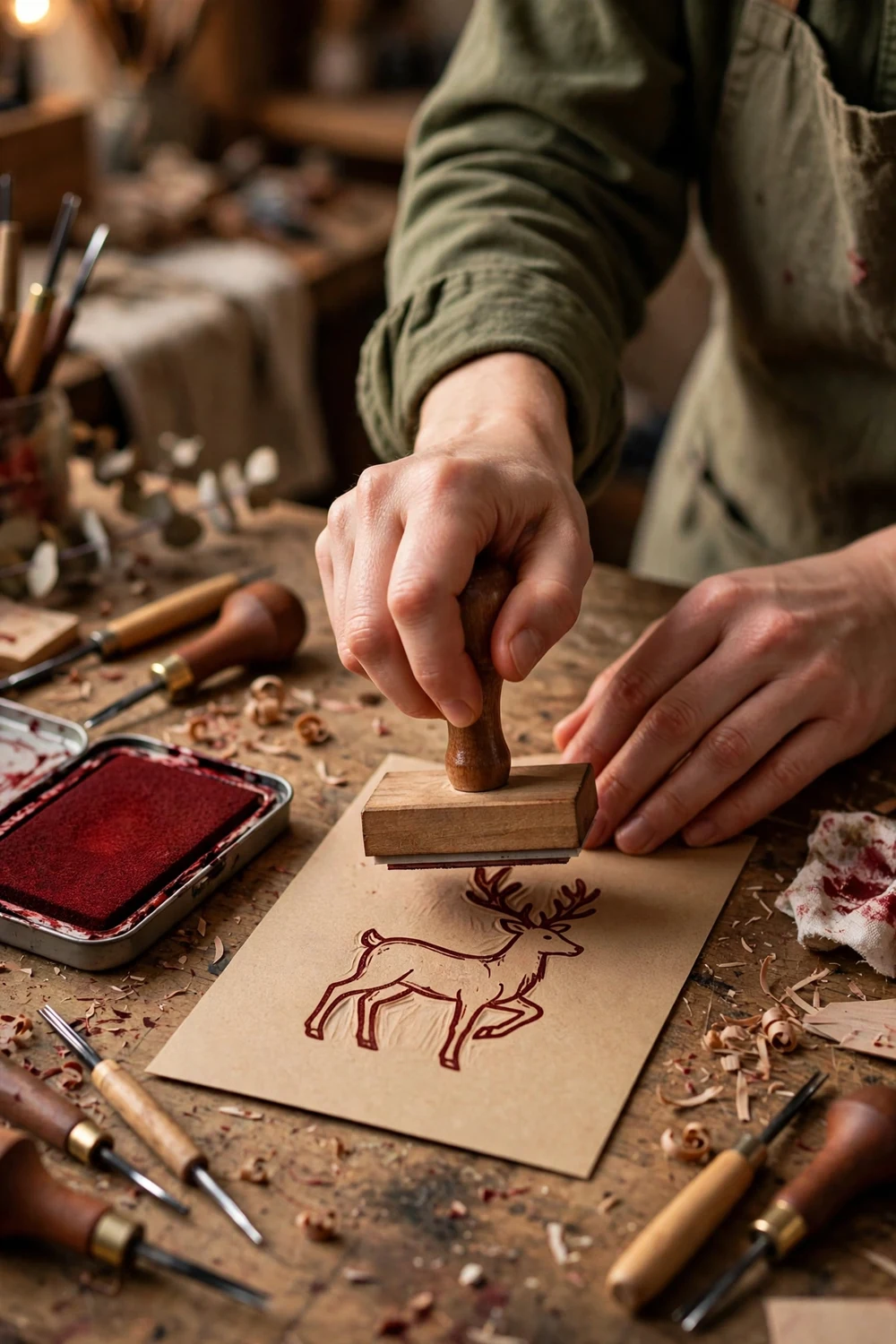
There is a special satisfaction in carving your own stamp and pressing it onto card after card. A simple lino block or soft rubber carving block, a craft knife and a little ink are all you need. Start with bold, simple shapes — a reindeer, a star, a sprig of holly, a snowflake — because chunky shapes carve cleanly and print beautifully, even for a first-timer.
Print your design in deep green or classic red on kraft card for a rustic look, or in gold ink on dark navy for something more elegant. One carved block can make fifty cards, which makes this one of the smartest christmas card ideas if you send a lot of them. Test each print on scrap paper first, keep a damp cloth nearby for inky fingers, and sign the back of every card so people know it was made by hand.
3. Pressed Botanical Christmas Cards
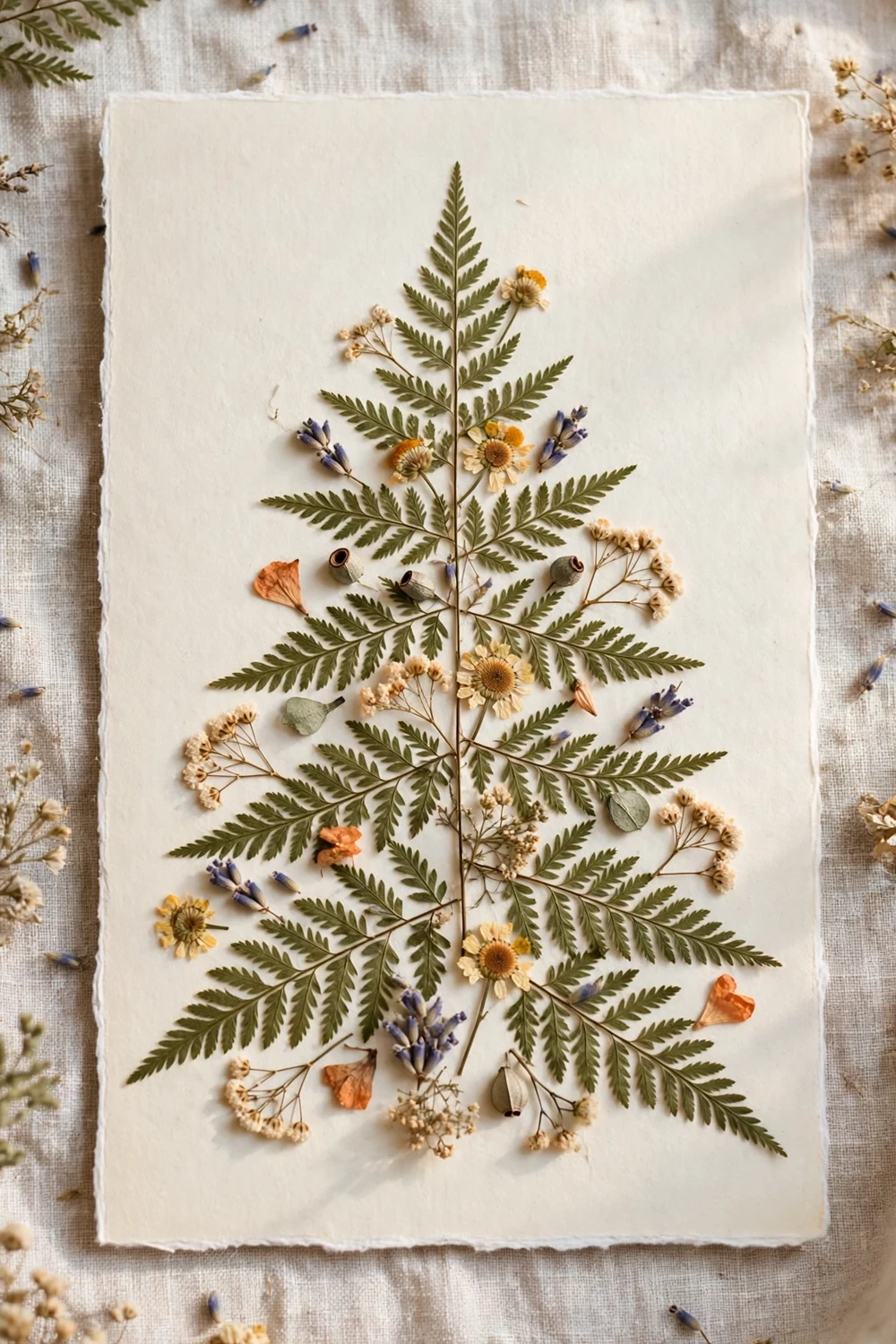
Pressed botanicals turn a simple card into a little piece of nature. Press small leaves, ferns, rosemary sprigs or tiny flowers between heavy books for a week or two, then arrange them on a card blank and fix them with a thin layer of clear-drying glue. A delicate fern becomes a Christmas tree, a round leaf becomes a bauble, and a sprig of rosemary smells faintly of Christmas when the envelope opens.
Keep the arrangement simple — one or two stems, plenty of white space, and a short greeting underneath. A thin frame drawn in fine pen around the edge finishes the look, and a light spray of fixative keeps the leaves from fading. These are among the most elegant christmas card ideas, and they suit the person who loves gardens, nature and quiet, thoughtful gifts.
4. Photo Collage Christmas Cards
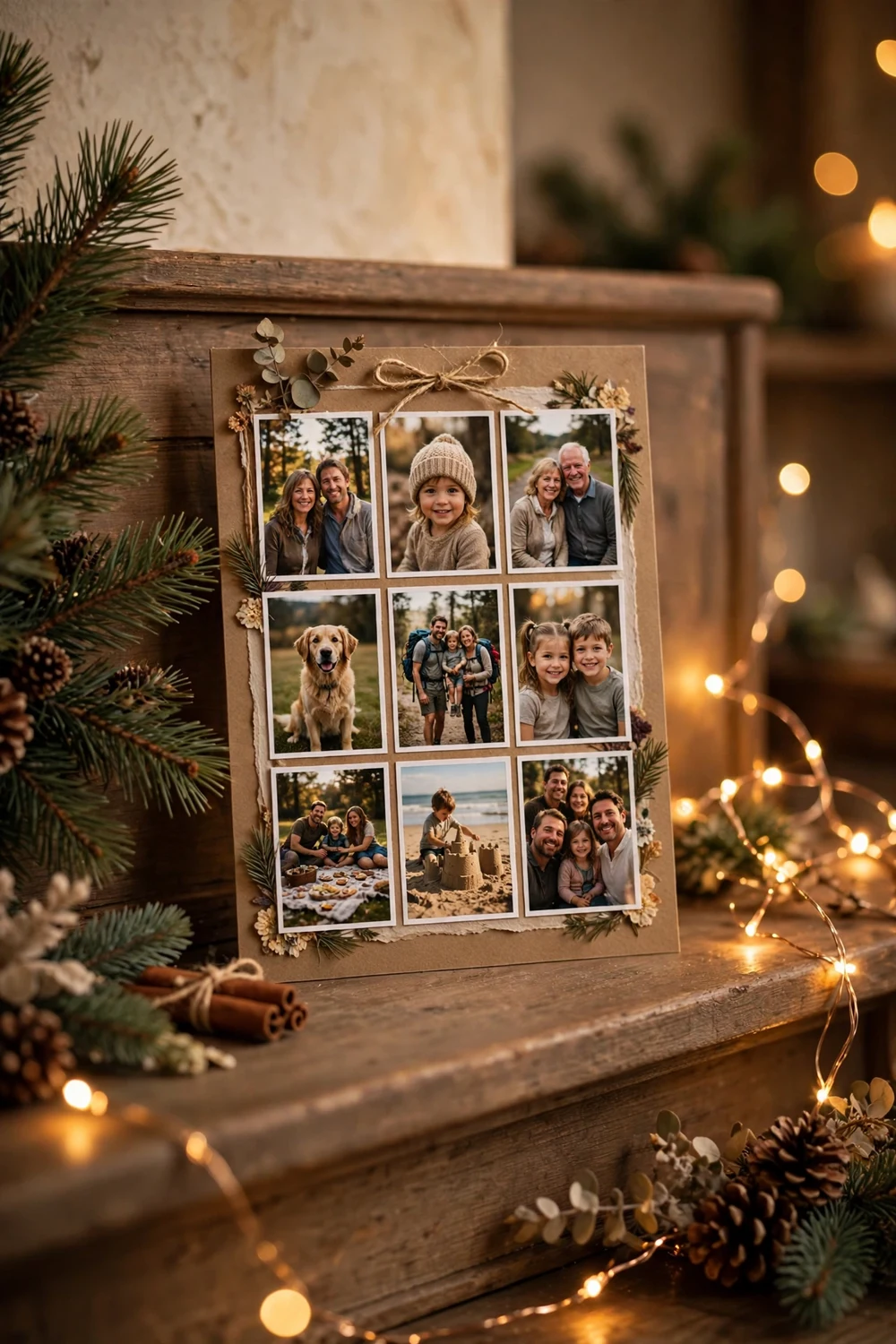
A photo collage card is the one people keep. Gather the year’s best moments — a summer holiday, a birthday, a new baby, a graduation — and arrange four to six small photos in a neat grid on the front of the card. Add the year in simple lettering and a short message inside, and you have a card that doubles as a family update and a keepsake.
Print photos small, around two inches square, and leave even white borders between them so the collage looks tidy rather than crowded. Matte photo paper works best, because it does not glare under the tree lights. If you are short on time, many print shops will print a ready-made collage card from your photos — but arranging it yourself lets you choose the order, the captions and the exact photos that tell your year best.
5. Fabric-Stitched Christmas Cards
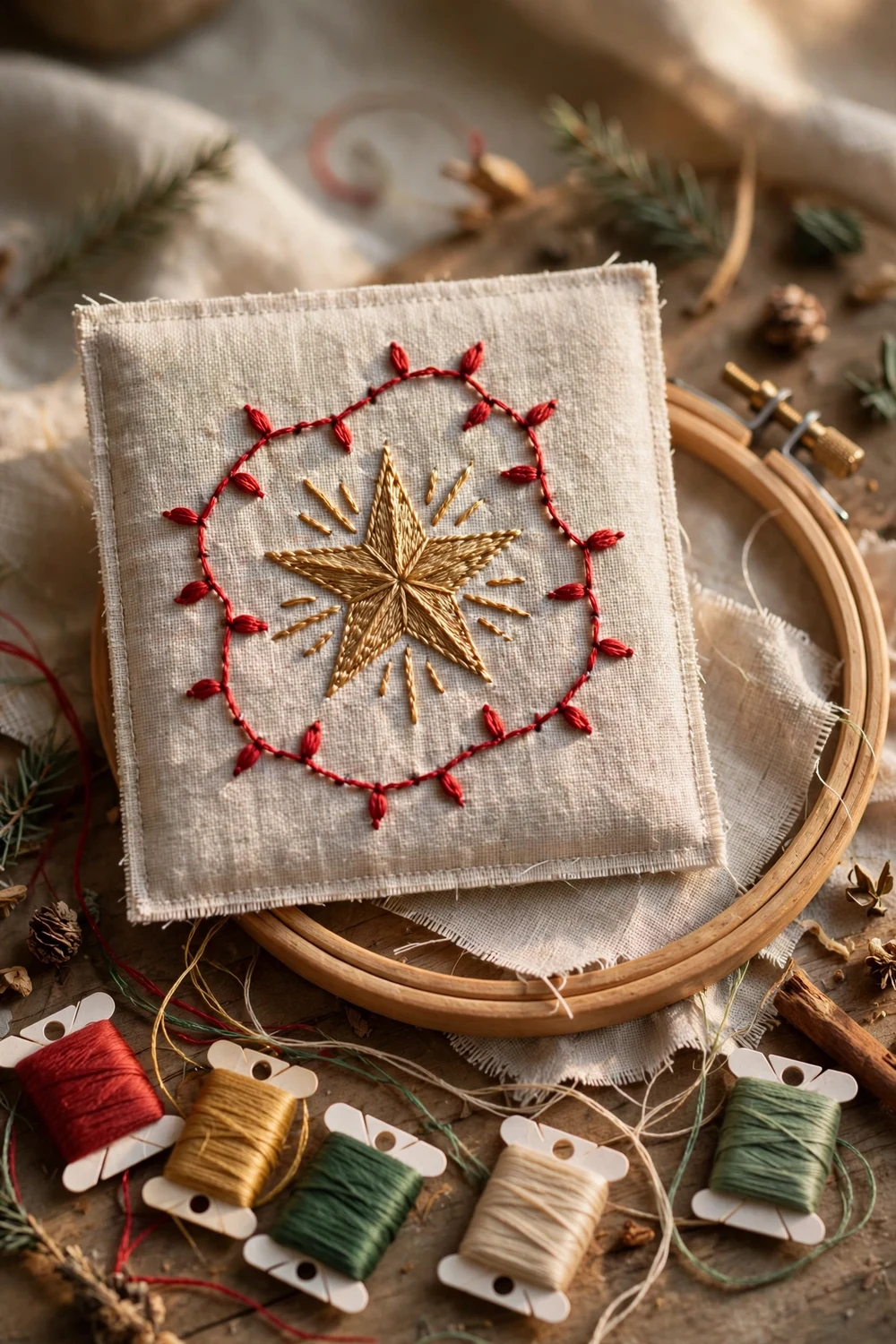
A stitched card feels warm in a way paper alone never does. Glue a small square of linen or felt to the card front, then stitch a simple shape through it — a star, a tree, a heart, or a string of tiny French knots like fairy lights. Even a few running stitches in red and gold thread look charming, and the texture makes people run their fingers over the card before they even read it.
Keep the design simple and the stitches loose enough that the card still closes flat. A needle, a few lengths of embroidery thread and a thimble are all you need, and a quiet evening in front of a film is the perfect time to stitch a batch. These are some of the cosiest christmas card ideas, and they are lovely for grandparents, who tend to treasure anything made with thread and time.
6. Layered Paper Cutout Cards
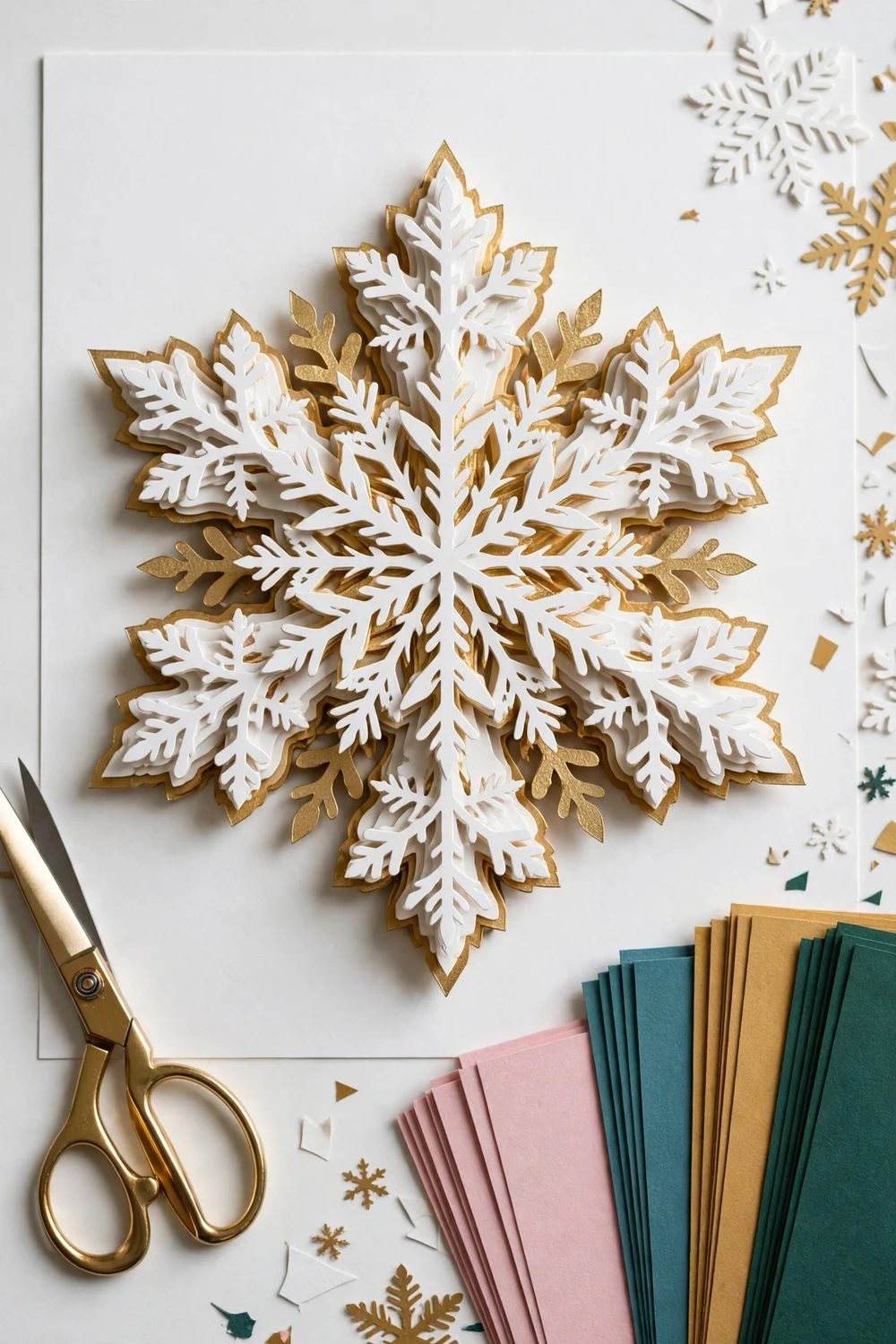
Layered paper cutouts give a card real depth. Cut the same shape — a snowflake, a tree, a star — from three or four sheets of paper in different shades, then stack them with small foam pads between the layers so each one floats above the next. The shadows between the layers make the design look far more complicated than it is, and the card catches the light beautifully on a mantelpiece.
White on white looks wonderfully wintry, while deep green, gold and cream feels rich and festive. A craft knife and a cutting mat give the cleanest edges, and a simple paper punch can make the smaller shapes in seconds. This is one of the most impressive christmas card ideas for very little money — a few sheets of coloured card, some foam pads, and an evening with a good podcast.
7. Dried Foliage Christmas Cards
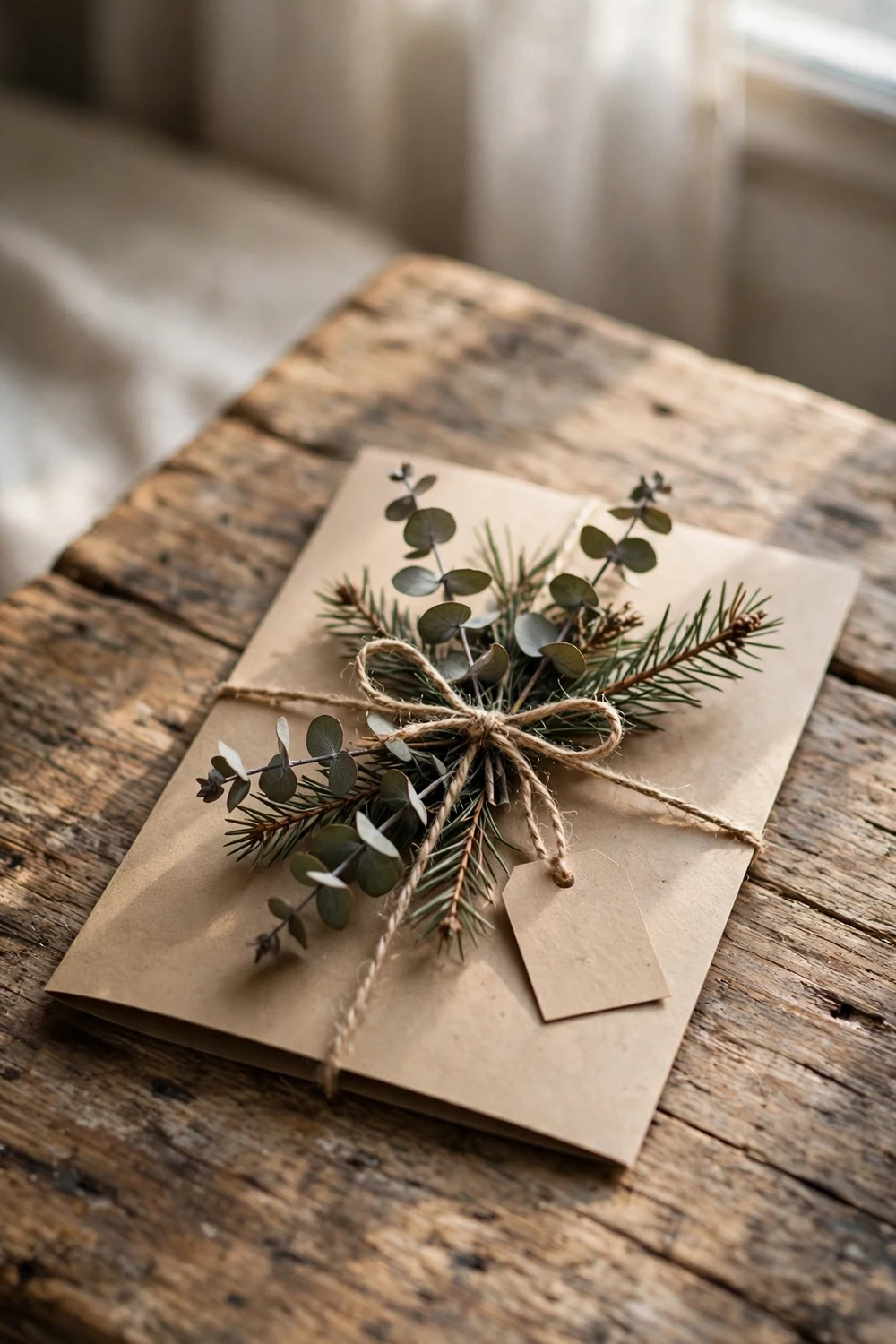
Dried foliage is the easiest way to make a card look expensive. A small sprig of dried eucalyptus, pine or rosemary tied to a kraft card with twine, plus a tiny hand-written tag, looks like something from a florist’s Christmas collection. The foliage keeps its colour for weeks, and the scent when the envelope opens is a gift in itself.
Buy a bunch of dried eucalyptus and cut it into small sprigs — one bunch makes dozens of cards. Tie each sprig with natural twine or a thin velvet ribbon, and keep the card itself simple so the foliage is the star. These are among the most stylish christmas card ideas, and they are perfect for the friend who loves natural, earthy, understated Christmas style.
8. Brush-Pen Calligraphy Cards
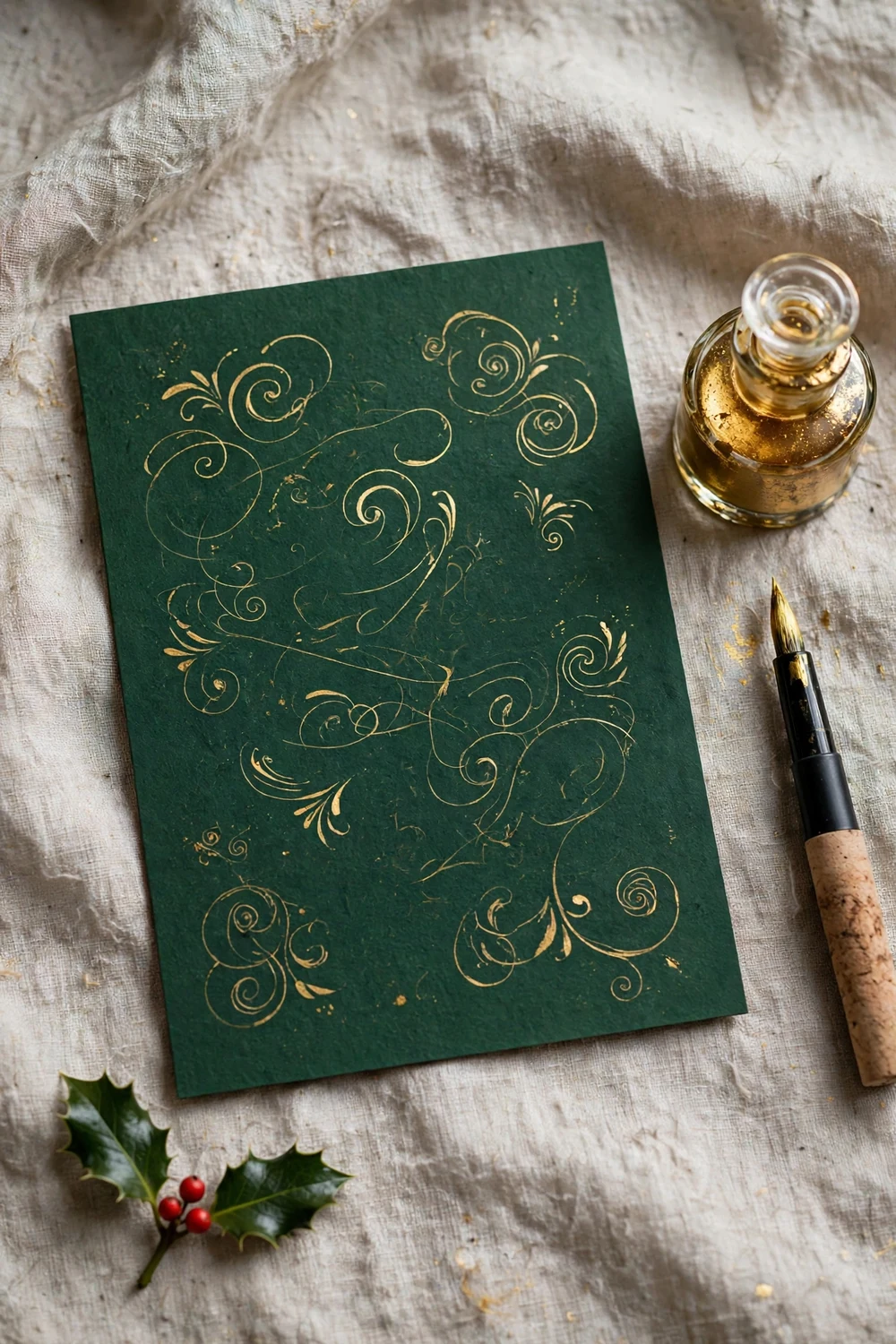
A calligraphy card proves that words alone can be the decoration. With a brush pen and a little practice, a simple “Merry Christmas” in flowing lettering looks breathtaking on a plain card — no pictures needed. Start with a light pencil guide, write slowly, and let the pen’s thick and thin strokes do the work; even imperfect lettering has a warmth that printed text never matches.
Practice on scrap paper first, and write your greeting before you add any other decoration so a mistake does not ruin a finished design. Gold ink on deep green or navy card looks especially festive, and a single sprig or a wax seal is all the extra decoration you need. These are some of the most personal christmas card ideas, because the handwriting itself is the gift.
9. Washi Tape Christmas Tree Cards
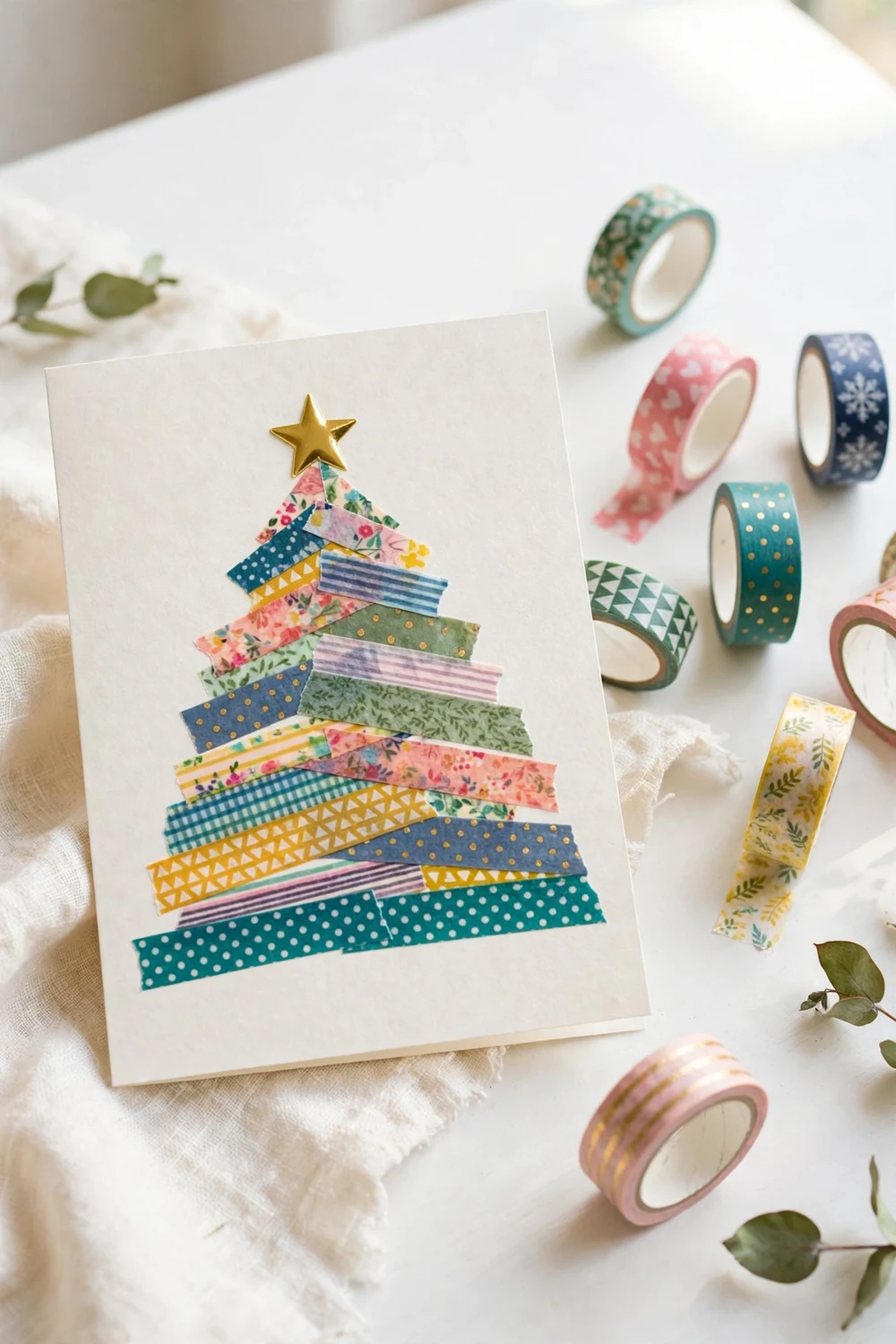
Washi tape trees are the happiest cards on this list. Cut strips of patterned washi tape into shorter and shorter lengths and layer them across the card to form a tree, then top it with a gold star sticker and add a tiny trunk drawn in pen. It takes five minutes, needs no drying time, and children can make a whole forest of them in one sitting.
Mix patterns — stripes, spots, stars, plain metallics — and keep the colours in one family, like reds and greens or blues and silvers, so the tree looks designed rather than random. Washi tape peels off cleanly if a strip goes on crooked, which makes this one of the most forgiving christmas card ideas for beginners and for little hands. Make a batch, sign them, and you are done before lunch.
10. Fingerprint Art Cards for Kids
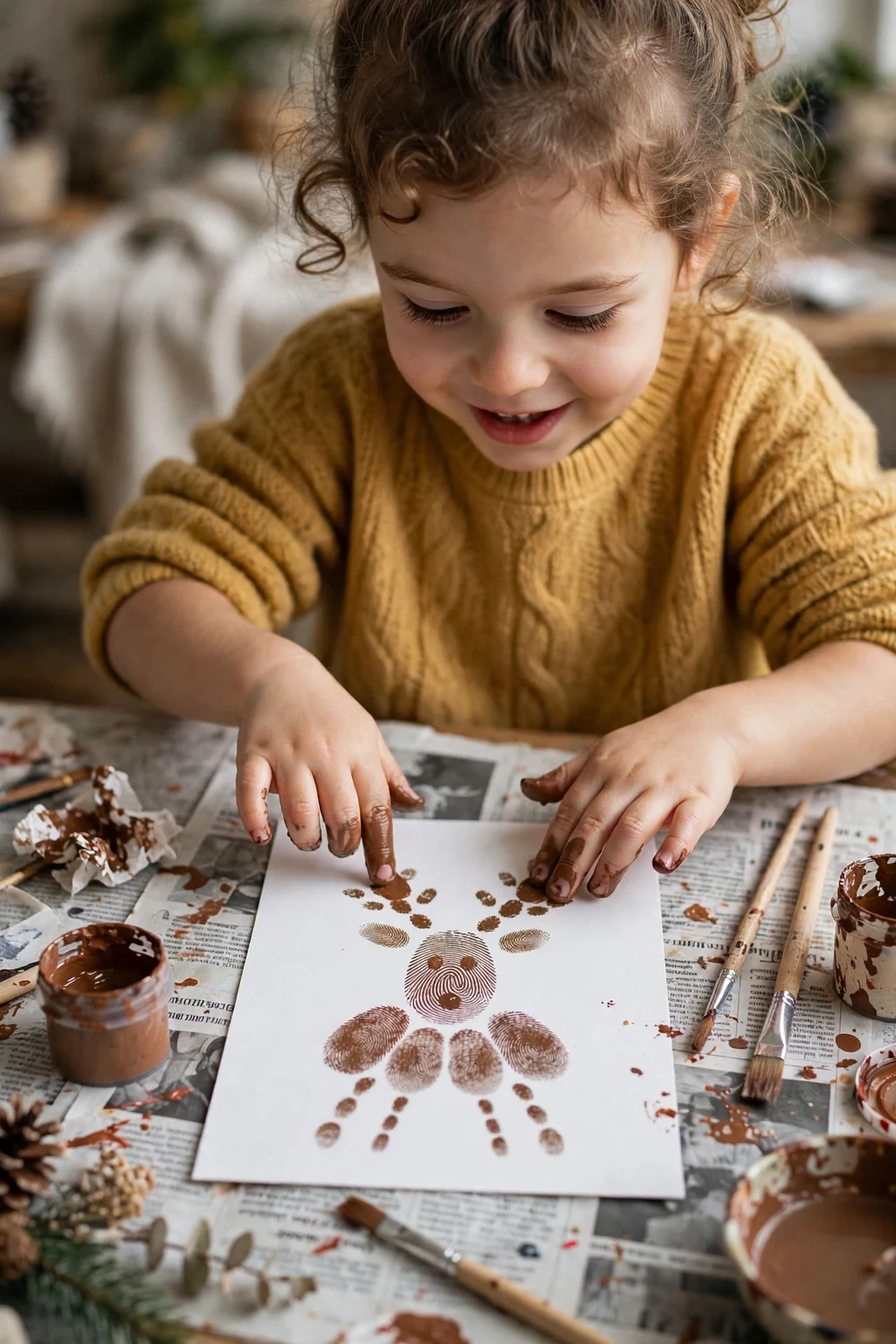
Fingerprint art is the card grandparents frame. Dip little thumbs in brown paint and press them onto the card to make reindeer bodies, then add antlers, eyes and a red nose with a fine pen once the paint dries. Green fingerprints in a triangle become a tree, and red and gold fingerprints become a string of baubles — and every print is a tiny record of how small those hands were this Christmas.
Use washable, non-toxic paint and cover the table with newspaper before you start, because this is gloriously messy. Let each colour dry before adding the next, and write the child’s name and the year inside — in ten years, that card will be worth more than anything bought in a shop. These are the sweetest christmas card ideas, and they make brilliant gifts for grandparents, godparents and teachers.
11. Button Ornament Cards
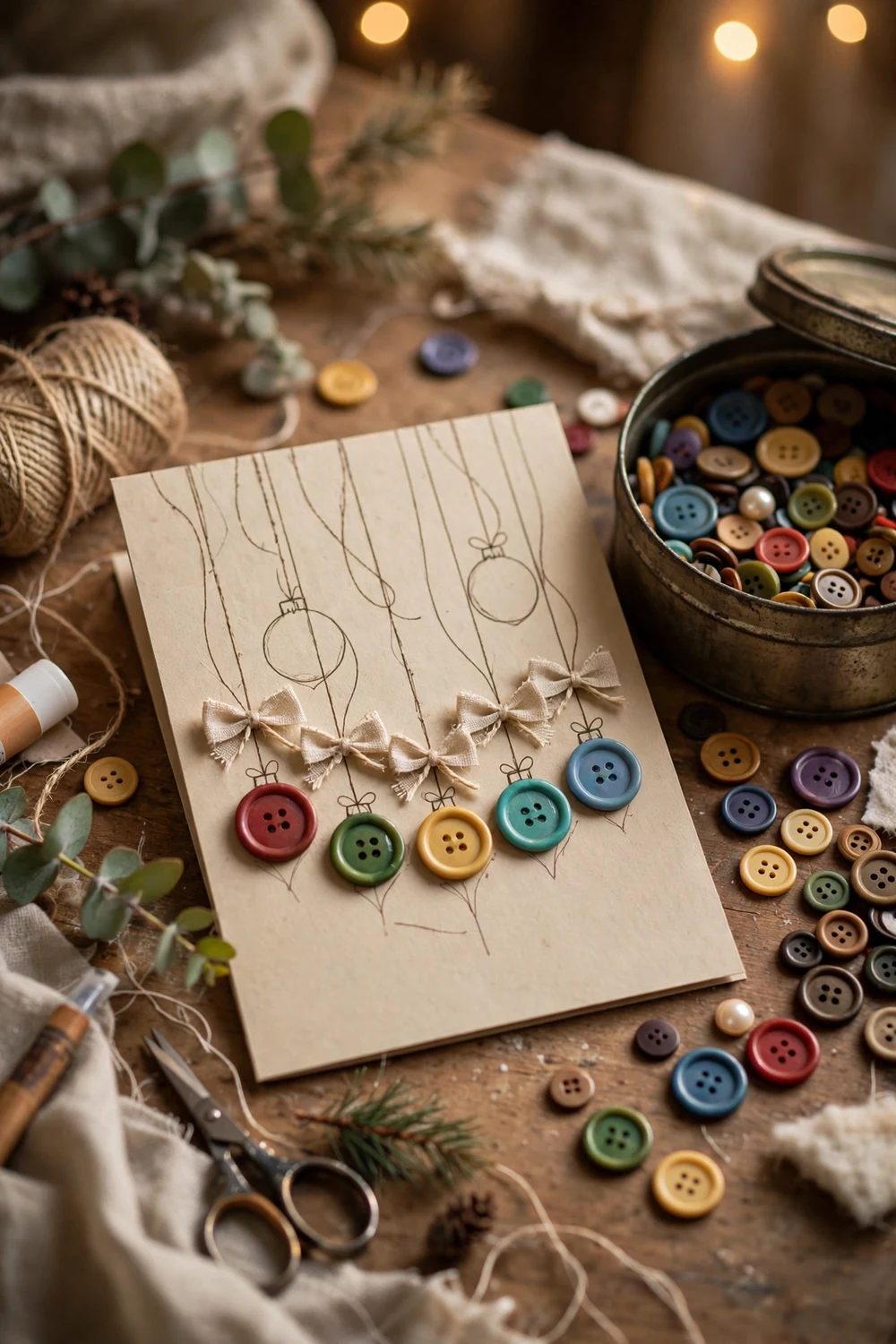
Buttons make the prettiest ornaments. Draw three or four thin lines hanging from the top of the card like bauble strings, then glue a button at the end of each line — red, green, gold, silver, or a cheerful mix. A tiny bow drawn in pen at the top of each string finishes the design, and the buttons catch the light every time the card is picked up.
Raid old button tins, charity shops or craft-store mixed bags for interesting shapes and colours; mismatched buttons look better than matching ones here. Use a strong craft glue and let it dry flat overnight so nothing slides. These are some of the most charming christmas card ideas, and they are a lovely way to use up buttons that have been sitting in a drawer for years.
12. Shaker Snow Globe Cards

A shaker card is pure Christmas magic. Cut a window in the card front, seal a clear acetate sheet behind it, and fill the little pocket with glitter, tiny sequins and miniature stars before closing it up. Every time the card is shaken, a tiny snowstorm swirls inside — and nobody, child or adult, can resist shaking it again.
Keep the pocket shallow and the filling light — a pinch of glitter and a dozen sequins is plenty, and too much will clump. Double-sided foam tape makes the best seal, because it holds the acetate tight and stops glitter escaping into the envelope. These are the most playful christmas card ideas on this list, and they are perfect for children, godchildren and anyone young at heart.
13. Felt Cut-Out Christmas Cards
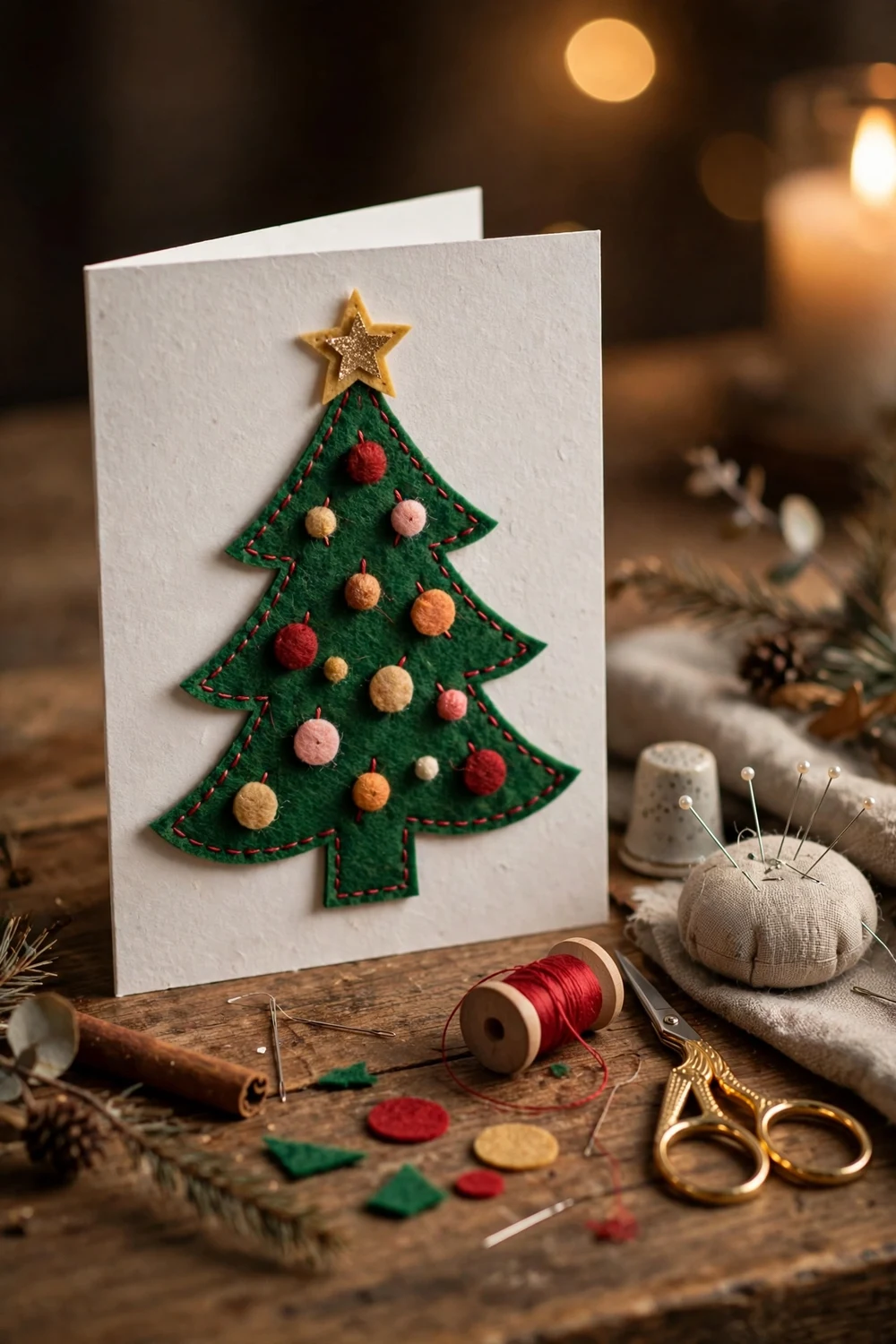
Felt cut-outs bring a soft, cosy texture to a card. Cut a tree, a stocking or a star from green and red felt, stitch the edges with a simple running stitch in contrasting thread, and glue the piece to the card front. Add a few tiny felt baubles or a star on top, and the card looks like a little piece of a Christmas jumper.
Felt does not fray, so the edges stay neat without any finishing, and a glue gun fixes pieces in seconds. Cut several shapes at once by stacking felt sheets, and keep the design to one or two pieces so the card stays flat enough to post. These are among the warmest christmas card ideas, and they suit anyone who loves handmade, homespun Christmas style.
14. Minimal Line Art Christmas Cards
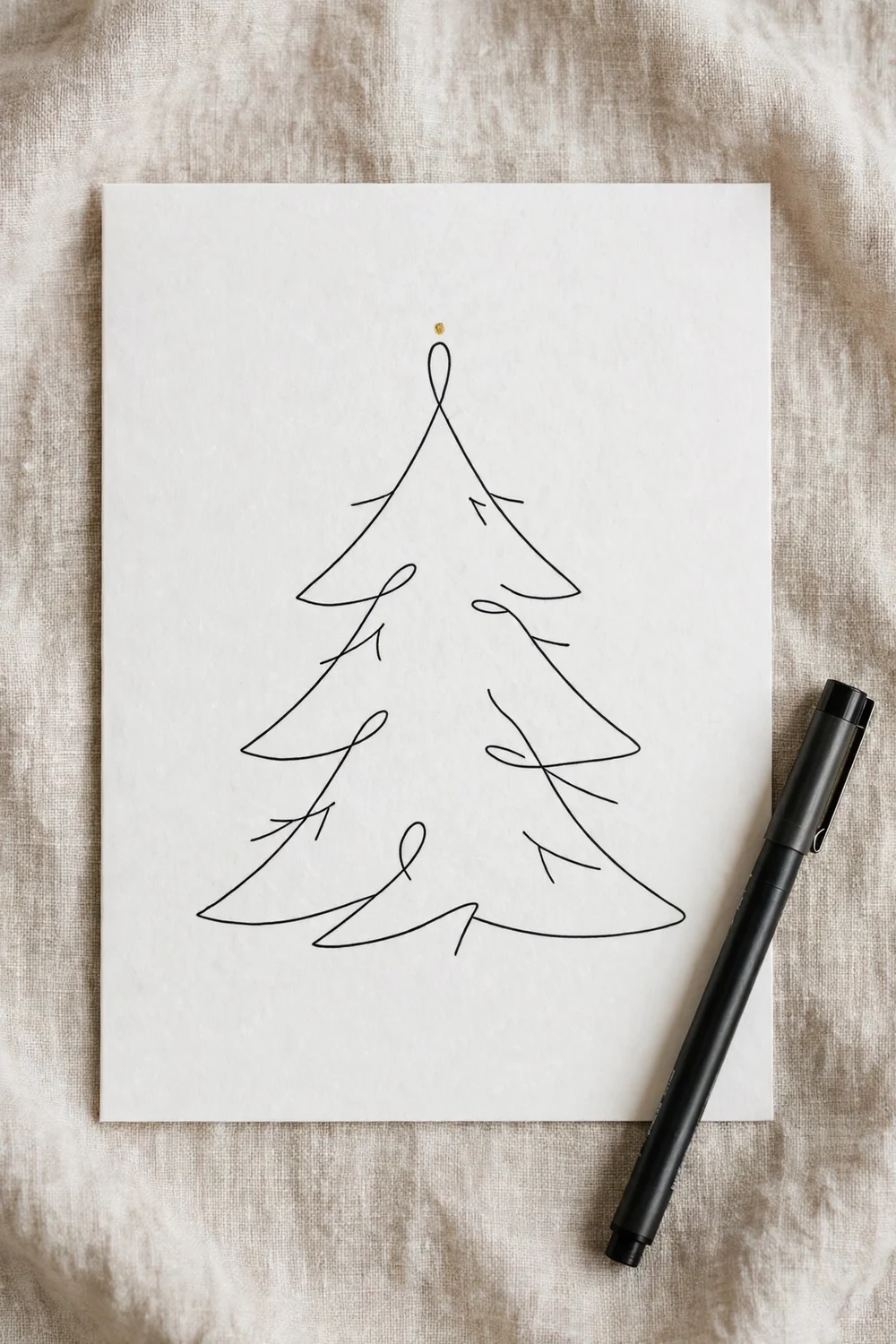
Minimal line art is proof that less can be more. One continuous black line, drawn without lifting the pen, becomes a Christmas tree, a reindeer, a star or a simple wreath on a plain white card. Add a tiny gold dot or a single word underneath, and the card looks like it came from a design studio — calm, modern and quietly beautiful.
Practice the drawing a few times on scrap paper until the line flows smoothly, then draw it directly on the card with a fine black pen. Resist the urge to add more: the empty space is part of the design. These are the most modern christmas card ideas, and they are perfect for the friend who loves clean, simple, Scandinavian-style Christmas decor.
15. Pop-Up and Interactive Christmas Cards
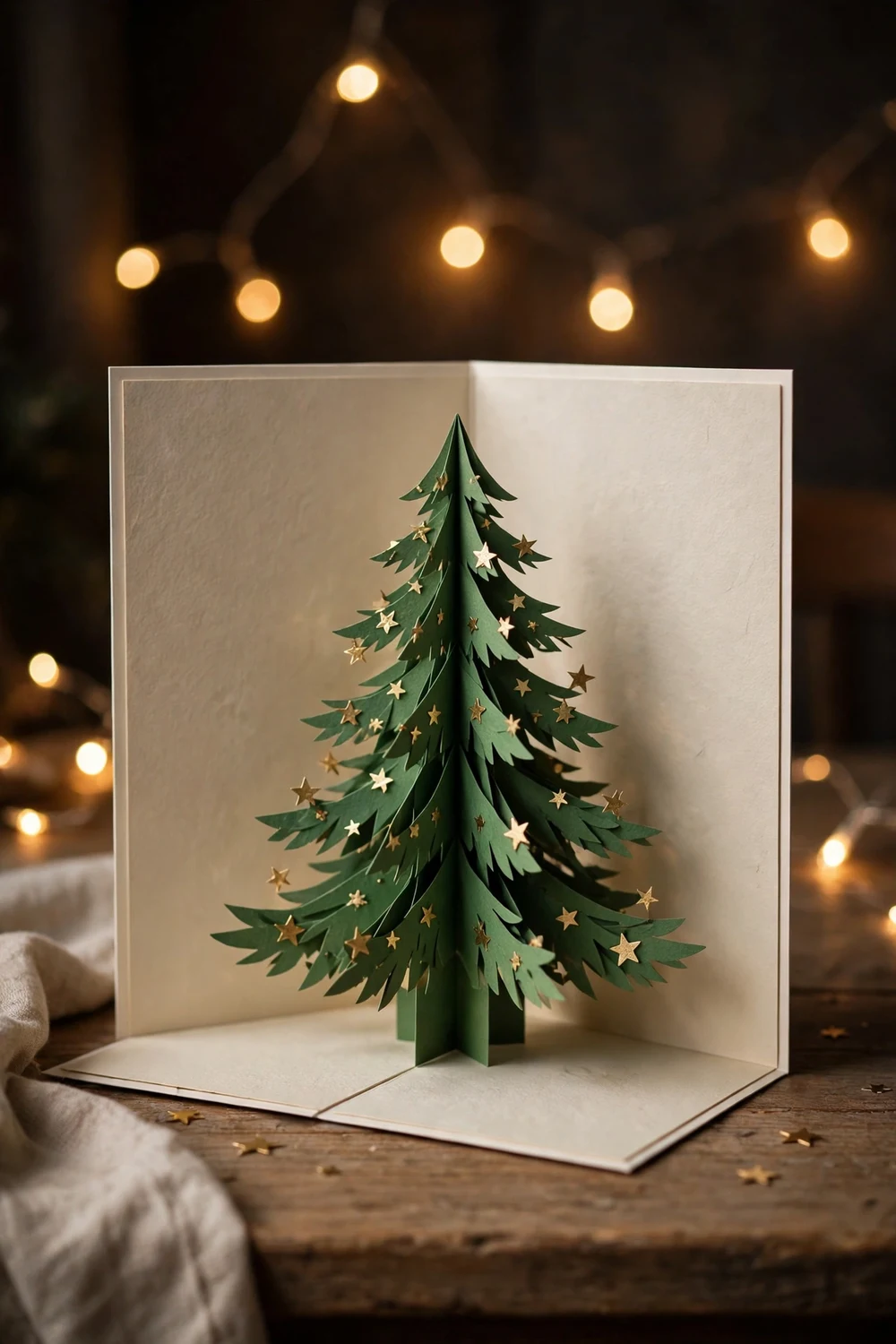
A pop-up card is a card and a decoration in one. Cut a simple pop-up tree or a row of presents into the centre fold so it springs up when the card opens, then decorate the inside with a few stars and a short message. The recipient will stand it on the mantelpiece for the whole season — which is more than you can say for most cards.
Start with a simple design and a template, and score the fold lines with a blunt knife before folding so the creases are crisp. Test the mechanism twice before gluing anything, and keep the pop-up shallow so the card still fits in a standard envelope. These are the most memorable christmas card ideas, and they are wonderful for children, who will open and close them about a hundred times.
How to Batch-Make and Mail Your Christmas Cards
Batch-making is the secret to handmade cards without the stress. Pick one design, cut all the pieces at once, then assemble in stages — fold every card, glue every layer, add every greeting — like a little production line. A batch of twenty cards takes about the same time as making five one by one, and you will get faster and neater with every card. Keep a box for finished cards so they stay flat and clean while you work through the list.
For mailing, work backwards from Christmas. Cards posted within your own country should go by the second week of December, and international cards should go in late November or the very first days of December — check your local postal service for its Christmas last-posting dates and add a few days of buffer. Weigh a finished card before buying stamps, because shaker cards, felt and buttons can push a card into a higher postage band. Write the addresses first, the messages second, and post in batches so nothing is left to a last-minute rush.
Frequently Asked Questions
When should I start making Christmas cards?
Start in late October or early November. That gives you time to make cards in relaxed batches, buy stamps, and post international cards in late November and local cards in the second week of December, well before the Christmas rush.
What paper is best for handmade Christmas cards?
A sturdy card blank of 250–300 gsm is best — it holds paint, glue and stitching without buckling. Watercolour paper is ideal for painted cards, kraft card suits stamped and foliage designs, and smooth white card is best for calligraphy and line art.
How do I keep handmade cards flat in the post?
Let glue dry completely, press finished cards under a heavy book overnight, and use a rigid envelope or a piece of thin card as a stiffener. Avoid very bulky decorations on cards you plan to post, and check the postage band before you buy stamps.
Can kids make these Christmas cards?
Yes — washi tape trees, fingerprint art and button ornaments are perfect for children, and older kids can try watercolour washes and paper cutouts. Use washable paint and child-safe scissors, and let them sign and date their cards inside.
Final Thoughts
A handmade Christmas card is never just a card. It is an evening spent painting, stitching or stamping; it is a fingerprint that shows how small a hand was this year; it is a sprig of rosemary that smells of Christmas when the envelope opens. Whether you choose a watercolour wash, a shaker snow globe or a simple line drawing, the best christmas card ideas are the ones that carry a little of you inside them.
Pick one design, make a batch, and post them early — then enjoy the messages that come back. Merry Christmas, and happy card-making.