When the temperature drops, your skin feels it first. Cold wind outside, dry heating inside, hot showers and heavy scarves can leave skin tight, flaky and dull — even if your summer routine worked perfectly. A good winter skincare routine is not about buying ten new products: it is about gentle cleansing, deep hydration, and protecting the moisture barrier your skin needs to stay soft and glowing all winter.
In this guide you will find 15 winter skincare routine steps for 2026, from a gentle cleanser and hydrating toner to a hyaluronic acid serum, a rich moisturiser, SPF in winter, lip and hand care, overnight masks, a dry-skin SOS plan, a sensitive-skin routine and a simple budget routine. Every step is easy to follow at home, with simple swaps for every skin type.
If winter is drying out more than your face, our overnight hair masks for dry, frizzy hair will rescue winter hair, our warm drinks for immunity guide keeps you cosy from the inside, and our winter hairstyles are perfect for cold-weather days.
1. Start With a Gentle, Hydrating Cleanser
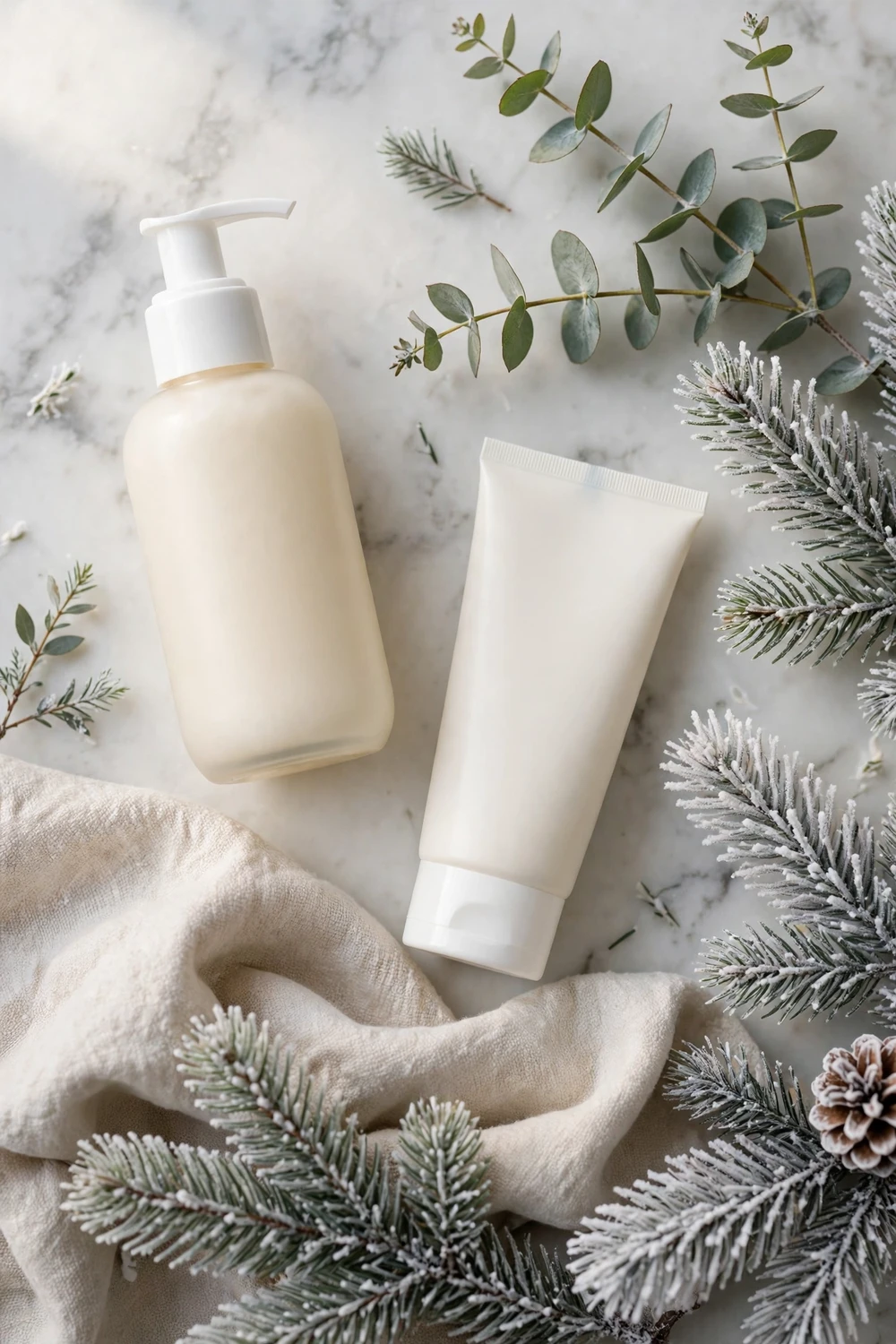
In winter, your cleanser should clean without stripping. Swap a foaming or harsh cleanser for a gentle, hydrating one — a cream, milk or oil cleanser that leaves your skin feeling soft, not tight or squeaky. Look for words like “gentle”, “hydrating” or “for dry skin” on the label, and avoid strong fragrances if your skin is easily irritated.
Wash with lukewarm water, never hot, and use your fingertips rather than a rough cloth. Pat your face dry gently with a soft towel instead of rubbing, and apply your next step while your skin is still slightly damp. This one small change — a gentler cleanse — can transform how your skin feels all winter, because it protects the natural oils your skin needs.
2. Add a Hydrating Toner or Essence

A hydrating toner or essence is the step most people skip, and in winter it makes the biggest difference. After cleansing, press a few drops of a watery, hydrating toner into your skin with your palms. Look for ingredients like glycerin, hyaluronic acid or panthenol, which draw moisture into the skin and leave it plump and comfortable.
This step works like a drink of water for your face: it preps your skin so that your serum and moisturiser can absorb better and work harder. If your skin is very dry, you can even layer the toner twice — a simple trick called the “seven-skin method” in a lighter form. Keep it fragrance-free if your skin is sensitive, and enjoy the instant feeling of relief.
3. Layer a Hyaluronic Acid Serum

Hyaluronic acid is winter skincare’s best friend. It is a humectant, which means it pulls water into the skin, holding up to a thousand times its weight in moisture. A few drops of a hyaluronic acid serum, applied to damp skin after your toner, can make your face feel bouncy, hydrated and comfortable, even on the coldest days.
Apply it while your skin is still slightly damp, then seal it in straight away with your moisturiser — otherwise the serum can actually pull moisture out of your skin in dry air. Look for a simple, fragrance-free serum, and give it a few weeks of daily use to see the full effect. It is a small bottle with a very big job, and it suits almost every skin type.
4. Seal It In With a Rich Winter Moisturiser

In summer, a light gel moisturiser might be enough. In winter, most skin needs something richer. Switch to a cream moisturiser with ceramides, squalane or shea butter — ingredients that repair and protect your skin barrier and lock moisture in for hours. Your skin should feel comfortable and soft, not tight, an hour after you apply it.
Apply your moisturiser morning and night, and do not forget your neck and the tops of your ears, which get cold and dry too. If your skin is very dry, you can press a little extra cream onto the driest patches, like your cheeks or around your nose. A rich moisturiser is the warm coat your skin wears all winter — choose one that feels like a comfort, not a chore.
5. Never Skip SPF, Even in Winter
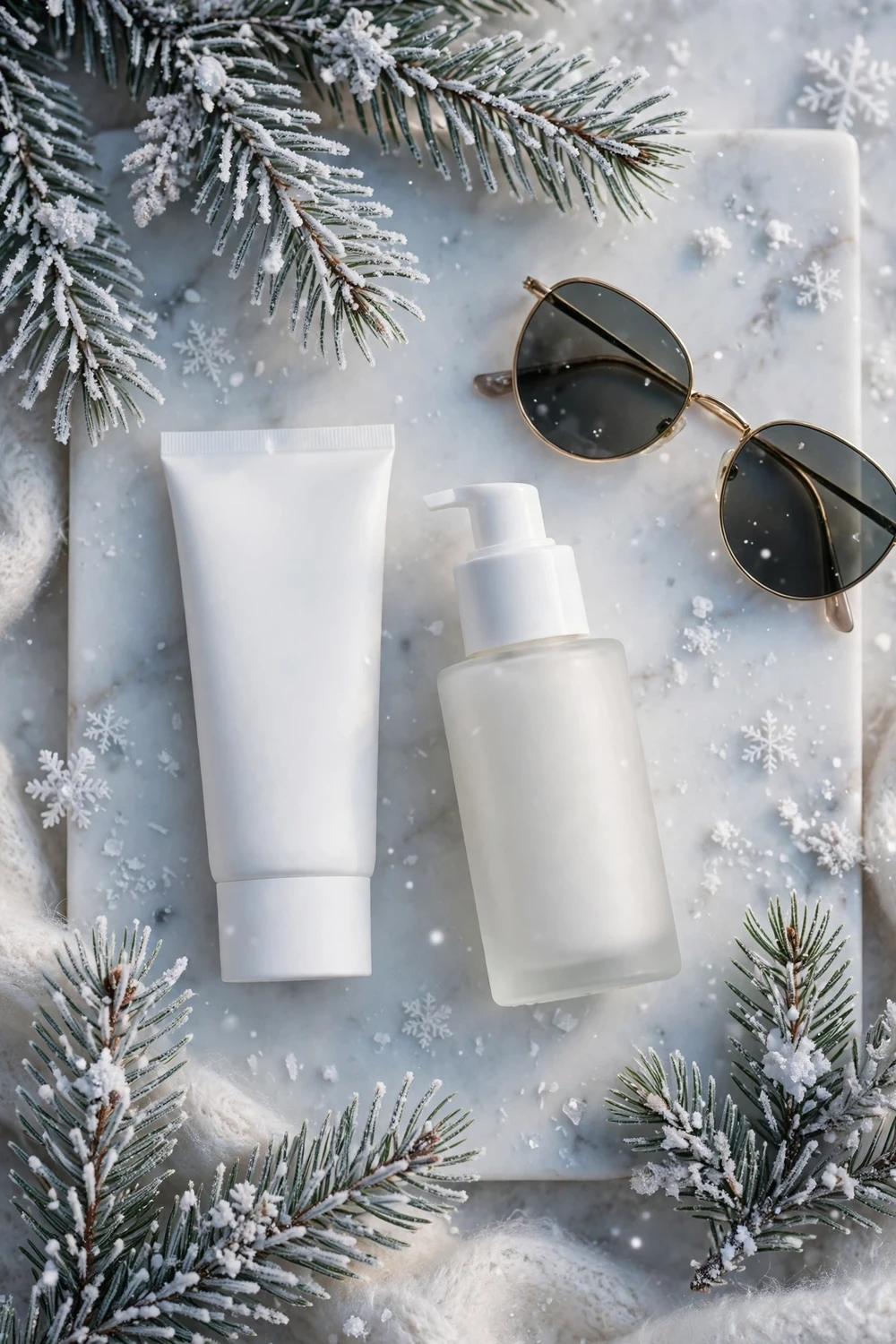
It is tempting to skip sunscreen when the sky is grey, but winter sun still damages skin. UV rays pass through clouds, reflect off snow, and reach your face on bright winter days, causing premature ageing and dark spots. A broad-spectrum SPF 30 or higher, applied every morning as the last step of your routine, protects your skin all year round.
Choose a hydrating sunscreen that feels comfortable under makeup and does not leave a white cast — many modern formulas feel more like a light moisturiser. Apply it to your face, neck and the backs of your hands, which show sun damage early. SPF is not a summer product: it is a daily habit, and winter is when it is easiest to forget, so make it non-negotiable.
6. Give Your Lips Some Winter Love
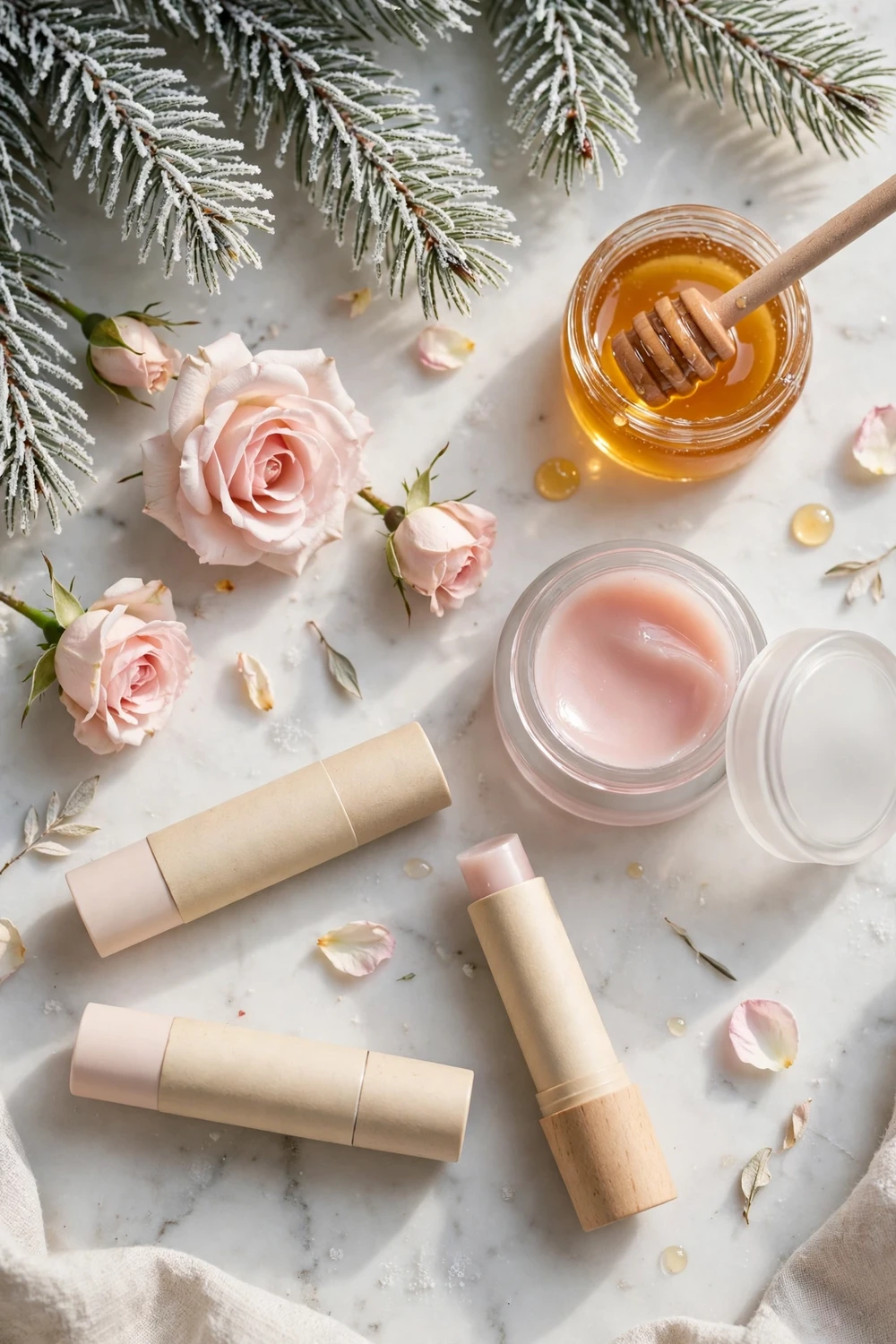
Lips have almost no oil glands of their own, which is why they chap so quickly in cold, dry air. A good lip balm is essential in winter: look for one with beeswax, shea butter, lanolin or petroleum jelly, which seal moisture in and protect against the wind. Apply it often, and always before you go outside and before bed.
Skip lip products with strong fragrances or flavours, which can irritate cracked lips, and avoid licking your lips — saliva dries them out further. Once a week, gently exfoliate with a soft toothbrush or a sugar scrub, then apply a thick layer of balm as an overnight lip mask. Soft, comfortable lips all winter are entirely possible, with just a little daily care.
7. Rescue Dry Hands With a Rich Hand Cream
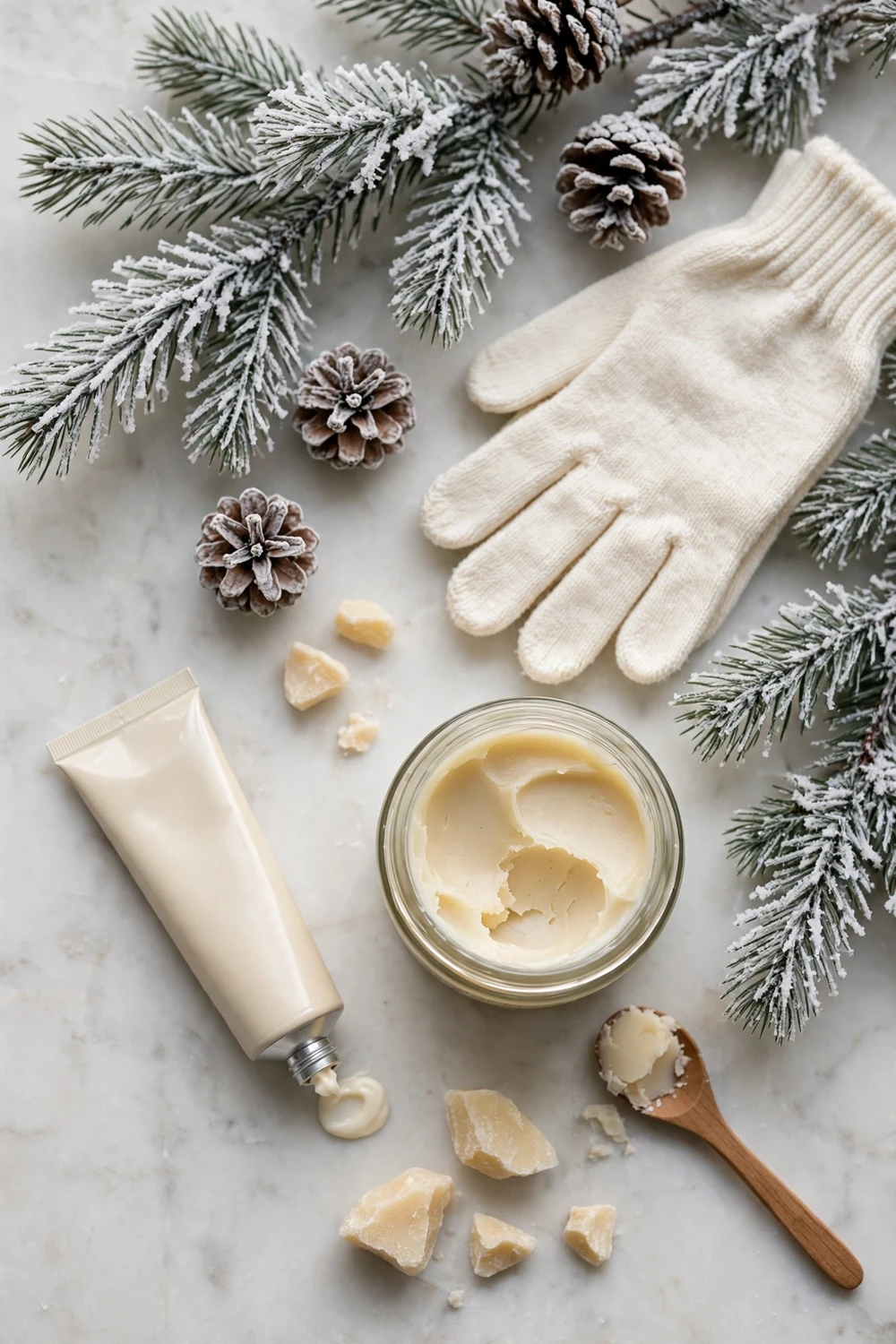
Hands suffer in winter more than almost anywhere else: cold air, hot water, soap and hand-washing all strip moisture away. A rich hand cream, kept by the sink and in your bag, is the answer. Look for creams with glycerin, shea butter or ceramides, and apply after every wash, while your hands are still slightly damp.
For a real rescue treatment, apply a thick layer of hand cream before bed, then slip on a pair of soft cotton gloves overnight. You will wake up to noticeably softer hands — it is one of the simplest, most satisfying winter beauty tricks there is. Do not forget your cuticles either: a drop of cuticle oil keeps nails healthy and stops painful splits.
8. Try an Overnight Sleeping Mask

An overnight sleeping mask is like a long, deep drink for your skin while you sleep. Apply a generous layer as the last step of your evening routine, two or three times a week, and let it work overnight. In the morning, your skin should feel soft, plump and well-rested — the difference is often visible after just one use.
Choose a hydrating sleeping mask with hyaluronic acid, ceramides or honey, and keep it simple: no need for a separate night cream underneath on mask nights. This is a wonderful step for dry or tired skin, and it feels like a small luxury, even though it takes only thirty seconds. If your skin is sensitive, patch-test first and start with once a week.
9. A Dry-Skin SOS Routine for Flaky Patches
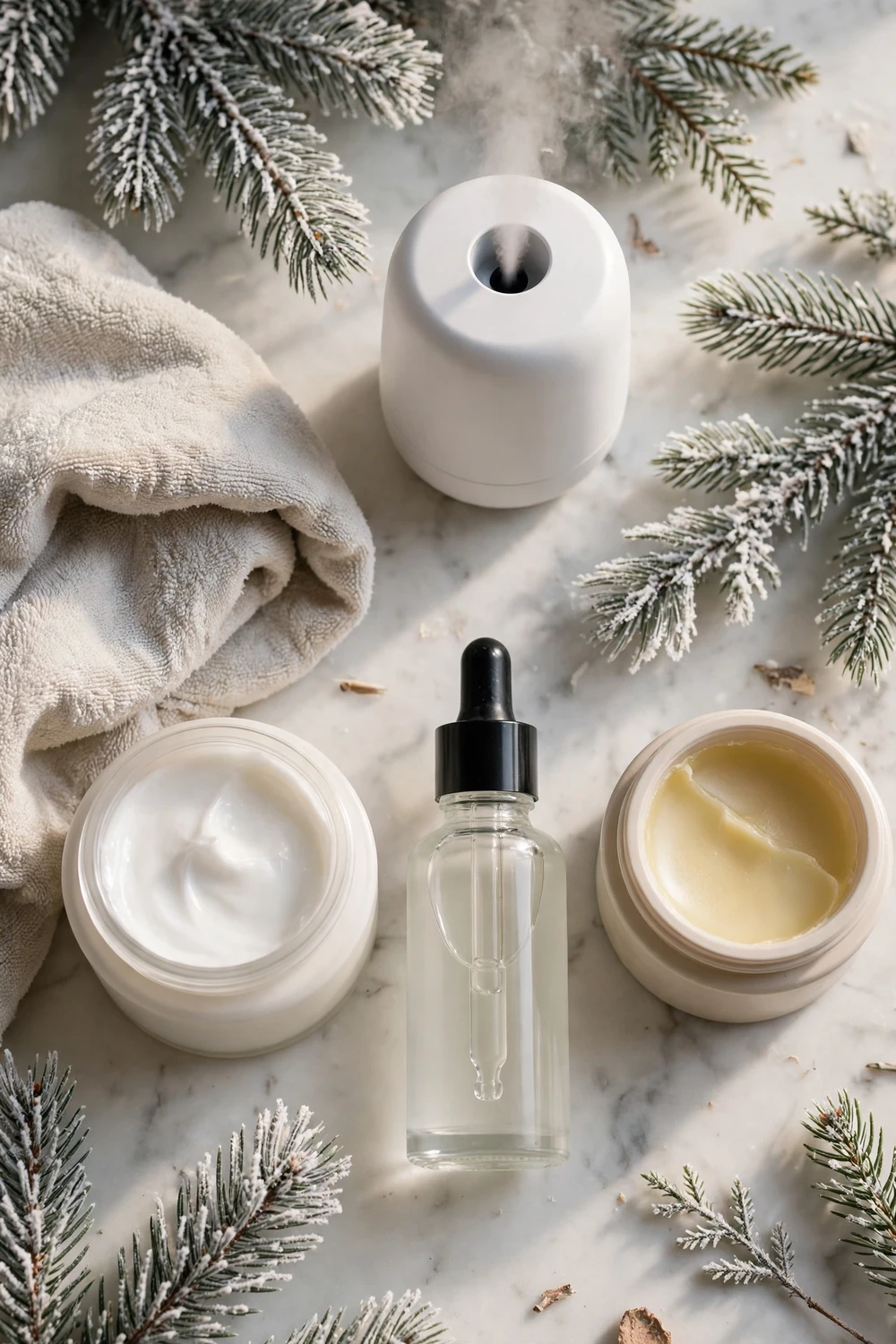
Flaky patches on your cheeks, around your nose or on your forehead are winter’s classic complaint. For a dry-skin SOS routine, simplify everything: a gentle cream cleanser, a hydrating toner, a hyaluronic acid serum, a rich cream, and a thin layer of a gentle facial oil or a barrier balm on the driest spots. Skip strong actives until your skin calms down.
Avoid hot water, harsh scrubs and strong exfoliants while your skin is flaking, and resist the urge to pick at dry patches. A humidifier in your bedroom can also help enormously, by putting moisture back into the dry, heated air you sleep in. With a few days of gentle, consistent care, most flaky patches settle down and your skin feels comfortable again.
10. A Gentle Routine for Sensitive Skin
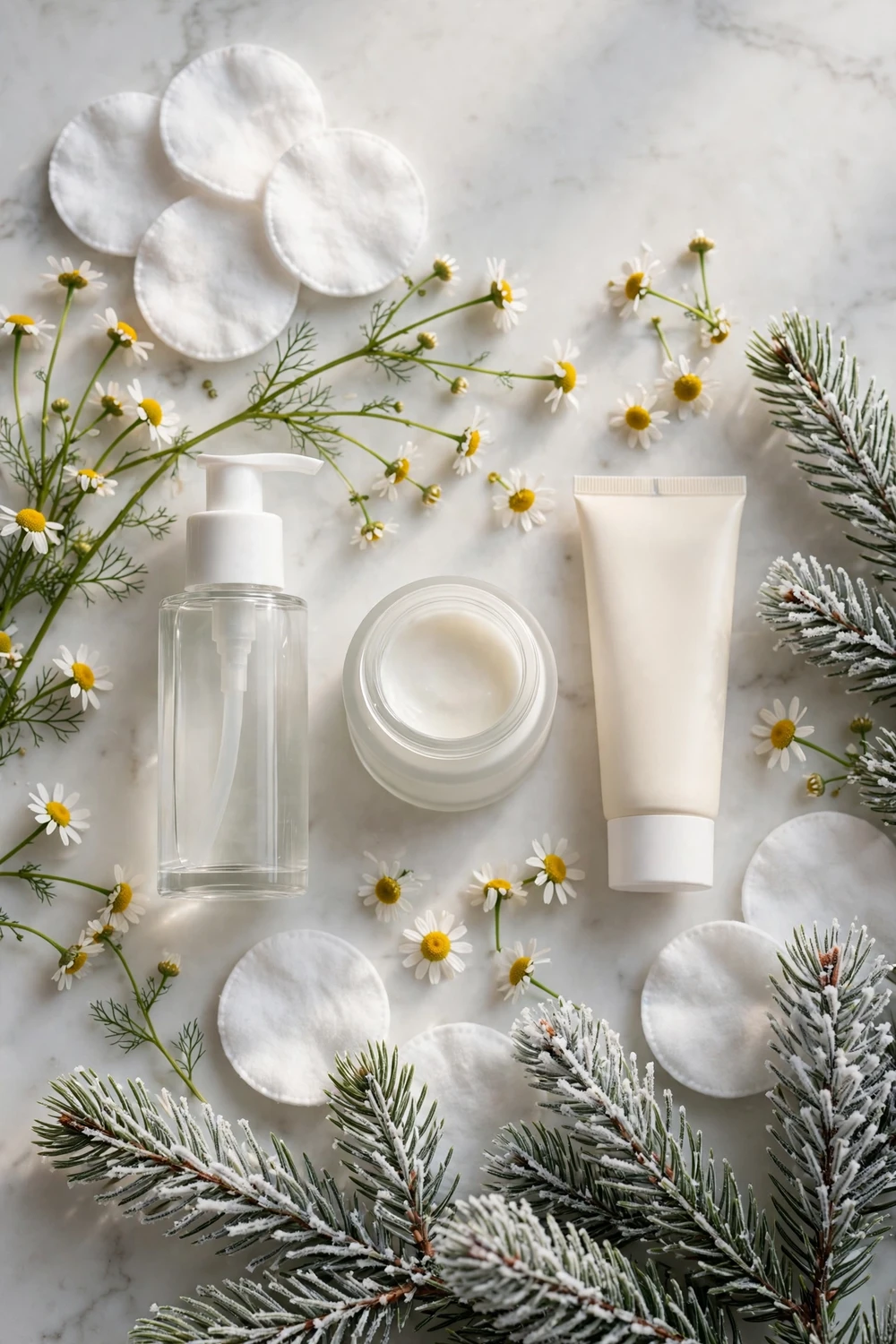
Sensitive skin needs a winter routine that is calm, simple and fragrance-free. Choose a cleanser, moisturiser and sunscreen labelled for sensitive skin, with as few ingredients as possible, and introduce any new product one at a time, so you know exactly what your skin likes. If a product stings or reddens your skin, stop using it and go back to basics.
In winter, sensitive skin often does best with fewer steps: a gentle cleanse, a hydrating toner, a simple moisturiser with ceramides, and SPF. Avoid strong acids, retinoids and heavy fragrances until the weather warms up, and always patch-test new products on your jawline first. Listening to your skin — and keeping things gentle — is the whole secret of a sensitive-skin winter routine.
11. Exfoliate Gently — But Not Too Often
Exfoliation removes dead skin and helps your moisturiser absorb better, but in winter it is easy to overdo it. Once a week is enough for most people, using a gentle chemical exfoliant like lactic acid or PHA, or a very soft physical scrub. Your skin should feel smoother afterwards, never tight, red or sore.
Never exfoliate on the same night as a strong treatment, and always follow exfoliation with a hydrating serum and a rich moisturiser. If your skin is flaky or irritated, skip exfoliation entirely until it calms down — a gentle routine will do more good than a scrub. Think of exfoliation as a light polish, not a deep clean, and your winter skin will thank you.
12. Add a Facial Oil for Extra Comfort

A facial oil is the cosiest step in a winter skincare routine. A few drops of squalane, jojoba or rosehip oil, pressed onto your skin after your moisturiser, seal in hydration and add a soft, healthy glow. It is especially lovely on cold evenings, when your skin feels tight and needs an extra layer of comfort.
Choose a lightweight, non-comedogenic oil if your skin is oily or acne-prone, and use just two or three drops — a little goes a long way. You can also mix a drop into your moisturiser for an easier application. Facial oil is not essential for everyone, but for dry winter skin it can be the step that finally makes everything feel comfortable.
13. Protect Your Skin From Cold Wind and Heating

Your routine is only half the story: your environment matters too. Cold wind strips moisture from your skin, so wear a soft scarf over the lower half of your face on windy days, and apply a barrier cream or a rich moisturiser before you go outside. Sunglasses protect the delicate skin around your eyes from wind and winter glare.
Indoors, central heating dries the air — and your skin with it. A humidifier in your bedroom, keeping showers short and lukewarm, and drinking enough water all help your skin stay hydrated from the inside out. Small habits like these, repeated every day, protect your skin barrier far better than any single expensive product.
14. A Simple Budget Winter Skincare Routine
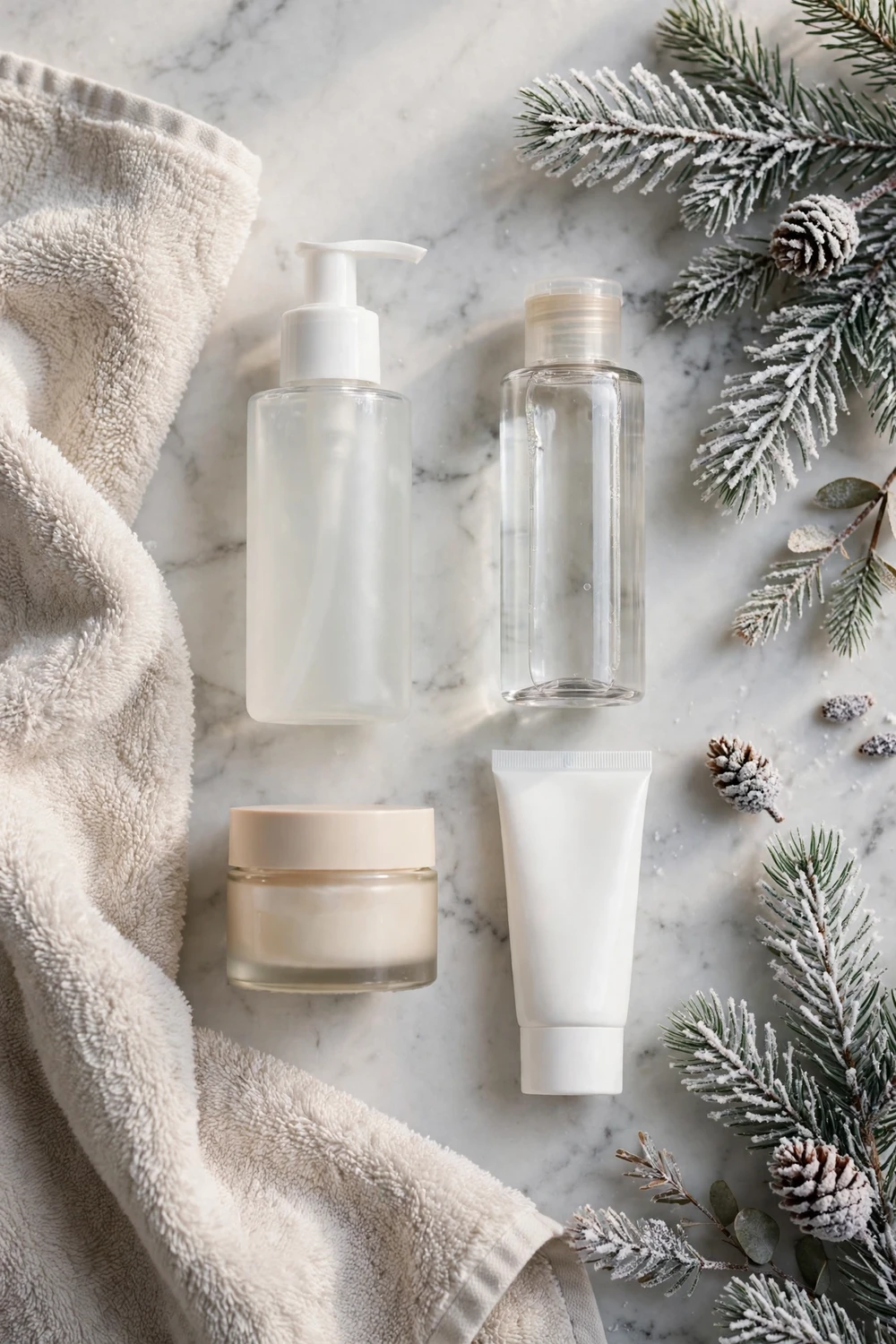
You do not need an expensive routine to have beautiful winter skin. A simple, budget-friendly routine has just four steps: a gentle cleanser, a hydrating toner or serum, a rich moisturiser, and SPF in the morning. Choose affordable, fragrance-free products from the drugstore, and spend your money on the moisturiser, which does the most work.
Look for multi-purpose products — a moisturiser with ceramides, a serum with hyaluronic acid — and avoid buying several products that do the same job. Consistency matters far more than price: the same simple routine, used every morning and night, will beat an expensive shelf of products you use only occasionally. Good winter skin is a habit, not a luxury.
15. A Cosy Night-Time Winter Skincare Ritual
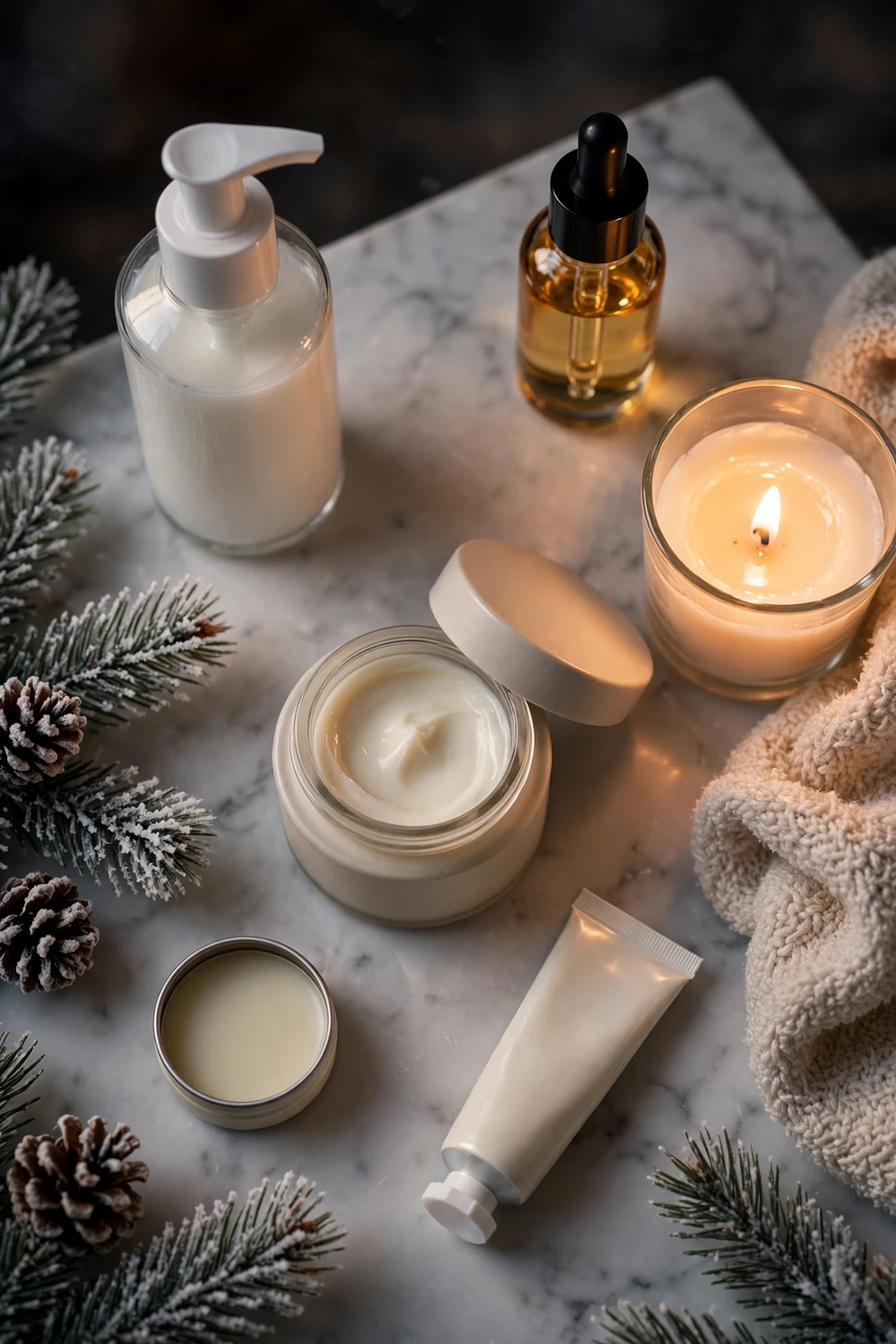
End the day with a ritual that feels like a treat, not a task. Cleanse gently, press in your toner and serum, apply your rich night moisturiser, and finish with lip balm and hand cream. Light a candle, put your phone away, and give yourself five quiet minutes — your skin, and your sleep, will both benefit.
This night-time ritual is the heart of a winter skincare routine: it is when your skin repairs itself, and when you get a moment to slow down. Keep it simple, keep it consistent, and enjoy it. Winter skincare is not about perfection — it is about comfort, care, and a little glow, even on the coldest, darkest evenings.
How to Build Your Own Winter Skincare Routine
Start with the basics: a gentle cleanser, a hydrating step, a rich moisturiser and SPF. Use those four steps every day for two weeks, and notice how your skin responds before you add anything else. If your skin feels tight, add a serum or a facial oil; if it feels irritated, simplify and remove one product at a time.
Introduce new products slowly, one every week or two, and patch-test on your jawline first. Your winter routine does not need to be complicated to work — it needs to be gentle, hydrating and consistent. And remember: the best routine is the one you actually enjoy using, morning and night, all winter long.
Frequently Asked Questions
What is the best winter skincare routine for dry skin?
A gentle cream cleanser, a hydrating toner, a hyaluronic acid serum, a rich ceramide moisturiser, SPF in the morning, and an overnight sleeping mask two or three times a week is the best winter routine for dry skin.
Do I need SPF in winter?
Yes — UV rays pass through clouds and reflect off snow, so a broad-spectrum SPF 30 or higher every morning protects your skin from premature ageing and dark spots, even on grey winter days.
How often should I exfoliate in winter?
Once a week is enough for most people in winter, using a gentle exfoliant. If your skin is flaky or irritated, skip exfoliation until it calms down and focus on gentle hydration instead.
What is the simplest budget winter skincare routine?
Just four steps: a gentle cleanser, a hydrating toner or serum, a rich moisturiser, and SPF in the morning. Consistency with affordable, fragrance-free products beats an expensive routine you use only occasionally.
Conclusion
A good winter skincare routine is really about kindness to your skin: gentle cleansing, deep hydration, a rich moisturiser, and daily protection from the cold, the wind and the winter sun.
Start with the basics, add one step at a time, and enjoy the ritual. With a little consistency, your skin can stay soft, glowing and comfortable all winter long — no matter how cold it gets outside.