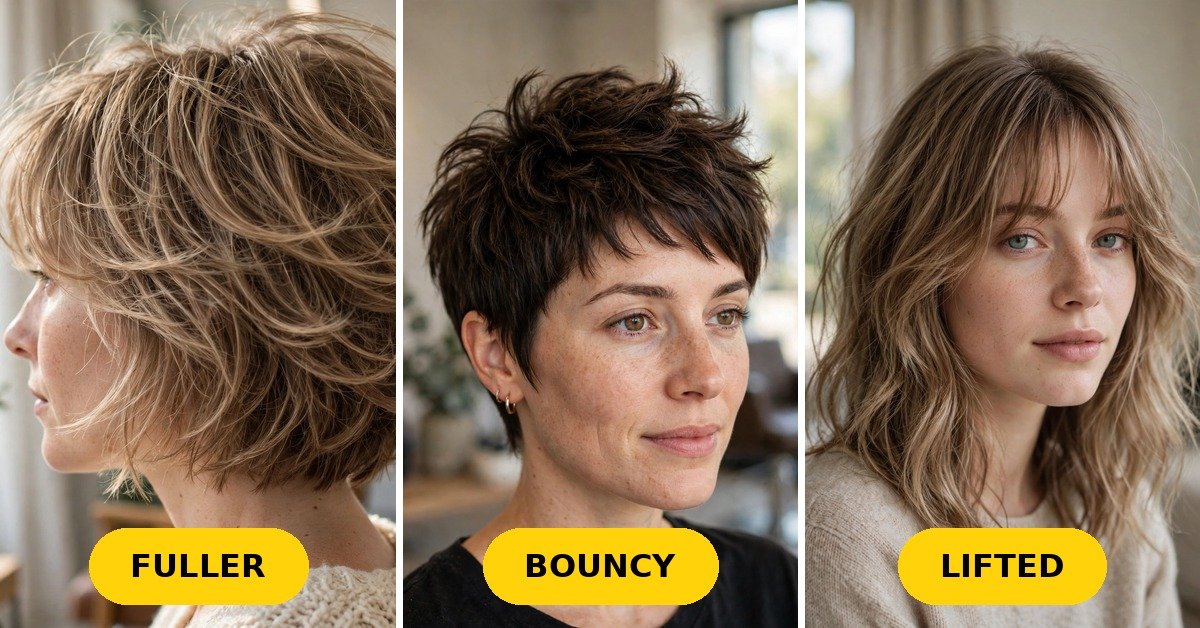
25 Hairstyles for Thin Hair That Add Instant Volume in 2026
If your hair always seems to fall flat by midday, you are not alone. Finding hairstyles for thin hair that hold their shape can feel like a never-ending search, because most styles online are shown on thick hair that does half the work on its own. The good news is that volume is something you can build with the right cut, the right styling habits, and a few clever tricks that work with fine hair instead of against it.
Thin hair has its own advantages: it dries faster, it is easy to shape, and it rarely feels heavy. What it needs is structure – a cut that creates the illusion of density, layers placed where they lift, and styling that builds support at the roots. In this guide, you will find 25 hairstyles for thin hair that do exactly that, from sharp bobs and playful pixies to soft layers, clever bangs, and easy everyday styles you can do in under ten minutes. For a broader look at trends, take a peek at these 25 fall hairstyles taking over this season before you choose your cut.
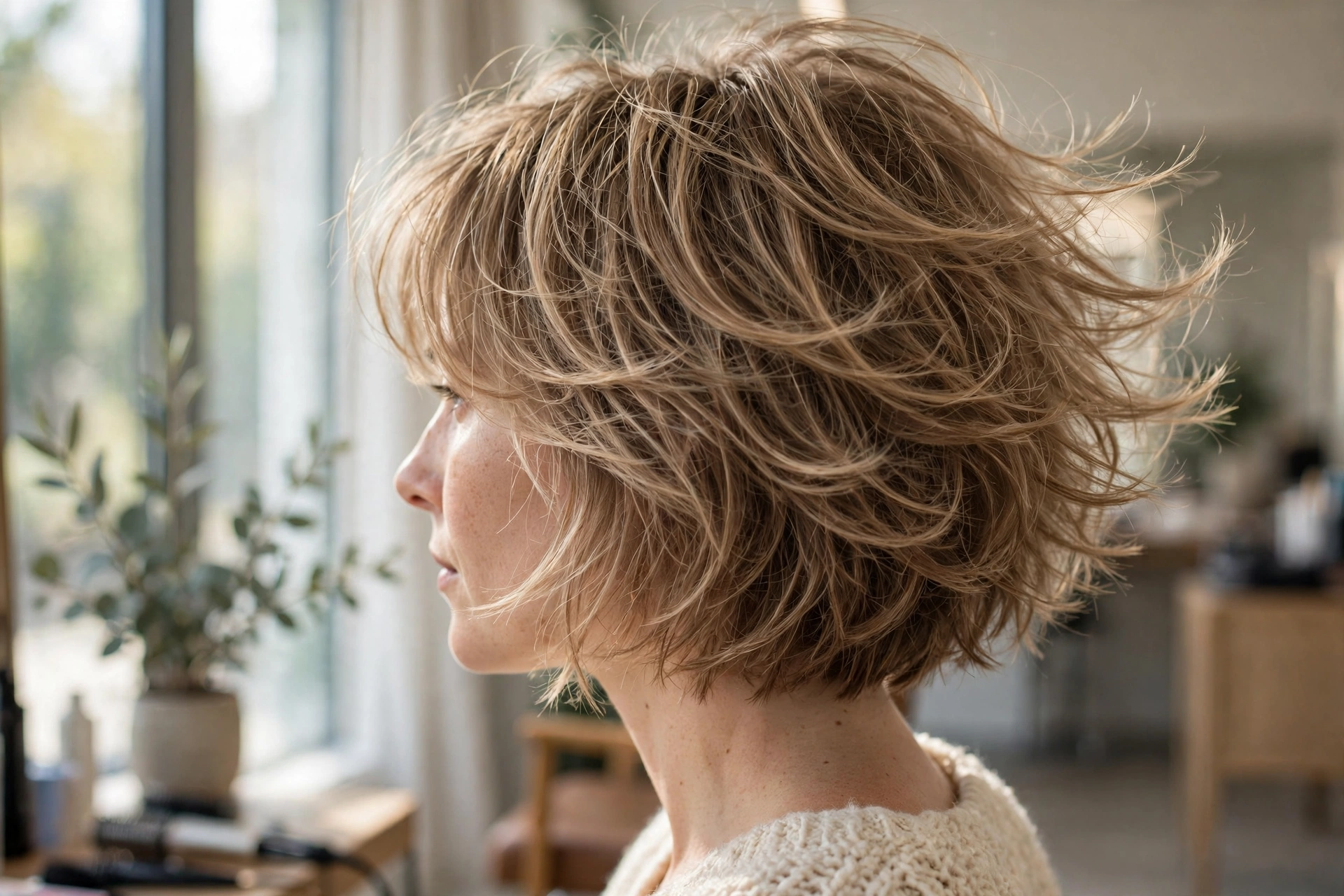
Why Thin Hair Goes Flat
Thin hair looks flat for a few simple reasons, and none of them are your fault. Each strand has a smaller diameter than thick hair, so it cannot hold itself up the way a coarse strand can. Long, one-length hair pulls downward under its own weight, flattening the roots and making the ends look wispy. Heavy conditioners, oils, and styling products coat fine strands and weigh them down further, and brushing freshly washed hair while damp can press it flat against the scalp. The fix is to choose cuts that remove weight where it drags you down and add shape where it lifts you up, then support that shape with lightweight products and a drying routine that gives the roots a head start.
Volume-Boosting Bobs & Lobs
Bobs are the most reliable hairstyles for thin hair, because a shorter length removes the weight that pulls fine hair flat. When the ends sit at or above the shoulders, the hair springs upward and the outline looks thicker.
1. The Blunt Bob
The blunt bob is cut straight across at one length, usually between chin and shoulders, with no layering at the ends. Because every strand ends at the same point, the bottom edge looks thick and solid rather than wispy. Styling tip: blow-dry with a round brush, turning the ends slightly under, to keep the edge crisp and full.
2. The Airy Layered Bob
The airy layered bob keeps the blunt outline but adds soft, invisible layers through the mid-lengths. The hair looks light and bouncy, while the solid perimeter keeps the ends looking full. Styling tip: scrunch in a little mousse while the hair is damp, then diffuse on low heat for airy movement.
3. The Italian Bob
The Italian bob is a chunky, chin-to-neck-length bob with a gently curved shape and softly bevelled ends. Its retro feel and rounded outline give fine hair a plush, cushioned look. Styling tip: use a large round brush to roll the ends under as you dry, building that signature rounded silhouette.
4. The Graduated Bob
The graduated bob is shorter at the back and gradually longer toward the front, which stacks volume at the crown and the nape. That stacked shape creates height exactly where fine hair tends to go flat. Styling tip: apply root-lift spray at the crown, and dry the back sections upward with a small round brush.
5. The Hydro-Bob
The hydro-bob is a sleek, wet-look bob styled to look freshly towel-dried, with a glossy, piecey finish. The piecey texture breaks fine hair into defined sections, so it reads as intentional and full rather than limp. Styling tip: work a pea-sized amount of lightweight gel through damp hair, comb it into place, and let it air-dry.
Pixies & Short Cuts
Short cuts are a secret weapon for thin hair: with little length to weigh the roots down, the hair stands up and holds texture far more easily.
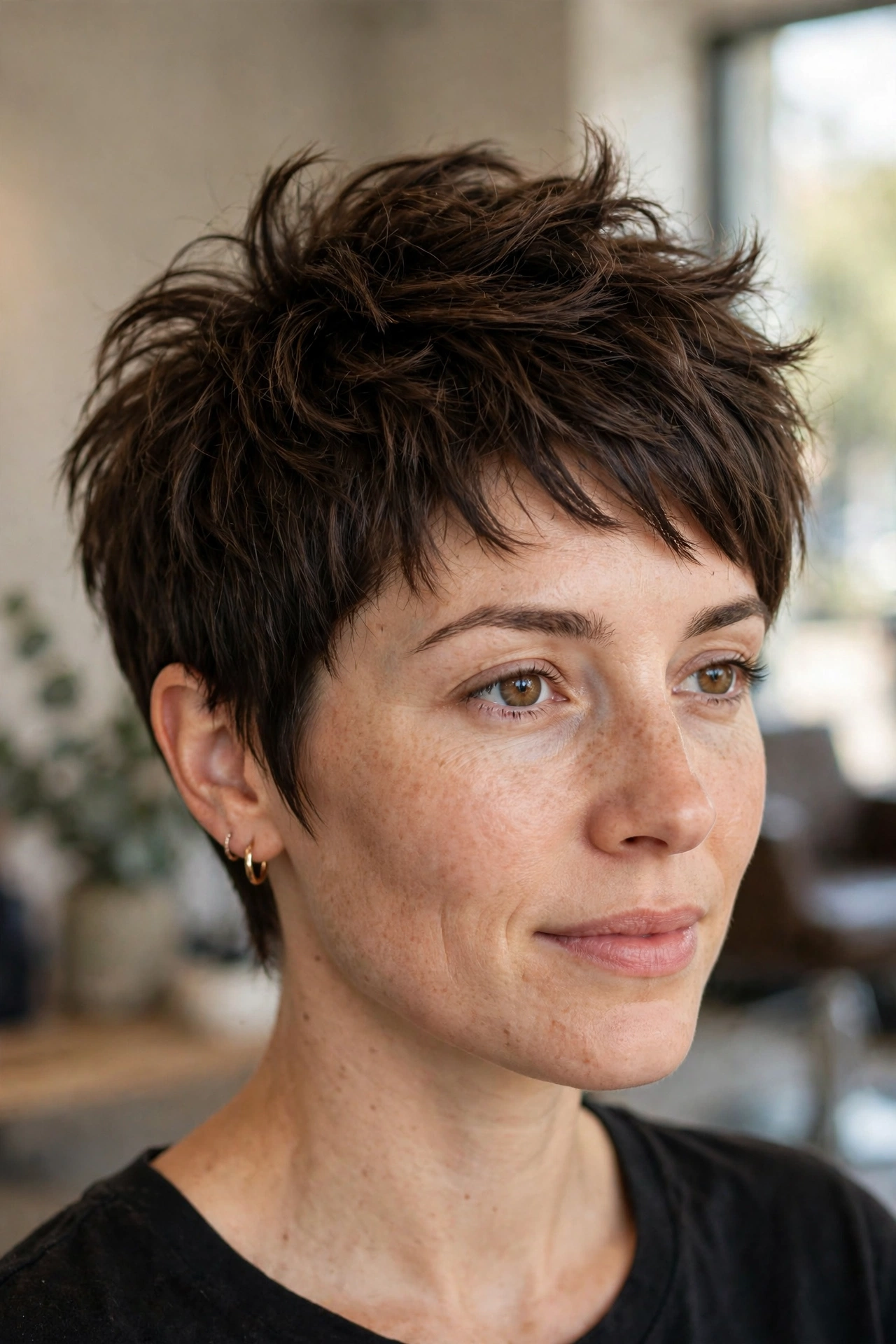
6. The Textured Pixie
The textured pixie is cut short on the sides and back with choppy, piecey layers on top. Those pieces catch the light and create the impression of many more strands. Styling tip: rub a tiny amount of matte styling paste between your fingertips and pinch the top layers into place.
7. The Pixie Bob (Bixie)
The pixie bob, affectionately called the bixie, sits between a pixie and a bob, with soft length around the ears and a longer, feathered top. It gives you the lift of a pixie with the softness of a bob, and grows out gracefully. Styling tip: blow-dry the top forward and upward with your fingers, then shake it out for soft volume.
8. The Feathered Pixie
The feathered pixie uses long, wispy, feathered layers that sweep softly in one direction, giving fine hair a light, airy finish. The feathers create gentle movement that stops the cut looking severe. Styling tip: use a little lightweight cream on the feathered ends, and avoid heavy waxes that clump fine strands together.
9. The Crown-Lift Pixie
The crown-lift pixie keeps extra length and layering right at the crown, where thin hair needs height most. The added layers give the style a built-in lift, so it looks full from every angle, even on second-day hair. Styling tip: backcomb the crown very gently with a fine-tooth comb, then smooth the top layer over it.
Layers & Shags
Layers add movement to thin hair, but the type of layer matters enormously. Heavy, chunky layers can leave fine hair looking stringy, while soft, well-placed layers create bounce without sacrificing density.
10. Butterfly Layers
Butterfly layers feature shorter layers around the face that blend into longer layers through the back, so the hair fans out softly like wings when it moves. The face-framing pieces lift the front, while the longer back keeps your length. Styling tip: blow-dry the face-framing layers away from your face with a round brush to maximise the bounce.
11. Ghost Layers
Ghost layers are hidden layers cut underneath the top layer of hair, so the surface looks smooth and one-length while the inside has invisible lift. They are ideal if you love long, sleek hair but want it fuller. Styling tip: flip your head upside down while blow-drying the roots, then flip back up and smooth the top layer.
12. The Textured Shag
The textured shag mixes choppy layers, a tousled finish, and plenty of movement through the mid-lengths and ends. Its deliberate messiness reads as fullness, and the layers stop the hair hanging in one flat sheet. Styling tip: spray a little salt-free texturising spray through the mid-lengths, scrunch, and let it air-dry.
13. Face-Framing Layers
Face-framing layers are shorter pieces cut around the face, starting at the cheekbones or chin, that blend into the rest of the hair. They lift the front of the style and give thin hair instant shape without a dramatic cut. Styling tip: curl the face-framing pieces away from your face with a medium barrel, then brush through gently for soft waves.
Bangs That Lift
Bangs are one of the quickest ways to change how full your hair looks, because they add a whole new section of hair across the forehead. Keep bangs light and feathery rather than heavy and blunt, so they look airy instead of sparse.
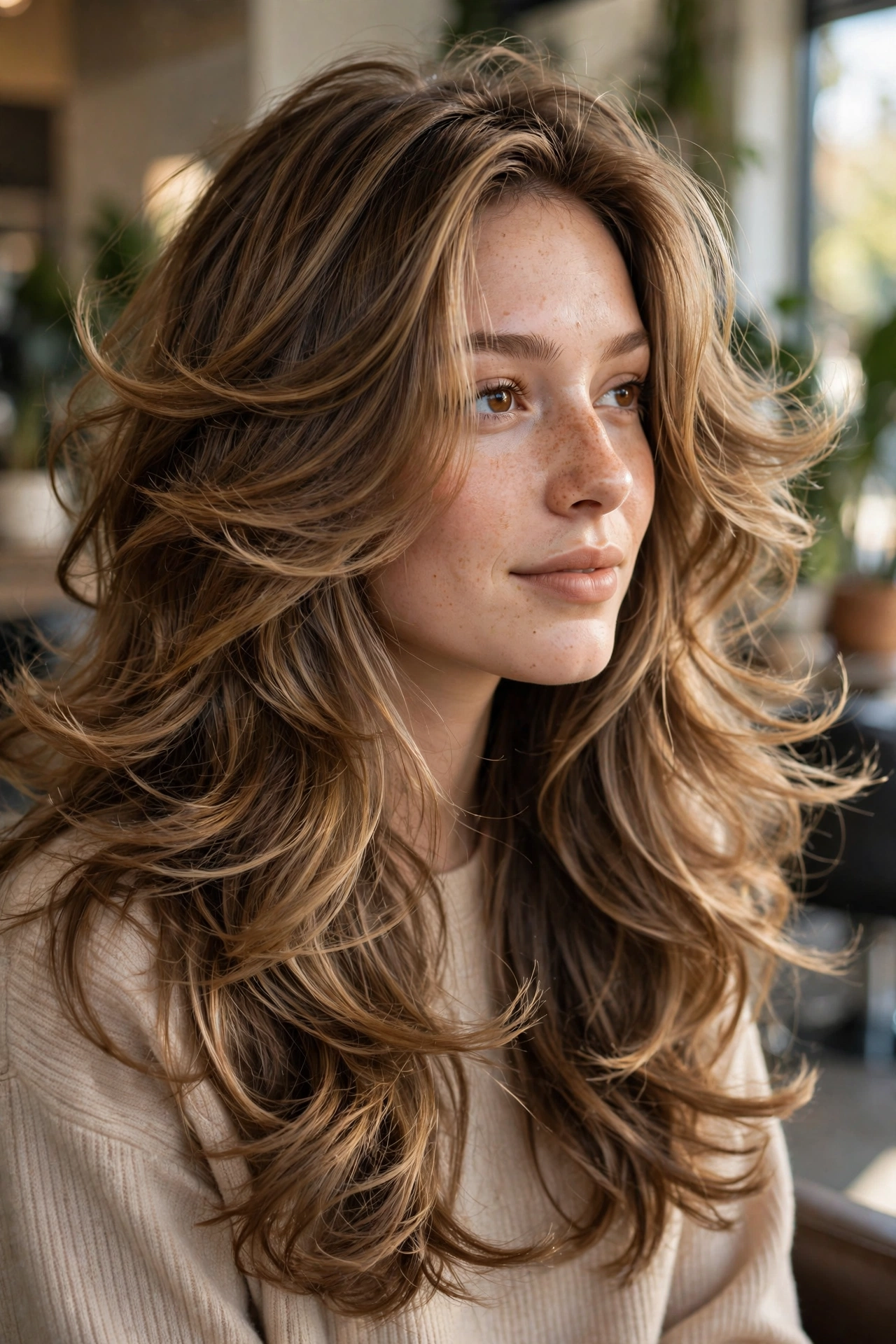
14. Wispy Bangs
Wispy bangs are light, feathered, and slightly see-through, with fine strands falling softly across the forehead. Because they are not cut too thick, they never look stringy, and the airy texture keeps the style feeling fresh. Styling tip: blow-dry wispy bangs with a small round brush, rolling them gently under, and keep them off heavy serums.
15. Curtain Bangs
Curtain bangs part in the middle and sweep to either side, framing the face like curtains. They add volume around the face, blend easily into layers, and grow out without an awkward phase. Styling tip: dry curtain bangs with a round brush, rolling each side away from the centre parting.
16. Choppy Bangs
Choppy bangs are cut with uneven, textured ends that give a playful, piecey finish. The choppy texture breaks the forehead line into small sections, making fine hair look fuller than a straight-across bang would. Styling tip: use a tiny amount of styling paste on the ends only, pinching the pieces apart.
Easy Everyday Styles
You do not need a salon visit to make thin hair look fuller. These everyday styles use simple techniques – a different parting, a little backcombing, a clever twist – for volume in minutes.
17. The Root-Lift Blowout
The root-lift blowout is a bouncy, salon-style finish you can do at home by drying the hair in sections, lifting each section up and away from the scalp as you dry it. Drying against gravity sets the roots in a lifted position while still warm. Styling tip: rough-dry until the hair is mostly dry, then switch to a round brush to lock in the lift.
18. Tousled Waves
Tousled waves are loose, imperfect waves that add width and movement to fine hair without needing tight curls. Because the waves are soft and uneven, they create the illusion of thickness through the mid-lengths. Styling tip: wrap random sections around a wide barrel, alternating directions, then shake the waves out with your fingers.
19. The Half-Up Volume Style
The half-up volume style gathers the top section of hair, backcombs it gently at the crown, and pins it back while the rest hangs loose. It gives you the lift of an updo with the softness of wearing your hair down. Styling tip: tease only the underside of the top section, then smooth the top layer over it.
20. The Messy Bun With Lift
The messy bun with lift starts with a gentle backcomb at the crown, then gathers the hair loosely into a high, soft bun with a few face-framing strands left out. The looseness is the point: a tight bun flattens thin hair, while a soft, airy bun looks full. Styling tip: pull a few strands loose around the hairline after pinning the bun, and gently tug the bun wider.
21. The Side-Part Switch
The side-part switch is the simplest volume trick in this whole list: move your parting to the opposite side, or shift it a couple of inches from where it usually sits. Hair trained to lie one way will naturally lift when flipped the other way. Styling tip: set the new parting with a quick blast of cool air from the dryer.
22. Braid Tricks for Volume
Braid tricks use loose, pancaked braids to make thin hair look thicker. A loose French or Dutch braid, gently pulled wider after braiding, looks far fuller than the hair actually is. Styling tip: after braiding, tug each loop of the braid outward gently, starting from the bottom.
Party & Occasion Styles
Special occasions call for a little extra drama, and thin hair can absolutely deliver it. These three styles add height, texture, and glamour, all without extensions. If you have a celebration coming up, these 22 Halloween hairstyles that steal the party are also full of volume-friendly ideas.
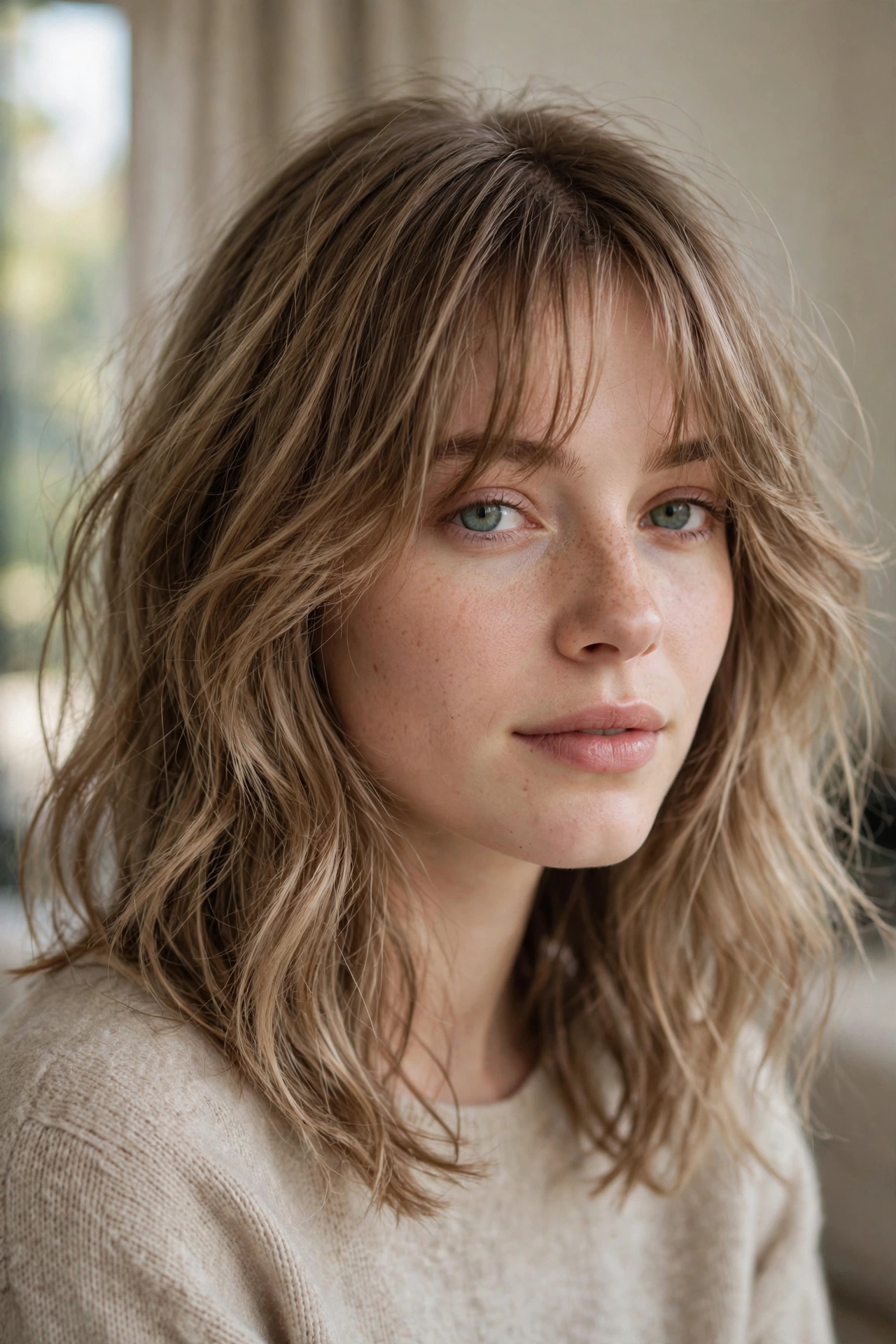
23. The Lifted Party Updo
The lifted party updo builds volume at the crown, then pins the hair up loosely, leaving soft, face-framing pieces out. The loose pinning keeps it looking soft rather than scraped back, which flatters thin hair far more than a tight, slicked style. Styling tip: backcomb the crown, pin the sides loosely, and finish with a light mist of flexible hairspray.
24. The Braided Crown With Volume
The braided crown wraps a loose, pancaked braid around the head like a halo, with the remaining hair left down or pinned softly. The widened braid reads as thick and romantic, and the crown placement adds height. Styling tip: braid loosely from the start rather than pulling a tight braid apart later.
25. The Glamorous Side Sweep
The glamorous side sweep pulls all the hair to one side with a deep side parting, then waves the lengths and pins them loosely behind one ear. Sweeping everything to one side doubles the visual density there, which makes thin hair look dramatically fuller in photos. Styling tip: set the deep side part with a clip while you style the rest, then smooth the top for a polished finish.
Your Volume Styling Toolkit
You do not need a drawer full of products to get volume. A small, well-chosen toolkit works better for thin hair, because fewer products means less weight on fine strands.
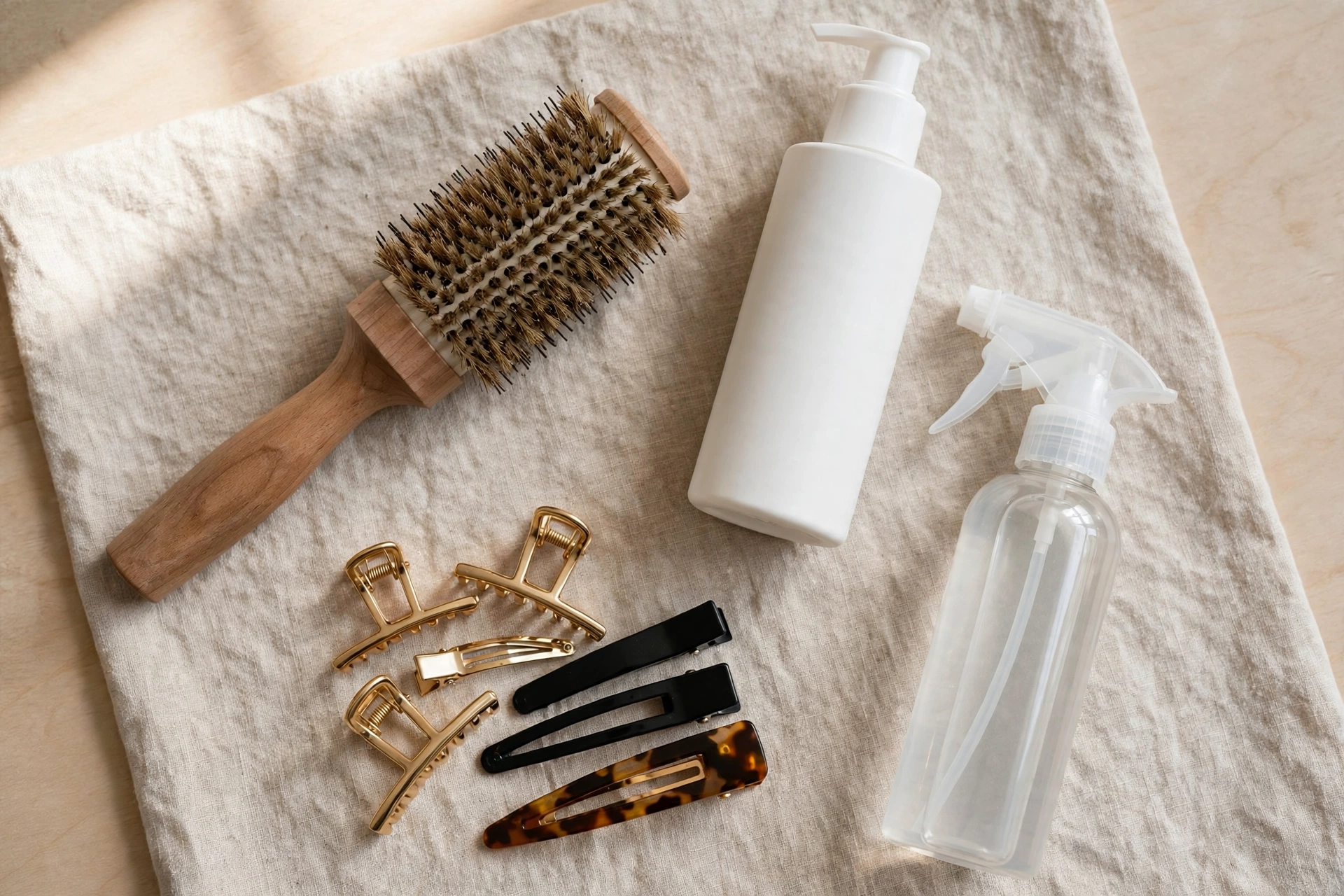
- Root-lift spray: apply to damp roots only, before blow-drying, to give the roots grip and height. Start with a light mist.
- Lightweight mousse: work a golf-ball-sized amount through damp hair from roots to mid-lengths. It adds body without the heaviness of a cream.
- Dry shampoo: spray at the roots on second-day hair to absorb oil and add grit, which helps fine hair hold its shape.
- Round brush: a medium round brush is the most useful tool for blow-drying volume. Lift each section up and away from the scalp as you dry.
- Diffuser: if your hair has any natural wave, a diffuser dries it gently while encouraging that wave, adding width and body.
- Fine-tooth comb: useful for gentle backcombing at the crown. Two or three gentle strokes are enough.
- Flexible hairspray: a light mist holds a style without freezing it in place. Avoid stiff sprays that drag fine hair down.
Healthy hair also holds a style better. If your hair feels dry as well as fine, these overnight hair masks for dry, frizzy hair can help keep it soft and manageable between styling days.
Mistakes That Make Thin Hair Look Flatter
Sometimes the biggest volume gains come from stopping a few habits that quietly flatten fine hair.
- Over-conditioning the roots: conditioner is meant for the mid-lengths and ends. Applying it at the roots coats fine strands and weighs them down.
- Using heavy oils and butters: thick oils can be wonderful on coarse hair, but on thin hair they tend to sit on the surface and flatten it. Use a tiny amount on the very ends only.
- Brushing wet hair flat: combing freshly washed hair straight down presses it against the scalp. Instead, detangle with a wide-tooth comb, then dry the roots with lift.
- Skipping heat protectant: fine hair is more vulnerable to heat damage, and damaged hair goes limp. Always use a lightweight heat protectant before styling with heat.
- One-length hair with no shape: long, one-length hair is the fastest route to flatness for thin hair. Even a few soft layers can make a visible difference.
- Too much product: layering several heavy products on fine hair almost always backfires. Start with less than you think you need.
How to Ask Your Stylist for Volume
Walking into the salon with the right words makes a real difference. Instead of asking for ‘layers’ in general, describe what you want to see: more lift at the crown, a fuller-looking outline, and ends that do not look wispy. Bring a photo of the style you like, and mention that your hair is fine.
Useful phrases: ‘I would like the ends to look blunt and full,’ ‘Could we add soft, invisible layers for movement without losing thickness?’ and ‘I want more lift at the crown without a dramatic cut.’ Ask how often the cut needs a trim – most volume-boosting cuts look best with a trim every six to eight weeks, because tidy ends always look fuller than split ones.
Frequently Asked Questions
What are the best hairstyles for thin hair?
The best hairstyles for thin hair are cuts that remove weight and add shape: blunt bobs, graduated bobs, textured pixies, butterfly layers, and ghost layers. They create the illusion of density by keeping the outline solid, adding lift at the crown, or building movement through the lengths.
Do layers make thin hair look thinner?
Layers can make thin hair look thinner if they are cut too short or too heavily, because they remove density from the ends. Soft, long layers and hidden ghost layers add movement and lift without sacrificing fullness. Ask your stylist for layers that create shape rather than remove weight.
Which hairstyles for thin hair add the most volume?
Hairstyles for thin hair that add the most volume are usually shorter styles with built-in lift, such as the graduated bob, the crown-lift pixie, and the textured shag. Among longer styles, butterfly layers and the root-lift blowout give the most noticeable volume. For instant volume without a cut, the side-part switch and half-up style are the fastest tricks.
How can I make thin hair look thicker without extensions?
You can make thin hair look thicker by choosing a cut with a solid outline, drying the roots with lift, and using lightweight products like mousse and root spray. Gentle backcombing at the crown, a deep side parting, and loose braids all add visible fullness.
Should I wash thin hair every day?
It depends on your scalp. If your roots get oily quickly, washing daily is fine, as long as you use a gentle shampoo and keep conditioner on the mid-lengths and ends only. If your hair is dry, washing every second or third day can help, and dry shampoo can refresh the style in between. Either way, avoid heavy products that weigh fine hair down.
Final Thoughts
Thin hair does not need to be a limitation. With the right cut, a light hand with products, and a few smart styling habits, fine hair can look full, bouncy, and full of life. Start with one change – a new parting, a blunt trim, a root-lift blowout – and see how much difference it makes. These 25 hairstyles for thin hair are a starting point, not a rulebook, so pick the ones that fit your life and the way you like to style your hair.