Think you know Halloween? These spooky Halloween facts might make you think again. Behind the costumes, the candy bowls, and the glowing pumpkins sits a holiday with more than two thousand years of strange history — ancient fire festivals, wandering spirits, trickster legends, Hollywood accidents, and world records that sound made up but are completely real.
Whether you are planning a party, picking a costume, or just love a good creepy story, this list is your perfect October companion. Grab a pumpkin-spiced drink, dim the lights, and work your way through all thirty. Fair warning: fact number 19 might make you look at the next full moon a little differently. And if you enjoy mind-bending trivia like this, you will love our collection of 101 fun facts that will blow your mind.
Origins & History: Spooky Halloween Facts About Where Halloween Came From
Halloween did not start with candy and costumes. It started with bonfires, harvests, and a very old belief that one night a year, the world of the living and the world of the dead stood dangerously close together.
1. Halloween is over 2,000 years old
Long before anyone said “trick or treat,” Celtic people in what is now Ireland, the United Kingdom, and northern France marked a festival called Samhain (pronounced “sow-in”). It fell around November 1, which they treated as their new year — and October 31 was the night the old year died. People believed the boundary between the living and the dead grew thin that night, so spirits could slip through.
2. The first jack-o’-lanterns were made from turnips
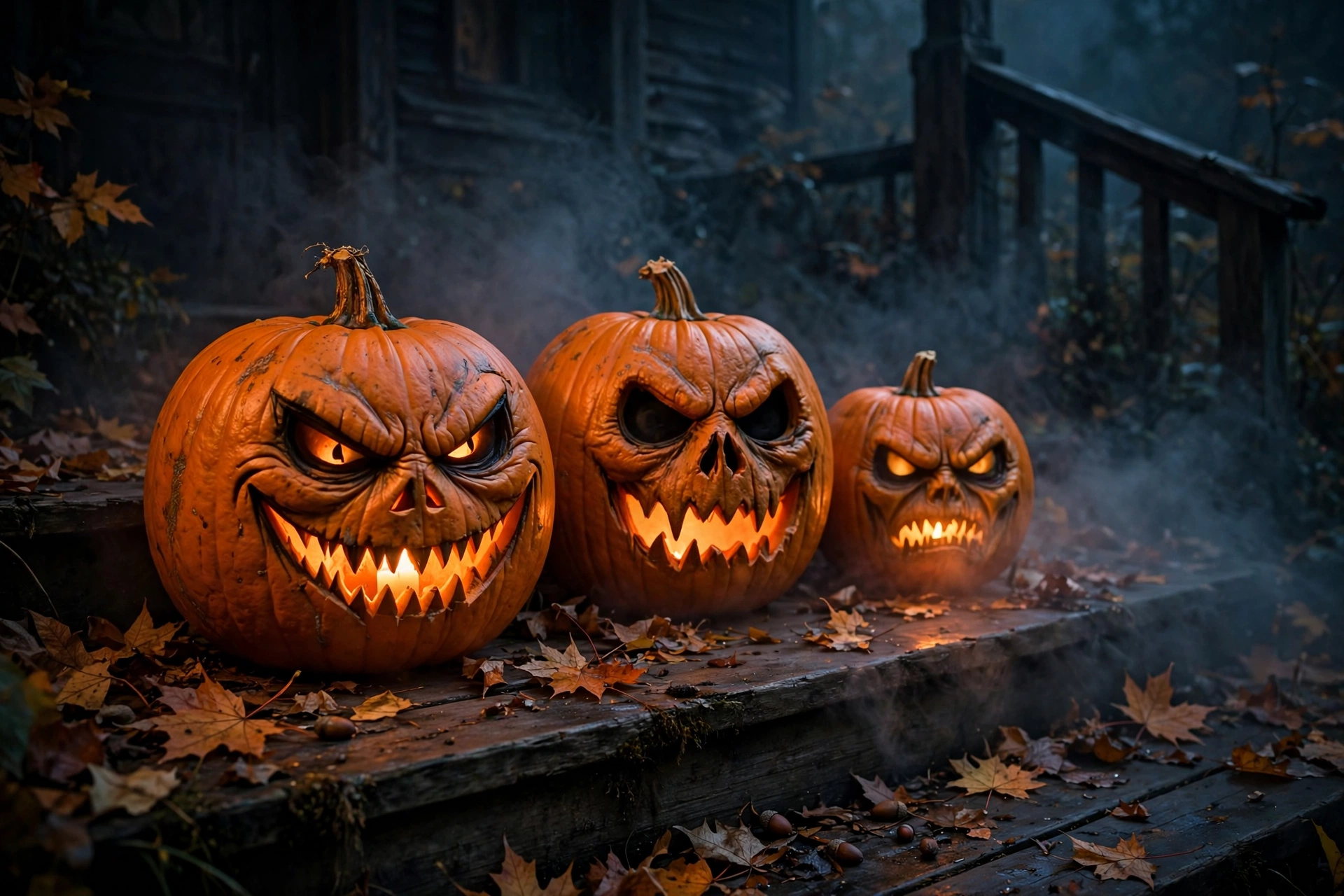
Pumpkins were not the original lantern. In Ireland and Scotland, people carved frightening faces into turnips, potatoes, and beets, then placed a small ember inside to make them glow. The idea was simple: a scary glowing face on your doorstep would frighten away wandering spirits. When Irish immigrants reached America, they found pumpkins — bigger, softer, and far easier to carve — and the pumpkin lantern was born.
3. The jack-o’-lantern is named after a man who tricked the Devil
An old Irish tale tells of a cunning fellow called Stingy Jack. The story goes that he tricked the Devil not once but twice, and as punishment, he was refused entry to both heaven and hell when he died. Condemned to wander the earth forever, he carried a single burning coal tucked inside a hollowed-out turnip to light his way. People began calling his ghostly lantern “Jack of the Lantern” — and the name stuck to every carved pumpkin that followed.
4. “Halloween” is short for “All Hallows’ Eve”
The name itself is a clue to the holiday’s layered past. November 1 is All Saints’ Day — also called All Hallows’ Day — in the Christian calendar, a day for honouring saints. The evening before it became known as All Hallows’ Eve, which over time was shortened to Hallowe’en, and eventually to Halloween. One holiday, two histories, woven together.
5. Trick-or-treating grew out of two old customs
Two medieval traditions helped shape the modern door-to-door ritual. In Britain, poor families practised “souling”: they went from house to house on All Souls’ Day offering prayers for the dead in exchange for small round cakes called soul cakes. Meanwhile, in Scotland and Ireland, children and young people went “guising” — dressing up in disguise and performing a song, a joke, or a poem in return for food or coins. Put the two together, add a century of change, and you get trick-or-treating.
6. Halloween crossed the ocean with Irish immigrants
Halloween as Americans know it owes an enormous debt to Irish immigration in the 1800s, especially during the years of the Great Famine. The newcomers brought their Samhain customs, their turnip lanterns, and their stories with them. The holiday then blended with local harvest celebrations and grew into the nationwide event it is today.
7. Costumes used to be entirely homemade
There was a time when no shop sold a ready-made Halloween costume. Families stitched their own from old sheets, scraps of fabric, and whatever was lying around the house — which is why so many vintage Halloween photos show wonderfully homemade ghosts, witches, and scarecrows. Mass-produced costumes only became common in the twentieth century, and the costume industry has never looked back.
8. Orange and black have a meaning
The classic Halloween colour pairing is no accident. Orange stands for the harvest, the autumn leaves, and the pumpkins glowing in the fields. Black stands for darkness, death, and the long nights closing in. Together, they capture the whole mood of the season: the year’s harvest ending, and winter waiting just around the corner.
Candy & Trick-or-Treating: Sweet Spooky Halloween Facts
For most kids, Halloween is really about one thing: the haul. These facts explain how candy became the currency of October 31.
9. Candy corn started life as “chicken feed”
Those little tri-coloured kernels date back to the 1880s, when a confectioner created them as a treat for farm country. Because the candy was shaped like a kernel of corn, it was first marketed as “chicken feed” — and the original boxes even carried the slogan in full. More than a century later, people still argue passionately about whether candy corn is delicious or dreadful. There seems to be no middle ground.
10. Americans spend billions on Halloween candy every year
Candy is one of the biggest pieces of Halloween spending. Each October, shoppers in the United States alone spend billions of dollars on sweets for trick-or-treaters, party bowls, and — let us be honest — for themselves. Chocolate bars remain the most popular handout, but every neighbourhood has that one house giving out toothbrushes. You know the one.
11. The phrase “trick or treat” first appeared in print in the 1920s
The words themselves are younger than the custom. The earliest known printed use of the phrase “trick or treat” dates to the 1920s, in a newspaper report from Canada. Within a few decades, the phrase had travelled across North America and become the password every costumed child shouts at the door.
12. Chocolate rules the candy bowl
Year after year, national candy surveys keep landing on a similar result: chocolate-based treats dominate the rankings. Peanut butter cups and chocolate bars regularly sit at the top of “most popular Halloween candy” lists, with fruity chews like Skittles close behind. If you want to be the most popular house on the street, chocolate is the safest bet.
13. One night’s haul can weigh several pounds
A determined trick-or-treater can come home with a bag that weighs several pounds — and a mountain of sugar to match. Dentists everywhere gently remind parents that a single evening’s collection can contain thousands of calories. The smart move, according to many parents: let the kids pick their favourites, then quietly retire the rest.
14. Halloween is America’s second-biggest commercial holiday
When you add up candy, costumes, decorations, party supplies, and haunted attractions, Halloween ranks as the second-largest commercial holiday in the United States — behind only Christmas. That is a remarkable rise for a festival that started as a Celtic harvest rite.
Creatures & Superstitions: Spooky Halloween Facts About Why We Fear Them
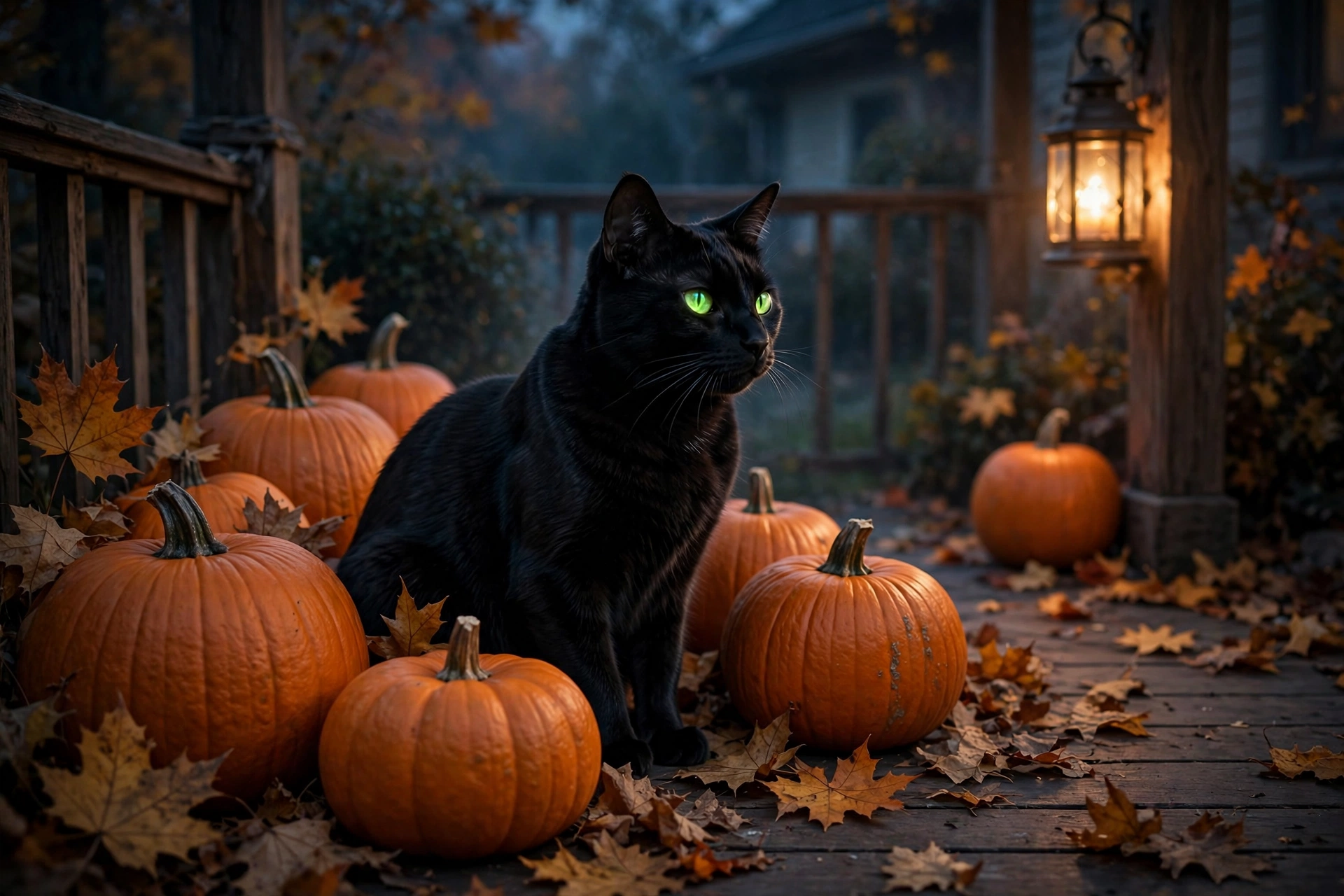
Black cats, bats, owls, and witches are Halloween staples — but each one earned its spooky reputation for a reason.
15. Black cats are lucky in some places — and unlucky in others
In the United States, a black cat crossing your path is widely treated as bad luck, a belief that traces back to medieval Europe, where black cats were associated with witches and dark magic. But cross the Atlantic and the story flips: in Scotland and parts of England, a black cat arriving at your door is considered good luck. Some animal shelters even report fewer black cat adoptions around Halloween — a sad side effect of the superstition.
16. Bats got their spooky image from bonfires and vampires
Bats are the only mammals that can truly fly, and their night-time habits made them easy targets for suspicion. Old Samhain bonfires attracted insects, which attracted bats — so the creatures were often seen circling the flames on the very night spirits were said to walk. Centuries later, vampire stories sealed the connection. In reality, most bats are shy, gentle, and very useful: a single bat can eat thousands of insects in one night.
17. Owls were once seen as omens of death
The owl’s eerie night-time call made it a creature of dread in ancient Rome, where hearing one was considered a dark omen. Yet in ancient Greece, the owl carried the opposite meaning: it was linked to Athena, the goddess of wisdom, and became a symbol of knowledge. Same bird, two completely different reputations — which only makes owls more fascinating.
18. The green-skinned witch came from Hollywood
Witches in folklore were not originally green. That now-iconic look arrived with the 1939 film The Wizard of Oz, whose Wicked Witch of the West appeared with green skin — and the image was so powerful that it permanently rewrote how witches are drawn, costumed, and imagined. Before that film, witches in stories were usually described as ordinary-looking people. If you are hunting for costume ideas, our 22 Halloween hairstyles can help you finish the look.
19. A full moon on Halloween is rare — it happens roughly every 19 years
Because the lunar cycle and the calendar do not line up neatly, a full moon landing exactly on October 31 is an uncommon treat. It happens roughly once every 19 years, following a pattern astronomers call the Metonic cycle. The most recent one, in 2020, gave the whole world a rare blue-tinted Halloween moon. If you missed it, the next one will be worth the wait.
20. Spiders were once thought to carry messages from the spirit world
In old folklore, finding a spider in your home was not just creepy — it was meaningful. Some traditions held that a spider dropping onto a candle or a lamp meant a spirit was nearby, watching over the household. Other tales said spiders were the souls of loved ones, quietly checking in. Either way, our eight-legged neighbours earned their Halloween decorations.
21. Celtic legend tells of a fairy cat
Before black cats became Halloween icons, Celtic folklore already had a supernatural feline: the Cat Sìth, a large fairy cat said to roam the Scottish Highlands. On Samhain night, people left a saucer of milk outside to keep the fairy cat friendly — and to keep it from stealing a soul. The habit of leaving out treats on the scariest night of the year may be older than we think.
Movies & Pop Culture: Spooky Halloween Facts From the Big Screen
No holiday owns its movie genre the way Halloween does. These are the stories behind some of the season’s most famous films.
22. Harry Houdini died on Halloween night
The world’s most famous escape artist died on October 31, 1926. The popular story says a punch to the stomach ruptured his appendix, though the real medical picture was more complicated. The date alone was enough to cement the legend: the man who spent his life escaping impossible situations died on the one night the year when the impossible is supposed to happen.
23. Michael Myers’ mask was a painted Captain Kirk mask
One of horror’s most terrifying faces began life as a piece of bargain-bin Star Trek merchandise. For John Carpenter’s 1978 film Halloween, the production team bought a cheap rubber mask of Captain Kirk — the face of actor William Shatner — widened the eye holes, painted it ghostly white, and teased the hair. The result was so blank and unsettling that it became the most famous mask in horror history. Shatner himself has said he is flattered.
24. “Hocus Pocus” flopped in cinemas — then became a classic
When the Sanderson sisters first hit the big screen in 1993, the film underperformed at the box office and critics were lukewarm. Then television reruns did their magic. Year after year, October airings turned Hocus Pocus into a beloved ritual, and it eventually earned a long-awaited sequel. Proof that some spells take a while to work.
25. “It’s the Great Pumpkin, Charlie Brown” first aired in 1966
For generations of viewers, October is not complete without Linus waiting in the pumpkin patch. The beloved television special premiered in 1966 and has been an annual tradition ever since — proof that the sincerest pumpkin patch of all is a state of mind.
26. The original “Halloween” was made on a tiny budget
John Carpenter’s 1978 Halloween was reportedly shot for only a few hundred thousand dollars — pocket change even by the standards of its day. It went on to become one of the most profitable independent films ever made, and it effectively created the template for the modern slasher movie. Not bad for a film shot in spring, with fake autumn leaves scattered on California streets.
Weird & Wonderful: Records, Phobias, and Halloween Capitals
We finish with the facts that sound fake — but are not.
27. The heaviest pumpkin ever grown weighed more than 2,700 pounds
Competitive pumpkin growing is a serious hobby, and the world record pumpkin weighed in at over 2,700 pounds — heavier than a small car. Growers spend months tending a single fruit with enormous vines, careful watering, and a great deal of patience. Carving that one would take more than an evening.
28. There is an actual phobia of Halloween
For some people, Halloween dread is not fun — it is clinical. Samhainophobia is the name for an intense, persistent fear of Halloween, its imagery, and its celebrations. It sits at the far end of a very normal spectrum: a little shiver at a haunted house is fun, but a genuine phobia is something else entirely.
29. Two towns claim the title “Halloween Capital of the World”
Salem, Massachusetts — famous for its 1692 witch trials — draws enormous Halloween crowds every October. But Anoka, Minnesota also claims the crown, and it has a strong case: the town staged what is believed to be the first Halloween parade in 1920, as a way to steer young people away from pranks and toward celebration. Both towns, in their own way, earned the title.
30. Tens of thousands of jack-o’-lanterns have been lit in one place
The town of Keene, New Hampshire has repeatedly set world records for the most lit jack-o’-lanterns displayed in a single location — with counts running into the tens of thousands. Imagine standing in front of a wall of glowing faces stretching as far as you can see. Now imagine carving them all. That is dedication. Speaking of carving and creativity, if pumpkins have inspired you to get crafty this season, check out our 25 Halloween nail ideas for spooky-cute looks you can actually wear.
Frequently Asked Questions
Why is Halloween celebrated on October 31?
October 31 is the eve of All Saints’ Day (November 1), and it lines up with the ancient Celtic festival of Samhain, which marked the end of the harvest and the start of the dark half of the year. The date survived more than two thousand years of history with its spooky reputation intact.
Why do we carve pumpkins on Halloween?
The tradition comes from the Irish legend of Stingy Jack and the older practice of carving faces into turnips to frighten away evil spirits. Irish immigrants to America swapped turnips for pumpkins because they were larger and easier to carve, and the jack-o’-lantern was born.
What is the most popular Halloween candy?
Surveys consistently put chocolate at the top. Peanut butter cups and classic chocolate bars usually lead the rankings, with fruity chews like Skittles close behind. The exact winner shifts a little each year, but chocolate almost always wins.
Is Halloween a religious holiday?
Not anymore — for most people, Halloween is a secular celebration built on layers of older traditions. It has roots in the Celtic festival of Samhain and links to the Christian observances of All Saints’ Day and All Souls’ Day, but today it is celebrated as a community and family holiday centred on costumes, candy, and fun.
What is the fear of Halloween called?
An intense fear of Halloween is called samhainophobia, named after the ancient festival of Samhain. It is a real, recognised specific phobia — very different from the enjoyable shiver of a haunted house.
The Final Treat
So there you have it — thirty spooky Halloween facts spanning ancient festivals, candy history, Hollywood accidents, and world records. Which one surprised you the most? Was it the turnip lanterns, the painted Captain Kirk mask, or the fairy cat that wanted a saucer of milk?
Tell us your favourite in the comments, share this list with your Halloween-obsessed friends, and come back to Time Zango all October long for more seasonal ideas, costumes, and creepy-good inspiration. Happy Halloween — and watch out for black cats.