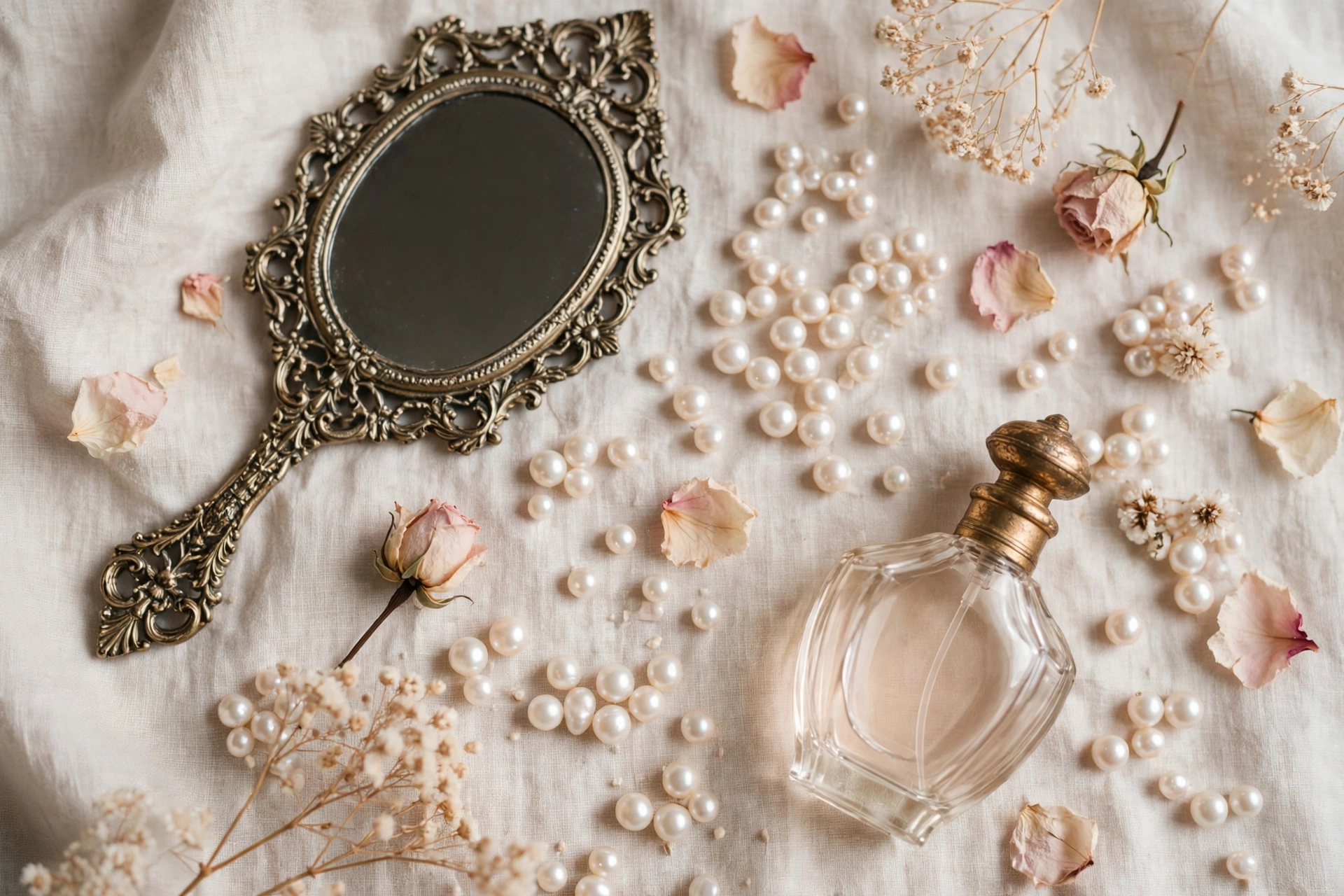
Every few years, the beauty world announces a “brand-new” trend, and every few years, history quietly clears its throat. Because if you dig into beauty rituals from centuries past, you start to realize that almost nothing on your vanity table is actually new. We are, in many ways, just repeating what our great-great-grandmothers did — with better lighting and ring lights. These beauty practices from the past keep resurfacing because the underlying desires — status, smoothness, glow — never went away.
From nails that would make a modern influencer jealous to skincare ingredients that sound more like pranks than serums, the past is full of beauty habits that were once considered perfectly normal. Here are five of the strangest — and most surprisingly relevant — old beauty practices that have clawed their way back into fashion.
1. Super-Long Nails: The Imperial Status Symbol
Long before stiletto acrylics ruled the salon, extreme nail length was the ultimate flex of the elite. According to historical accounts, noblewomen in imperial China grew their fingernails several inches long as a visible signal that they never had to lift a finger for manual work. Some even wore ornate gold and jade nail guards to protect their prized talons.
Fast-forward to today, and ultra-long nails are everywhere again — on red carpets, in music videos, and all over your social feed. The modern version is less about proving you are royalty and more about pure self-expression: coffin shapes, chrome finishes, hand-painted art. The motivation changed, but the message is the same: look at me. Super-long nails are the flashiest of these beauty practices from the past. And if dramatic length is not quite your thing, there are plenty of chic short nail designs that instantly elevate your look without getting in the way of your keyboard.
2. Facial Hair Removal: A 4,000-Year Obsession
Humans have been at war with unwanted facial hair for millennia. Ancient Egyptians reportedly used a sticky paste of sugar, lemon, and water — an early version of sugaring that is still popular today. During the Renaissance, fashionable women reportedly plucked their hairlines to create high, noble-looking foreheads. And in the Victorian era, some depilatory creams contained genuinely alarming chemicals, a reminder that the quest for smooth skin has not always been kind.
Today’s revival looks gentler but follows the same impulse. Facial hair removal may be the oldest of all beauty practices from the past still in daily use. Dermaplaning — shaving the fine hairs off the face for glassy-smooth makeup application — is a booming salon service, and threading remains one of the most precise hair removal methods around. Before booking any treatment, though, it is worth doing your homework: some modern beauty procedures may be more harmful than useful, and knowing which is which can save your skin, literally.

3. Snail Mucin: From Ancient Remedy to K-Beauty Superstar
Yes, snail slime. Bear with us. Legend has it that the healing properties of snail mucus were noticed as far back as ancient Greece, where crushed snails were reportedly applied to soothe irritated skin. Whether or not the ancient version actually worked is lost to history, but the idea refused to die.
The modern comeback started with a much-cited story about Chilean snail farmers who noticed their hands looked remarkably smooth and youthful despite hard outdoor labor. Korean skincare brands seized on the concept, and today snail mucin serums are a staple of K-beauty routines worldwide. Modern formulations filter and process the mucin into clean, stable products — a far cry from rubbing a garden snail on your cheek — and fans swear by the plumping, hydrating glow it delivers. Snail mucin is the strangest-sounding of the beauty practices from the past — and the one with the most modern science behind it.
4. False Eyelashes: From Victorian Wigmakers to Your Makeup Bag
Dramatic lashes feel like a thoroughly modern invention, but the idea is surprisingly old. According to historical accounts, 19th-century wigmakers and hairdressers experimented with sewing strands of hair through the eyelids — a procedure that sounds about as fun as it reads. The modern strip lash arrived in the early film era, when a wig-maker created the first false eyelashes for a silent movie star who wanted her eyes to pop on camera.
Today’s lash scene is a full industry: strip lashes for nights out, cluster lashes, salon extensions, and lash lifts that curl your natural lashes into submission. The goal has not changed in over a century — bigger, bolder eyes. False eyelashes show how beauty practices from the past evolve: the goal stayed the same, the method got safer. Just remember that little things add up over time, much like the everyday beauty mistakes that can secretly ruin your look, so go easy on the glue and give your natural lashes regular breaks.
5. Freshwater Sponge Powder: The “Badyaga” Facial, Reborn
This one comes from old Eastern European folk medicine. Badyaga is a powder made from dried freshwater sponges, and it was traditionally mixed into pastes and applied to the skin. The reason it tingles? The sponge contains microscopic needle-like structures called spicules, which gently irritate the skin and reportedly stimulate circulation and renewal.
Science-minded beauty brands have now repackaged the concept as “spicule” or “micro-spicule” skincare — serums and creams containing tiny mineral or marine-derived particles that mimic a gentle microdermabrasion effect. The modern versions are standardized and tested, which matters a lot, because the original folk remedy was famously not for the faint of heart. This is one comeback where the 21st-century upgrade is definitely the version to try. The badyaga facial is the one entry among these beauty practices from the past where the modern version is clearly the one to try.
Fashion is famously cyclical, and beauty is no exception. What was once the height of elegance becomes a punchline, then a vintage curiosity, and then — suddenly — a bestseller again. If any of these beauty practices from the past tempt you, do your research and consult a dermatologist or beauty specialist before trying them, because what worked (or was merely tolerated) centuries ago is not automatically safe today. The past gave us the ideas; modern science should give us the guardrails.
Frequently Asked Questions
Are these historical beauty practices safe to try today?
Not all of them, at least not in their original form. Victorian depilatories and sponge-powder facials were harsh by any standard. Stick to modern, tested versions of these trends, and check with a dermatologist first — especially if you have sensitive skin.
Which of these old trends actually has science behind it?
Among these beauty practices from the past, snail mucin is the strongest contender: studies suggest it contains hydrating and skin-supporting compounds like hyaluronic acid and glycolic acid. Micro-spicule cosmetics also have a plausible mechanism. The rest — long nails, lashes, hair removal — are about aesthetics, not biology.
Why do ancient beauty trends keep coming back?
Beauty moves in cycles. Social media constantly rediscovers old rituals, repackages them with better technology and prettier packaging, and sells them to a new generation. Plus, there is something irresistible about a beauty secret that feels both ancient and exclusive.