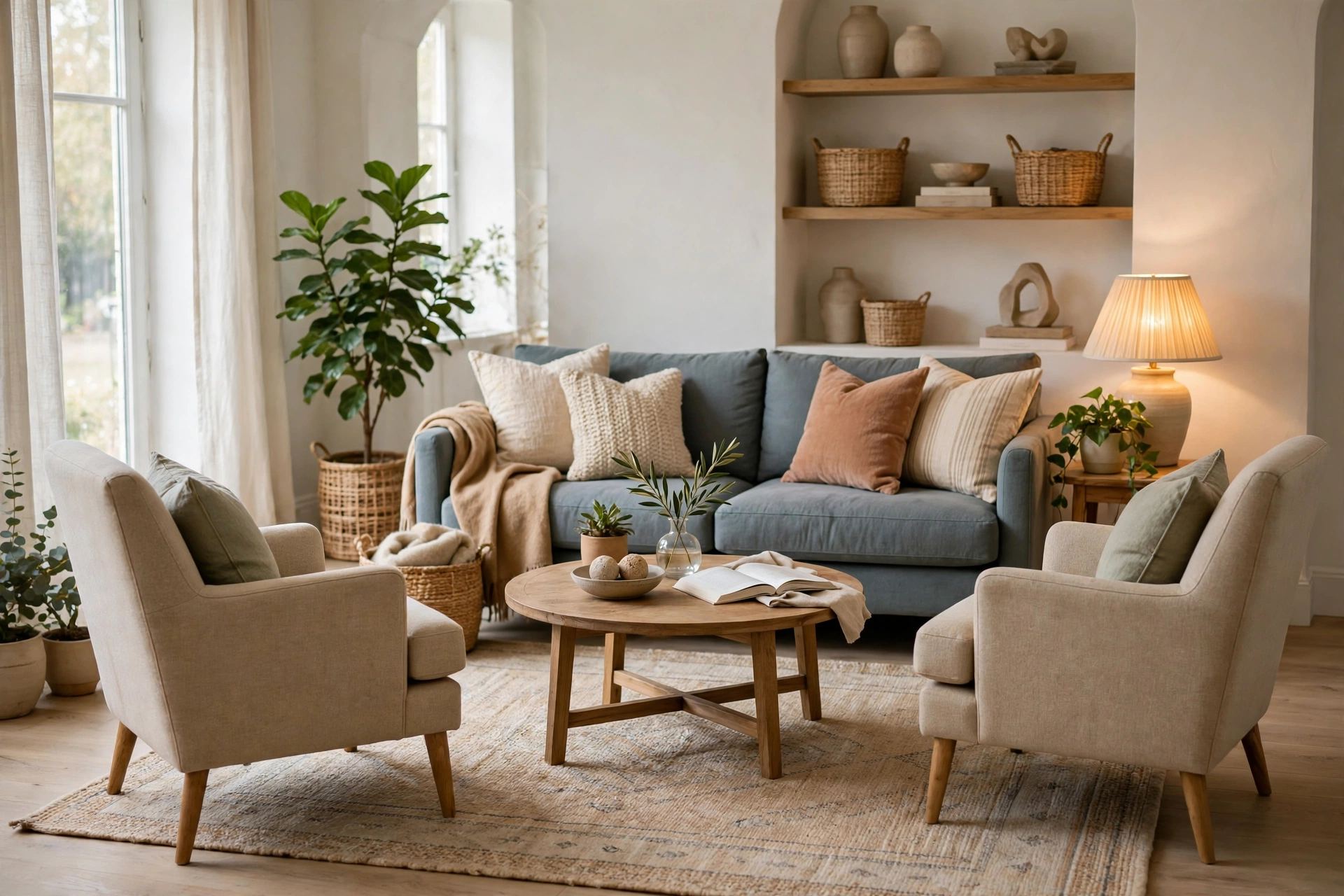
Buying furniture feels exciting — until the new sofa blocks the doorway or the “perfect” coffee table looks lost in your living room. Almost everyone has made one expensive furniture blunder, and the real cost is not just money: the wrong piece can throw off an entire room for years. The furniture shopping mistakes below are the ones designers see most often — and each one is easy to dodge with a little planning.
The good news is that nearly every furniture shopping mistake is avoidable with a little planning. Below are the mistakes people make most often — and exactly how to dodge each one. If you want the wider picture, our roundup of common interior design mistakes covers what can go wrong beyond the furniture itself.
1. Buying Without Measuring First
The number-one blunder is also the simplest: falling in love with a piece without checking whether it fits. Showroom floors are enormous, so everything looks smaller there — then the “compact” sectional swallows your whole lounge. Measure the room first: length, width and ceiling height, plus every doorway and stairwell the piece must travel through. Keep the numbers in your phone, and tape the outline on the floor with painter’s tape. If it feels wrong on the floor, it will feel wrong in the room. Skipping the tape measure is the most expensive of all furniture shopping mistakes.
2. Blocking Walkways and Natural Flow
A beautiful chair is no good if you have to sidle past it like an obstacle course. Good rooms have invisible highways: leave roughly 75 to 90 centimetres of clear passage on main walkways, and at least 45 centimetres between a sofa and the coffee table so legs have somewhere to go. Before buying, walk your daily routes — bed to bathroom, sofa to kitchen — and make sure no new piece sits on them. People rarely trip over bad style; they trip over bad placement.
3. Buying the Full Matching Set
Matching bedroom or living-room sets look tempting in the showroom, but they often make a home feel like a furniture catalogue — flat and impersonal. Real character comes from mixing pieces that share a thread: a common wood tone, a repeated metal finish, or a palette that flows between them. Buy the anchor piece first, usually the sofa or the bed, then layer in side tables, chairs and storage from different ranges that harmonise with it. You get a room with personality, and it is easier on the budget too. Buying the full matching set is one of those furniture shopping mistakes that looks fine on delivery day and dated within a year.
4. Chasing Trends That Will Not Last
Velvet everything, ultra-curvy sofas, the colour of the moment — trends are fun, but a sofa is a five-to-ten-year commitment. If the style dies in eighteen months, you are stuck with an expensive regret. The fix is simple: keep big, pricey pieces timeless and neutral, and let trends live in the cheap, swappable stuff — cushions, throws, art, a side chair. That way you can refresh the look for a fraction of the cost whenever tastes shift.

5. Choosing Looks Over Comfort
That sculptural chair looks incredible in photos, but will your back forgive you after a film night? Furniture is used, not just looked at. Always sit before you buy: test the seat depth, back angle and arm height, and check whether your feet touch the floor. When shopping online, read comfort reviews carefully and check the return policy. A stunning chair nobody sits on is just an expensive sculpture — and your guests notice the difference immediately. Choosing looks over comfort is among the furniture shopping mistakes people only discover after the return window closes.
6. Getting Colour Wrong and Ignoring Your Light
A fabric swatch that looked rich grey under showroom spotlights can turn blue, green or dull in your home’s natural light. Always bring swatches home and study them in daylight, evening lamplight and shade before committing — the same goes for wood finishes and lacquers. Watch your palette balance too: too many competing colours feel chaotic, while one flat colour everywhere feels lifeless. Pick a base, one or two supporting tones and a single accent, then repeat them so the room feels intentional. Getting colour wrong under your own light is one of the quietest furniture shopping mistakes.
7. Forgetting Texture and Visual Weight
A room furnished entirely in smooth, similar materials — glossy wood, flat cotton, sleek metal — can feel cold even when the colours are warm. Mix textures instead: pair linen with velvet, rough jute with smooth leather, matte with a touch of shine. Mind visual weight as well: a chunky dark bookcase needs something equally solid nearby, or the room feels lopsided. Balance heavy pieces with other strong items, and let airy, leggy furniture breathe beside them.
8. Leaving the Room Without Balance or a Focal Point
Every room needs a place for the eye to land — a fireplace, a bold headboard, a striking art piece, even a beautifully styled bookshelf. Without a focal point, furniture drifts and the eye has nowhere to rest. Arrange seating to face or frame that anchor, then build balance around it: matching lamps, paired side tables or balanced art create calm. Perfect symmetry is not required, but a rough visual balance stops the room feeling accidentally messy.
9. Cramming Too Much Into the Space
Fewer, better pieces almost always win. Overstuffed rooms feel cramped and are harder to clean, move through and enjoy, so edit ruthlessly: if two pieces do the same job, keep the better one. The same applies to the rug — the classic error is a rug so small it floats in the middle of the floor. The front legs of sofas and chairs should sit on the rug, and for living rooms bigger is almost always better. Cramming too much in and choosing a too-small rug are two furniture shopping mistakes that often arrive together. If a room still feels crowded, these stylish organisation ideas for a neat space can help you reclaim it.
10. Fighting the Architecture, Skipping Customisation and Forgetting Accessories
Work with what the room gives you: do not push a tall unit against a low sloped ceiling or hide a beautiful window behind a wardrobe. Measure alcoves and awkward corners — many retailers offer custom sizes, leg finishes and fabric upgrades for a modest premium, and one made-to-fit piece can solve what three standard ones cannot. Finally, do not stop at the big items: curtains, cushions, throws, lamps and plants are what make furniture feel like home. Fighting the architecture rounds out the list of furniture shopping mistakes worth planning around. Keep roughly ten to fifteen percent of your budget for these finishing touches.
Every one of these furniture shopping mistakes shares one root cause: buying pieces instead of planning rooms. Measure first, prioritise comfort, keep big items timeless, and let the room’s light, flow and architecture guide you. Do it right once and you will enjoy the result every day. And if the budget feels tight, these home decor styling tips on a budget prove you do not need to spend big to get it right.
Frequently Asked Questions
What is the biggest mistake when buying furniture?
The biggest of all furniture shopping mistakes is buying without measuring. Record the room dimensions, doorways and stairwells before you shop — a taped outline on the floor reveals sizing problems before you spend a penny.
Should I buy furniture as a matching set?
Usually not. Sets look flat and catalogue-like; instead, choose an anchor piece first and add coordinating items that share a finish, tone or style thread for a room with real character.
How do I avoid buying furniture I will regret?
Keep expensive pieces neutral and timeless, test comfort in person, view fabrics in your own light, and put trends into cheap, swappable accessories. A generous return policy is your safety net against the costliest furniture shopping mistakes.