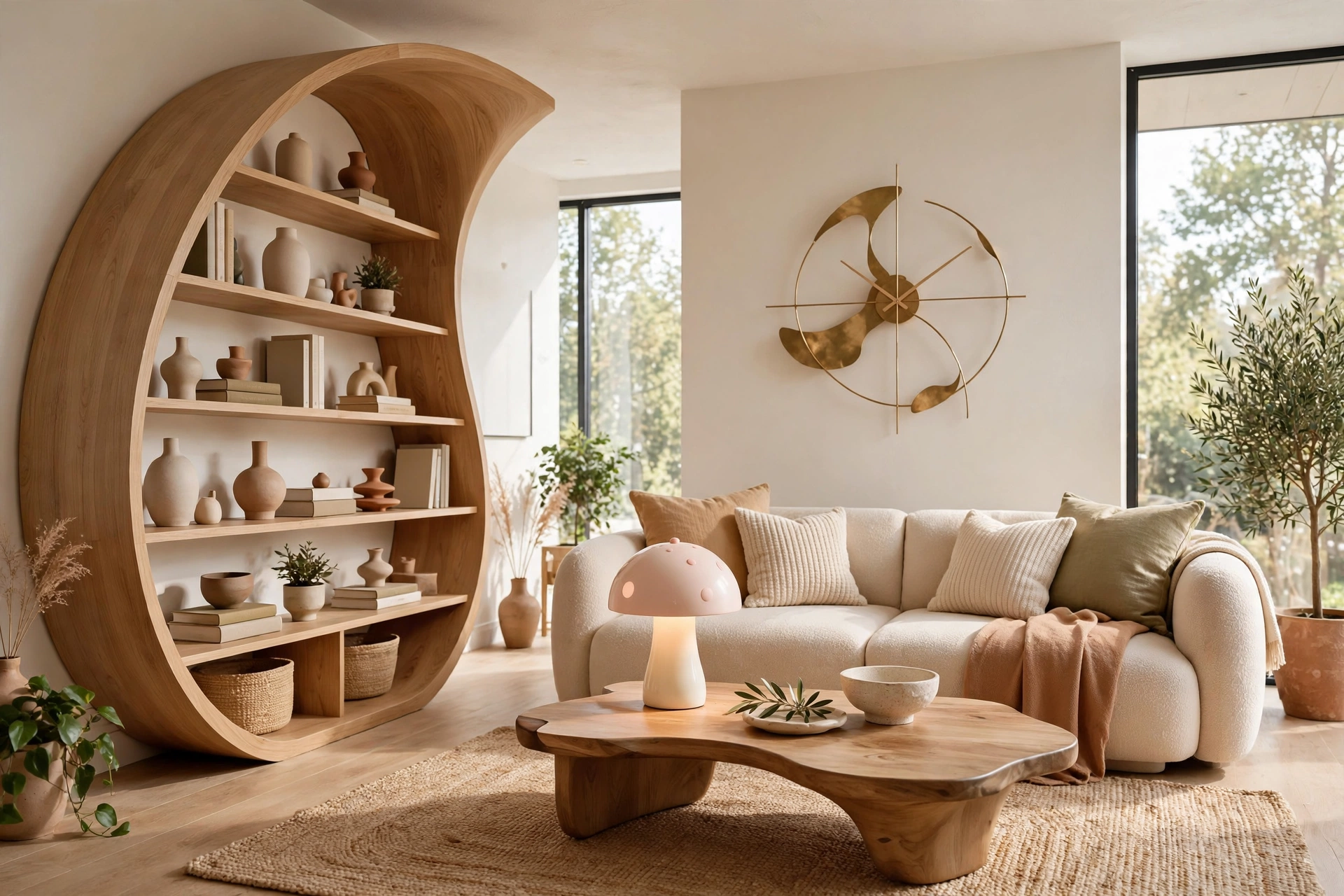
Great design rarely shouts. The most memorable rooms are usually the ones with one or two surprising pieces — a lamp shaped like something from a storybook, a shelf that curves where you expect a straight line, or a coffee table that starts a conversation before anyone sits down. That is the magic of unique design items: ordinary objects reimagined with enough wit and craft to make a whole room feel personal.
If your home feels tidy but forgettable, you do not need a full renovation. You need a few well-chosen pieces that reflect your taste. This guide walks through eighteen kinds of unique design items, how to choose them, and how to style them so your home looks curated rather than cluttered.
What Makes a Design Item Truly Unique
A unique item is not just unusual for the sake of it. The best pieces combine three qualities: a clear function, a distinctive form, and a story. A sculptural chair still has to be comfortable. A playful vase still has to hold water. When form and function work together, the piece earns its place and stays beautiful long after the novelty fades.
Ask three questions before buying anything unusual. Does it solve a real problem in your room? Does its shape, colour, or material contrast nicely with what you already own? And would you still love it if you saw it every single day? If the answer to all three is yes, it is probably a keeper.
Statement Furniture That Anchors a Room
Start with one anchor piece. A curved or asymmetrical bookshelf can turn a blank wall into a focal point while still storing your books. An asymmetrical coffee table gives a seating area instant character, especially when paired with a simple sofa that lets the table shine. A sculptural side chair in a bold colour can rescue a plain corner without any other changes.
The trick is restraint. One statement piece per room is usually enough. If every item competes for attention, the room feels like a showroom rather than a home. Let the anchor piece lead, and keep the surrounding furniture calm and simple so the eye knows where to rest.
Lighting That Doubles as Art
Lighting is one of the easiest places to add personality. A mushroom-shaped lamp, a paper lantern with an unexpected silhouette, or a pendant light made from woven rattan can change the mood of a room the moment it is switched on. Warm light flatters almost every interior, so look for bulbs in the warm-white range and dimmers where possible.
Layer your lighting rather than relying on a single overhead fixture. A floor lamp beside a reading chair, a small table lamp on a shelf, and a statement pendant over the dining table give you options for bright mornings, relaxed evenings, and everything in between. Unique design items work hardest when they are lit well, because shadows and highlights show off their shapes.
Small Objects, Big Personality
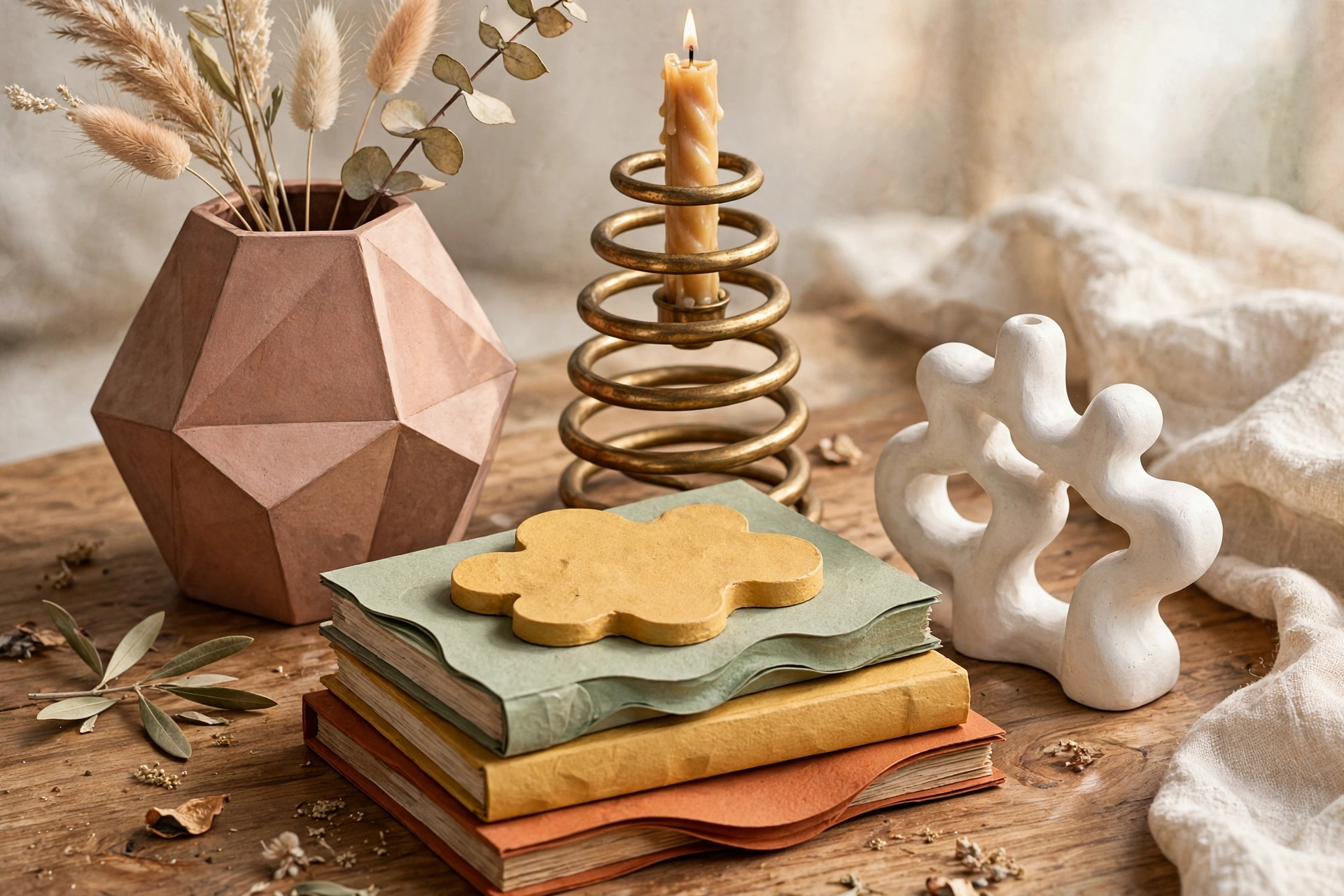
Not every unique piece has to be large or expensive. Small objects often carry the most charm: a geometric vase, a spiral candle holder, a set of artfully shaped books, or a small abstract sculpture on a console table. These are also the easiest pieces to move around, so you can refresh a room in minutes without buying anything new.
Group small objects in odd numbers — threes and fives tend to look more natural than pairs. Vary heights and textures: a tall vase beside a low bowl, a smooth ceramic next to rough wood. Leave breathing room between groups so each piece can be appreciated. If a shelf looks crowded, remove one item and see whether the rest suddenly look better. They usually do.
Functional Art for the Kitchen and Desk
Rooms where you work and cook deserve interesting objects too. A sculptural fruit bowl, a set of handmade mugs in mismatched glazes, or a desk organiser with an unusual silhouette can make daily routines feel a little more joyful. These pieces earn their place twice: they are useful, and they are beautiful.
When choosing functional pieces, check the practical details first. Mugs should feel balanced in the hand, bowls should be easy to clean, and desk organisers should fit the things you actually use. A beautiful object that is awkward to use will end up in a cupboard, so let comfort and durability lead and let looks follow close behind.
How to Style Unique Pieces Without Clutter
The most common mistake with bold decor is overcrowding. A room full of unusual items stops feeling unique and starts feeling noisy. Give each special piece space. A clear surface, a plain wall, or an uncluttered shelf behind it will make its shape stand out.
Colour helps tie everything together. Pick two or three core colours for the room and let your unique pieces echo at least one of them. A bright yellow lamp feels intentional in a room that already has warm wood and a mustard cushion; the same lamp can feel random in a room of cool greys. Repetition is what turns a collection of oddities into a style. If you are unsure where to start, our guide to avoiding common interior design mistakes (https://timezango.com/interior-design-mistakes/) covers the pitfalls that make even lovely rooms feel off.
Where to Start on a Realistic Budget
You do not need a designer budget to find unique design items. Independent makers, craft fairs, and small online shops are full of handmade pieces at fair prices. Thrift shops and vintage markets are also excellent hunting grounds — a coat of paint or a new shade can transform a second-hand find. Start with one room and one piece, live with it for a few weeks, and notice how it changes the way you use the space.
Storage matters too: beautiful objects lose their impact when they are surrounded by clutter. Simple organisation makes statement pieces shine, so pair your new finds with the ideas in our neat-space organisation guide (https://timezango.com/home-stylish-organization-ideas-for-neat-space/). And if you enjoy clever, budget-friendly upgrades, our home tricks roundup (https://timezango.com/10-genius-home-tricks-to-save-time-and-money/) has more small changes with a big payoff.
Frequently Asked Questions
How many unique design items should one room have? One statement piece plus two or three smaller accents is a good balance. Fewer pieces with more space around them almost always look more expensive and more intentional than a crowded display.
Are unique design items practical for small homes? Yes — in fact, small homes benefit most. A single sculptural shelf, a multipurpose stool, or a foldable statement table can add personality without taking up extra floor space. Choose pieces that do two jobs at once.
How do I mix unique pieces with furniture I already own? Repeat one colour, material, or shape from your existing furniture in each new piece. A walnut sculpture echoes a walnut table; a curved lamp echoes a rounded armchair. Those small echoes make eclectic rooms feel coherent.
Should I follow trends or buy what I love? Buy what you love, with a nod to trends only if they genuinely suit your home. Trends fade quickly, but a piece you chose because it made you smile will still please you years later.
Conclusion
Unique design items are not about showing off. They are about making your home feel like yours — a place where everyday objects carry a little wit, craft, and personality. Start with one piece you love, give it room to breathe, and build slowly. Over time, those thoughtful choices add up to a home that feels alive, welcoming, and unmistakably your own.