Lost Forever: 8 Unusual Buildings the World Will Never See Again
Every city has buildings that exist only in photographs now. Some were pulled down for progress, some were lost to fire or war, and some were destroyed by people who simply did not value what they had. The eight unusual buildings below were all remarkable in their own way — a theatre, a church, a lakeside palace, a leaning tower, a grand hotel, a bridge, an orphanage, and a field of ancient pyramids. What they share is a sadder distinction: none of them survives today. Their stories are a reminder that architecture is never permanent, and that the strange, beautiful buildings of our own time deserve to be appreciated while they stand.
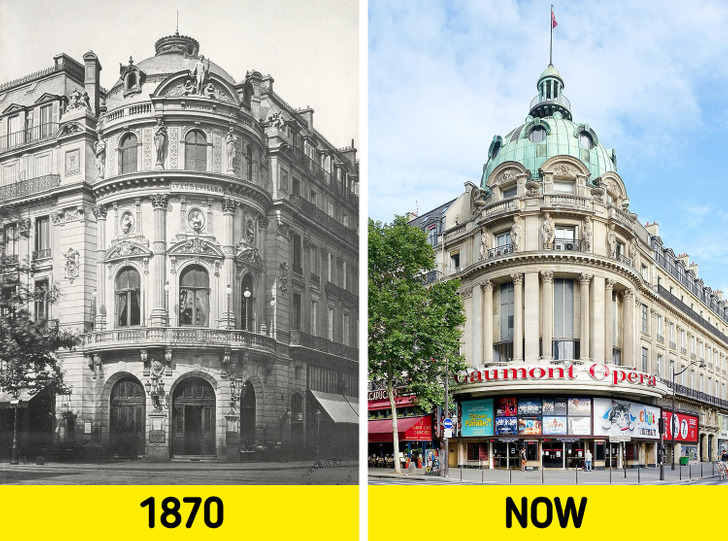
1. Théâtre du Vaudeville, Paris
© Charles Marville / Wikimedia Commons, © CC0 1.0, © Guilhem Vellut / Wikimedia Commons, © CC BY 2.0
Paris has always loved its theatres, and the Théâtre du Vaudeville was one of its most beloved. Opened in 1869 on the Boulevard des Capucines, it hosted light comedies and vaudeville shows that drew fashionable crowds for decades. Its elegant auditorium was a fixture of Parisian nightlife at the turn of the century. Yet even a popular theatre could not survive changing times: the building was demolished in 1927 to make way for a cinema, and today only photographs and posters preserve its glamour.
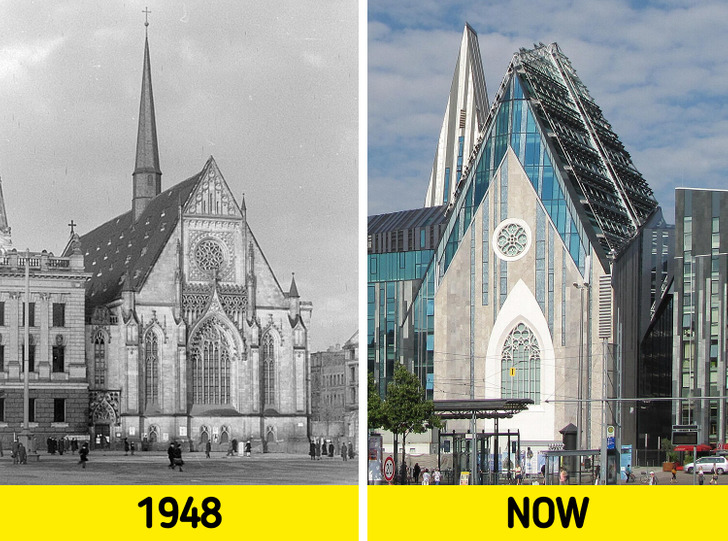
2. Paulinerkirche, Leipzig
© Roger Rössing / Wikimedia Commons, © CC BY-SA 3.0 DE, © Concord / Wikimedia Commons, © CC BY-SA 3.0
The Paulinerkirche was the church of Leipzig University, with roots reaching back to the Middle Ages. For centuries it stood as a place of worship, learning, and music in the heart of the city. In 1968, the authorities of East Germany ordered it demolished to clear space for a new university building — a decision that shocked many and is still debated today. A modern church now stands on the site, but the original Gothic building, and the centuries of history inside it, are gone forever.
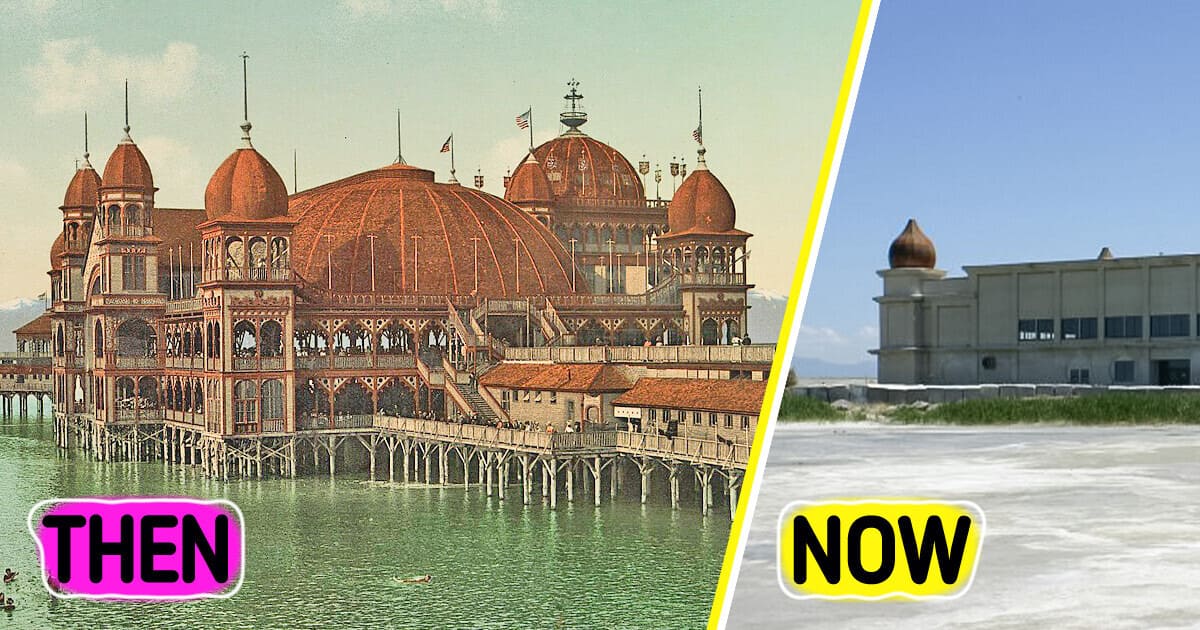
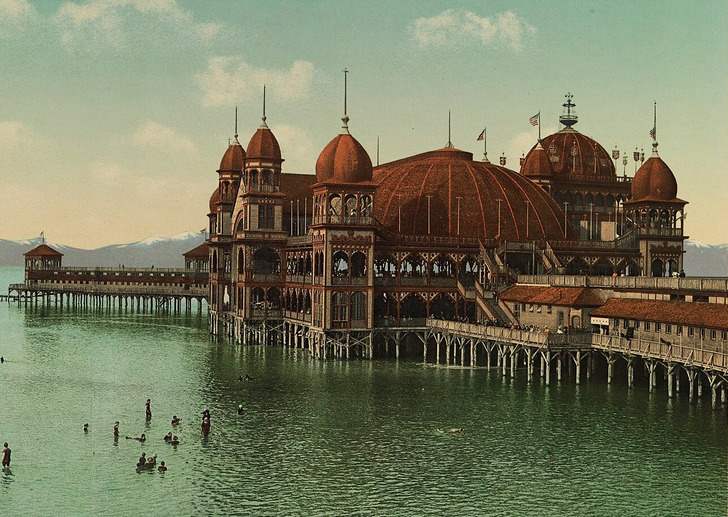
3. Saltair Pavilion, Great Salt Lake, Utah
© Smithsonian American Art Museum, Gift of Mitchell and Nancy Steir / Wikimedia Commons, © CC0 1.0
On the shore of Utah’s Great Salt Lake once stood a palace that looked like something from a fairy tale. The Saltair Pavilion, opened in 1893, was a grand resort with domes, towers, and a vast dance floor, built to draw visitors to the salty lake. Crowds came by train for bathing, dancing, and concerts. But the lake’s harsh, salty air and a devastating fire in 1925 ended its golden age. Though it was rebuilt, the resort never regained its former glory, and the original pavilion survives only in old postcards and photographs.
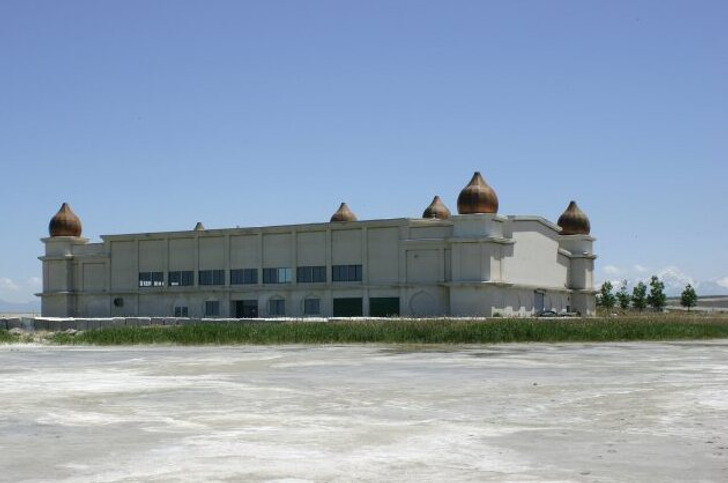
© BigBen212 / Wikimedia Commons, © CC BY-SA 3.0
4. The Pyramids of Meroë, Sudan
© Frédéric Cailliaud / Wikimedia Commons, © CC0 1.0
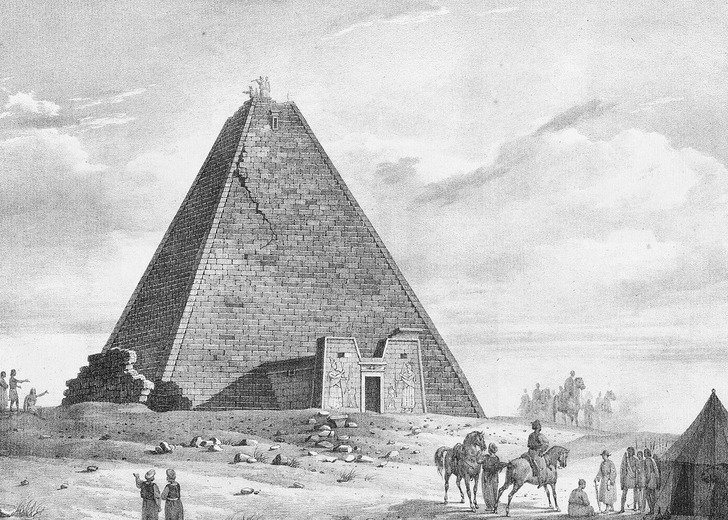
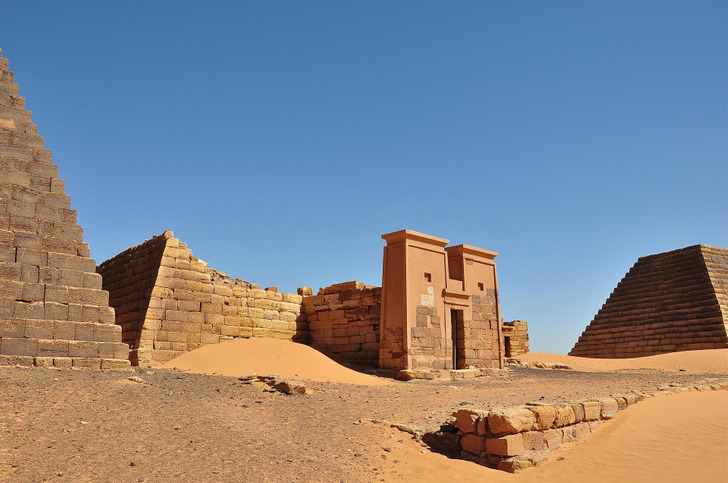
The ancient Kingdom of Kush left behind more than 200 pyramids at Meroë in what is now Sudan — smaller and steeper than the famous pyramids of Egypt, and in some ways even more striking. In 1834, an Italian treasure hunter named Giuseppe Ferlini arrived and, believing gold was hidden inside, decapitated around forty of the pyramids, tearing off their tops to search for treasure. He found some gold, but he destroyed irreplaceable monuments in the process. The damaged pyramids still stand today as a warning about what greed does to heritage — and the ones he destroyed completely are lost for good.
© TrackHD / Wikimedia Commons, © CC BY-SA 3.0
5. The Leaning Tower of Zaragoza, Spain
© Edward Hawke Locker / Wikimedia Commons, © CC0 1.0
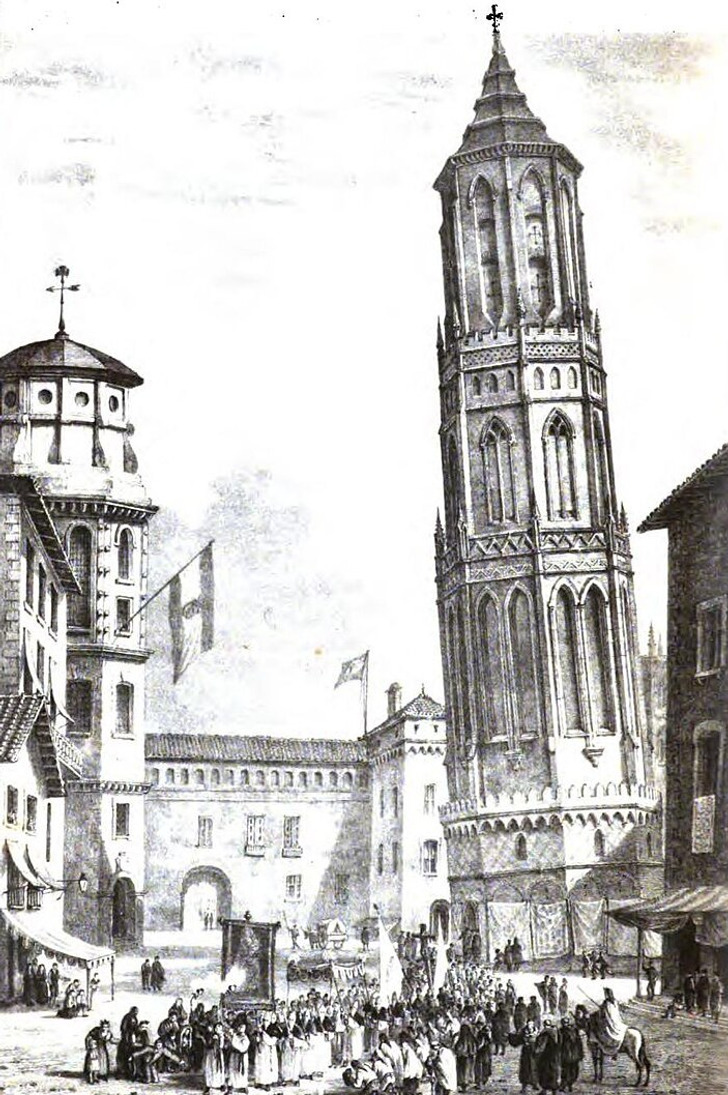
Pisa was not the only city with a leaning tower. Zaragoza in Spain had its own — the Torre Nueva, a graceful brick clock tower built in 1504 that began to tilt soon after construction. For nearly four centuries it leaned over the city, becoming a beloved landmark and a symbol of Zaragoza. But by the 19th century, engineers feared it might collapse, and the city made the painful decision to demolish it in 1892. Today a small monument marks where it stood, and old photographs show a tower that was every bit as charming as its Italian cousin.
6. The Striehl’s Orphan Foundation House, Hanover
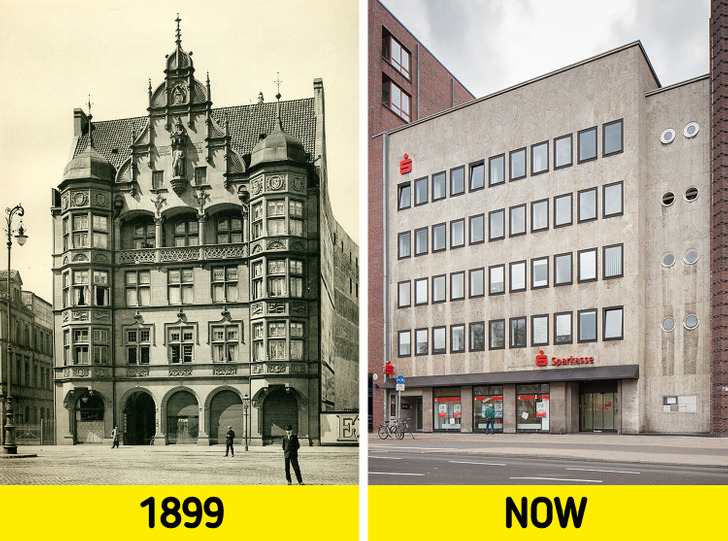
© Georg Alpers / Wikimedia Commons, © CC0 1.0, © ChristianSchd / Wikimedia Commons, © CC BY-SA 3.0
Not every lost building was famous. The house of the Striehl’s Orphan Foundation in Hanover, Germany, was an orphanage — a place of shelter and care for children who had nowhere else to go. Its grand facade spoke of a time when even charitable buildings were built with pride and ornament. Like so many 19th-century institutions, it did not survive the demolitions and rebuilding of the 20th century. Its story is a quieter kind of loss: not a landmark the world mourned, but a home that mattered deeply to the children who lived there.
7. Hotel New Netherland, New York
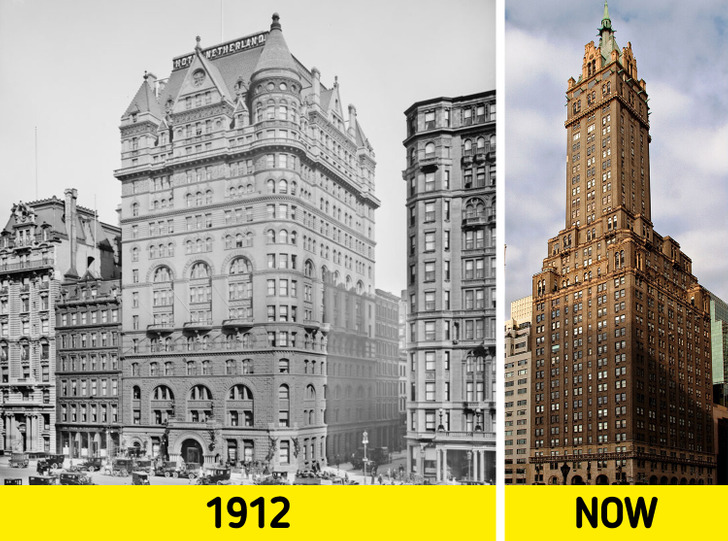
© Unknown author / Wikimedia Commons, © CC0 1.0, © Tony Hisgett / Flickr, © CC BY 2.0
At the corner of Fifth Avenue and 59th Street in New York once stood one of the city’s grandest hotels: the New Netherland. Opened in the 1890s, it was among the tallest buildings in the city at the time, offering luxury rooms and sweeping views over Central Park. The wealthy and famous stayed there, and for a while it defined uptown elegance. But New York rebuilds itself relentlessly, and in 1927 the hotel was demolished to make way for the Sherry-Netherland — a new luxury building that still occupies the site today.
8. The Neue Elbbrücke, Hamburg
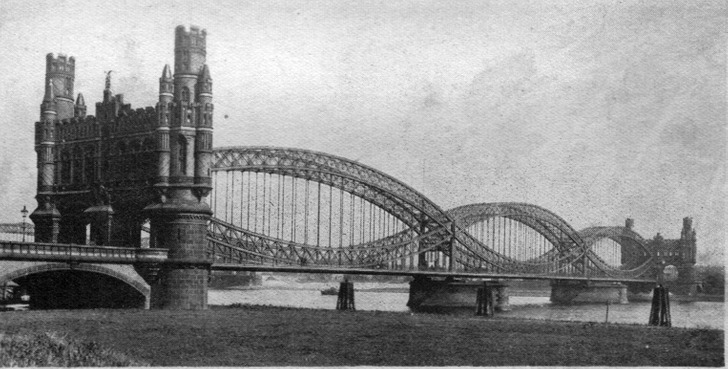
© Unknown author / Wikimedia Commons, © CC0 1.0
Hamburg’s Neue Elbbrücke, or New Elbe Bridge, was a suspension bridge that carried traffic across the Elbe River in the 19th century. With its tall towers and sweeping cables, it was an engineering achievement of its time and a gateway to the great port city. For more than a century it served the city, surviving wars and floods. Eventually, though, it could no longer carry modern traffic, and it was demolished in the 20th century. Its replacement serves the same crossing today, but the elegant old suspension bridge lives on only in engravings and photographs.
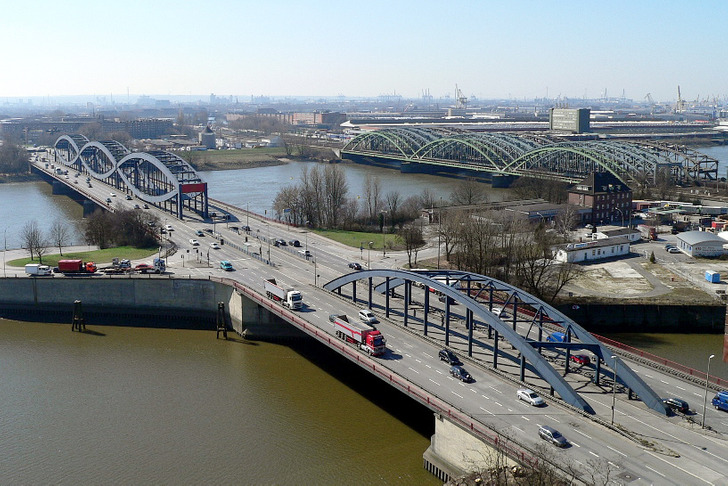
© Wmeinhart / Wikimedia Commons, © CC BY-SA 3.0
What These Lost Buildings Teach Us
Look at these eight stories together and a pattern appears. Buildings rarely disappear because people hated them. They disappear because land becomes more valuable than history, because maintenance is postponed until it is too late, or because a new generation simply does not see what the old one saw. Every demolition seemed reasonable at the time — a cinema, a university building, a new hotel, a wider bridge. The loss only becomes clear decades later, when photographs are all that is left.
That is why the unusual buildings around us today deserve a second look. The strange theatre, the odd tower, the old factory, the quirky house on the corner — these are the buildings future generations will either thank us for keeping or mourn as we mourn the ones above. Preservation is not about freezing a city in time. It is about keeping enough of the past standing that the future can still touch it.
Frequently Asked Questions About Unusual Buildings Lost to History
Why were so many beautiful old buildings demolished?
The most common reasons were changing land values, new transport needs, fire, war, and the belief that newer automatically meant better. Many demolitions happened before modern heritage-protection laws existed, so there was often no legal way to stop them.
Can demolished buildings ever be rebuilt?
Sometimes. A few famous lost buildings have been reconstructed from photographs and plans, like the Paulinerkirche in Leipzig, which has a modern successor on its original site. But a reconstruction is never the original — the materials, craftsmanship, and centuries of wear cannot be copied.
How can I learn more about lost buildings in my own city?
Start with your local library, city archives, and historical societies, which often hold old photographs and maps. Many cities also have heritage walks and online photo archives. Old postcards, sold in antique shops and online, are another wonderful window into what your streets once looked like.
Preview photo credit Smithsonian American Art Museum, Gift of Mitchell and Nancy Steir / Wikimedia Commons, CC0 1.0, BigBen212 / Wikimedia Commons, CC BY-SA 3.0
credits: brightside.me