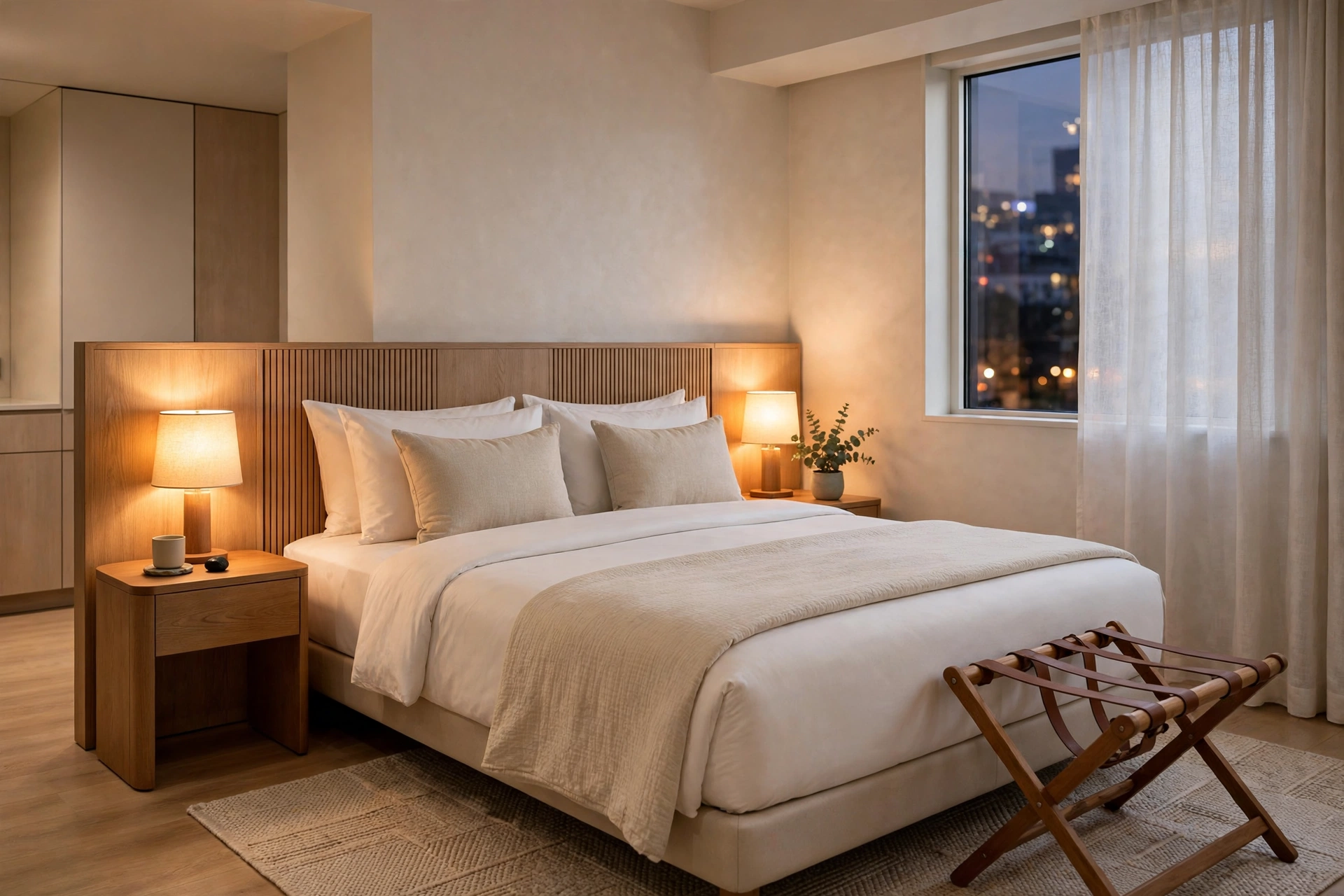
Seasoned travelers swear by one simple habit: they inspect their hotel room before unpacking, and they do it every single time. A two-minute walkthrough can be the difference between a restful stay and a night of surprises — stained sheets, a dead bolt that won’t lock, or a bathroom you would rather not use. Here are 19 smart checks, grouped by area, that frequent travelers who inspect their hotel room never skip.
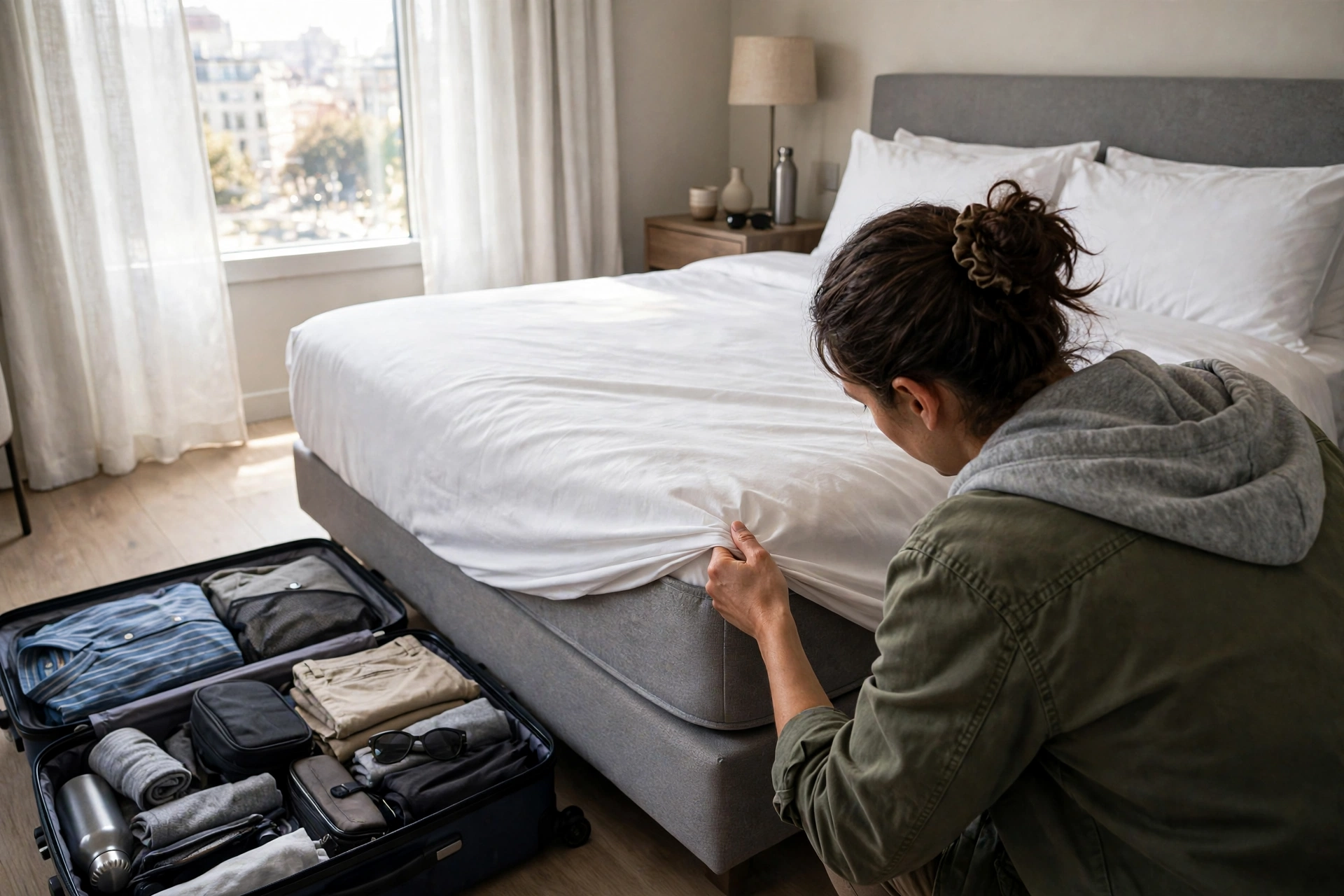
Bed & Bedding: Most Guests inspect their hotel room Here First
1. Pull back the sheets and check the mattress corners. This is the number-one ritual of anyone who likes to inspect their hotel room. Lift the fitted sheet at the corners and look along the mattress seams for tiny dark spots or shed skins. If anything looks off, ask for another room — no explanation needed.
2. Look under the bed. A quick glance underneath tells you a lot about how thoroughly the room is cleaned. Forgotten items, dust bunnies or wrappers are a sign the corners are being skipped.
3. Check the pillows and pillowcases. Give the pillowcases a once-over for stains or hairs from a previous guest, and fluff the pillows to make sure they have not gone flat. If you are allergic to down, ask the front desk for foam alternatives — most hotels keep a few in reserve.
4. Sniff and inspect the bedding. Fresh laundry has a clean, neutral smell. Musty or heavily perfumed bedding can mean it is not fully clean, and overpowering air freshener is sometimes used to mask a deeper problem.
Bathroom & Toiletries: The Cleanliness Tell
5. Inspect the towels before you shower. Towels are one of the first things guests who inspect their hotel room actually touch. Hold bath towels up to the light and check for stains, frayed edges or an odd smell. Some hotels track their linens with laundry tags — a small chip or label inside a towel is just an inventory tool, not something to worry about.
6. Run the shower and check the water. Let the water run for thirty seconds and check the temperature, pressure and color. Discolored water or a weak stream is worth reporting immediately so staff can act while you still have leverage.
7. Look behind the toilet and under the sink. These are the spots rushed housekeeping misses. Grime along the base of the toilet or under the sink is a reliable indicator of the room’s true cleaning standard.
8. Check toiletries and soap. Make sure dispensers are actually full and sealed, not half-used. Individually wrapped soaps are normal; small holes or odd shapes in bar soap are usually just a manufacturing detail to reduce waste, not a hygiene concern.
9. Test the bathroom lock and ventilation. A bathroom door that does not lock and a fan that does nothing both deserve a mention at the front desk, especially on longer stays.
Safety, Locks & Room Security
10. Test the main door lock, dead bolt and chain. This is the check people who inspect their hotel room take most seriously. Close the door and try the handle from inside, then engage the dead bolt or security latch. If any of them feel loose or do not fully engage, request a room change.
11. Check the peephole. Look through it to confirm the view is clear and not covered or tampered with. It is a small detail that matters if someone knocks late at night.
12. Inspect windows and balcony doors. Make sure every window latches properly and the balcony sliding door locks. On ground-floor rooms, this check is non-negotiable.
13. Look for the room safe and test it. If there is an in-room safe, set a temporary code, lock it and reopen it before trusting it with your valuables. If there is no safe, ask whether the front desk offers secure storage.
14. Scan for odd fixtures. Hinged wall panels, locked service doors and other unusual fittings are usually just maintenance access points for wiring or air conditioning — but knowing they are there means nothing will startle you later.
Comfort, Amenities & Hidden Details
15. Test the Wi-Fi, outlets and lights. Plug in your phone, connect to the Wi-Fi and flip every switch. Finding out at midnight that the only working outlet is across the room is an avoidable frustration.
16. Check the thermostat and air conditioning. Run the AC or heating for a few minutes to confirm it actually responds. A noisy or ineffective unit can ruin your sleep, and rooms are easiest to change in the first hour.
17. Inspect the mini-fridge and coffee area. Seasoned guests who inspect their hotel room always peek inside the mini-fridge before touching anything. Open it, check for expired items or sticky shelves, and confirm the coffeemaker is clean inside. Anything left by a previous guest is a red flag about the turnover routine.
18. Look for the little extras — and their price tags. Complimentary phones, bottled water, snacks and in-room tablets can be free or eye-wateringly expensive. Check for a price card before you touch anything you are not sure about, so the minibar does not deliver a nasty surprise at checkout.
19. Do a final noise and neighbor check. Stand quietly for a minute with the door closed. Thin walls, a humming ice machine next door or a room beside the elevator will all reveal themselves — and the front desk can often move you before you have unpacked.
Making it a habit to inspect their hotel room is how smart travelers turn a good trip into a great one. These little rituals are why frequent flyers tend to plan every part of their trip carefully, right down to the airports they pass through. The same mindset that powers clever everyday time-and-money-saving tricks works just as well on the road: a calm, systematic look around saves you far more than it costs. And if you love this kind of curious detail, these mind-blowing fun facts are a great companion for your next journey.
Frequently Asked Questions
How long does a hotel room inspection take?
Most travelers who inspect their hotel room finish the full walkthrough in under five minutes. Bed, bathroom, locks and a quick appliance test cover the vast majority of issues, so it barely delays your unpacking.
What should I do if I find something wrong?
Report it to the front desk right away, ideally within the first hour of check-in. Hotels are far more willing to change your room or fix a problem when you flag it immediately rather than the next morning.
Is it rude to inspect a hotel room before settling in?
Not at all. Hotels expect guests to check their rooms, and a polite request for a different room is completely normal. Staff would much rather move you early than deal with a complaint after a bad night’s sleep.