With a phone only, we can now order groceries, buy anything, call a taxi, watch a movie or listen to music. Technology has become such a big part of our lives that it is hard to imagine how we used to live without it. But we decided to recall how it was in the past and how everything around us has changed. These 14 comics show exactly how much life has changed — and this guide looks at the biggest shifts behind them.
The article contains images generated by artificial intelligence.
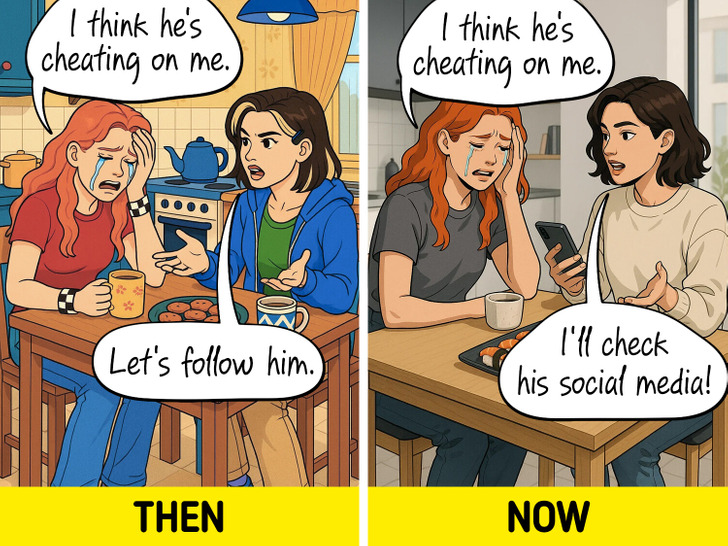
You can learn a lot about a person from photos and social media posts. People can sometimes identify cheaters by the smallest details in a photo.
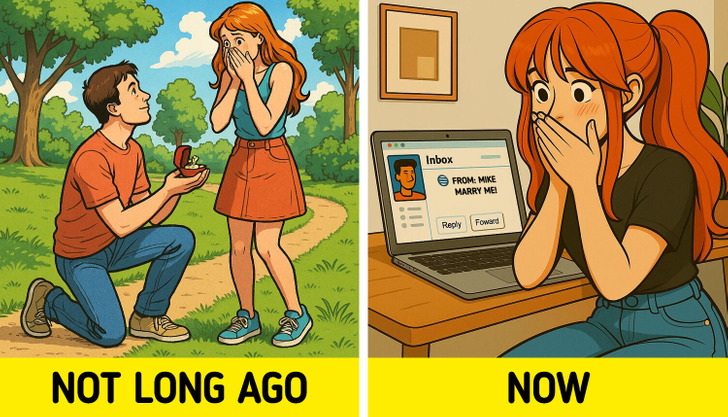
A marriage proposal can now be made and received online. It is sent by email.
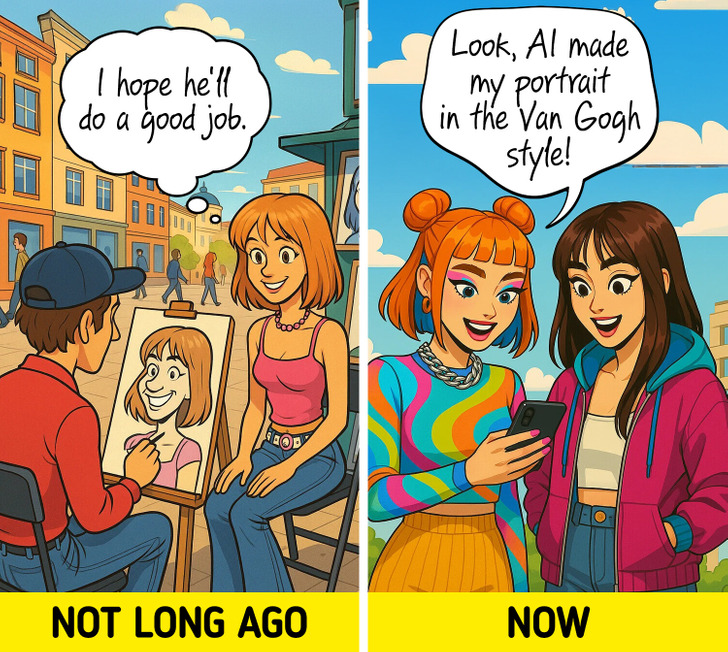
To get your portrait, you had to pose for an artist. Now neural networks can make a picture in any style from a photograph.
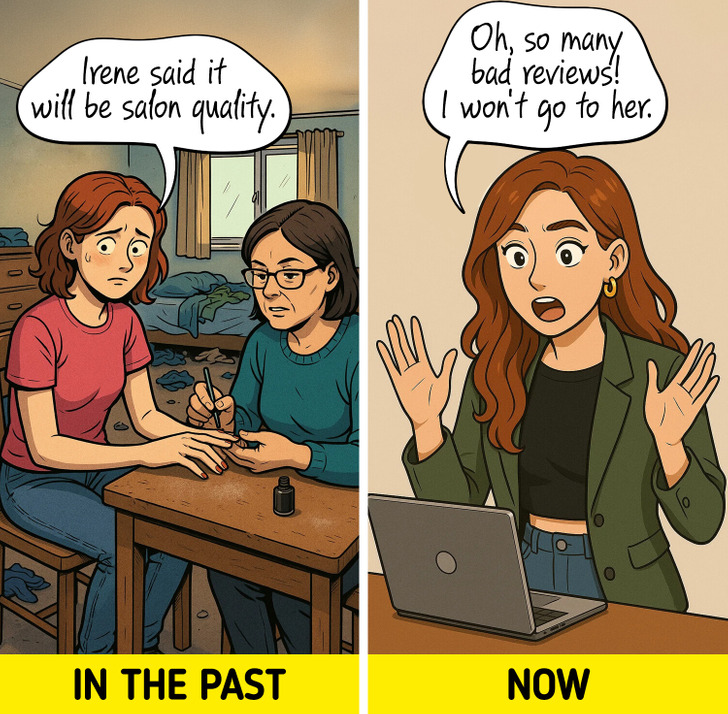
You no longer have to blindly trust an expert, now you can read reviews about them.
Once there were separate gadgets for everything, and you had to carry a map, a phone, a camera, a music player, etc. Now all these functions are performed by a smartphone.
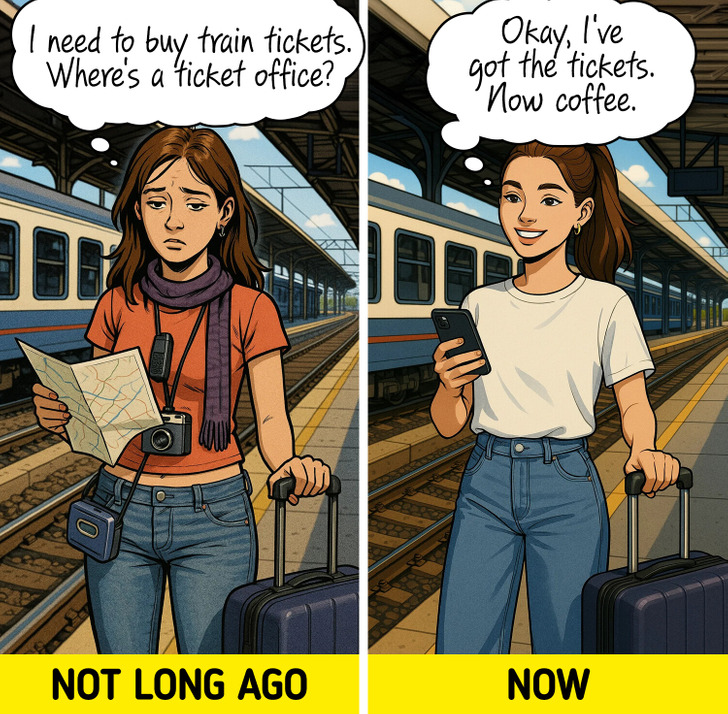
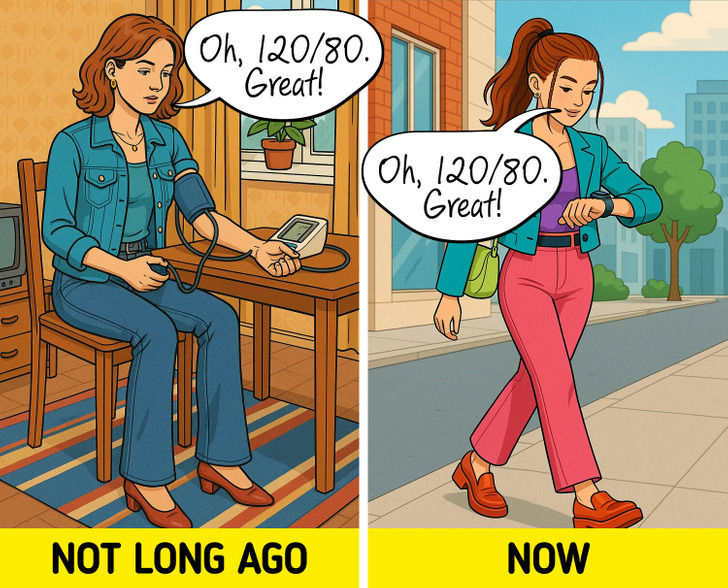
You can check your blood pressure while outdoors with a smart watch or fitness tracker.
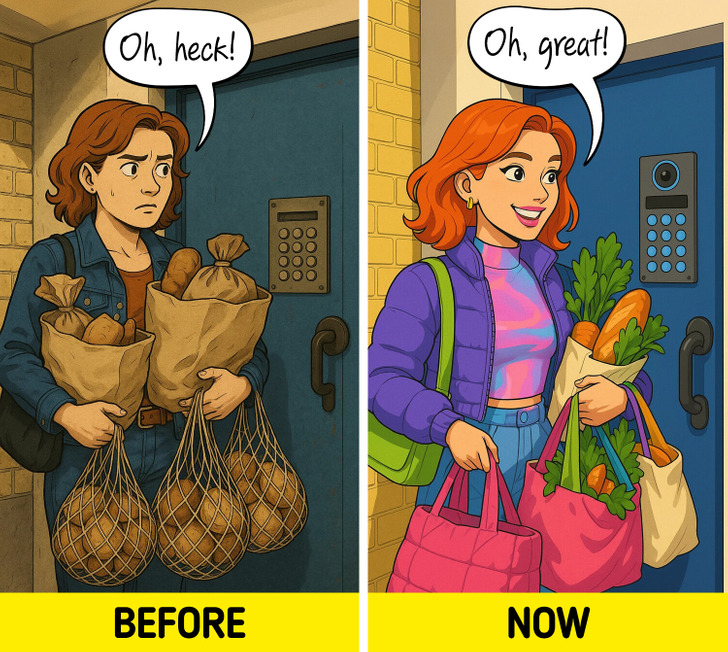
Code locks have evolved into smart intercoms with cameras that have facial recognition. So, they can open the door simply by recognizing you.
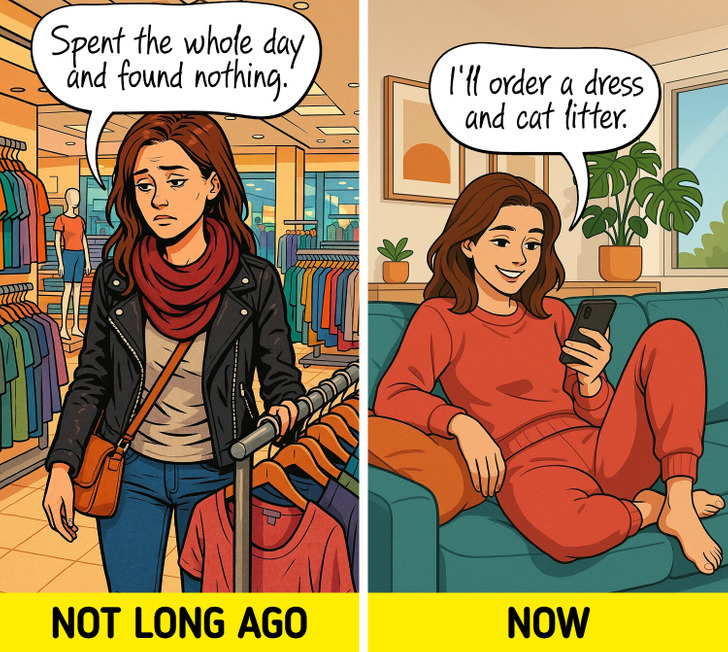
You don’t have to go shopping. You can find everything from clothes to groceries on marketplaces online.
All retouching had to be done manually on the computer. Now it can be done in real time with inbuilt filters.
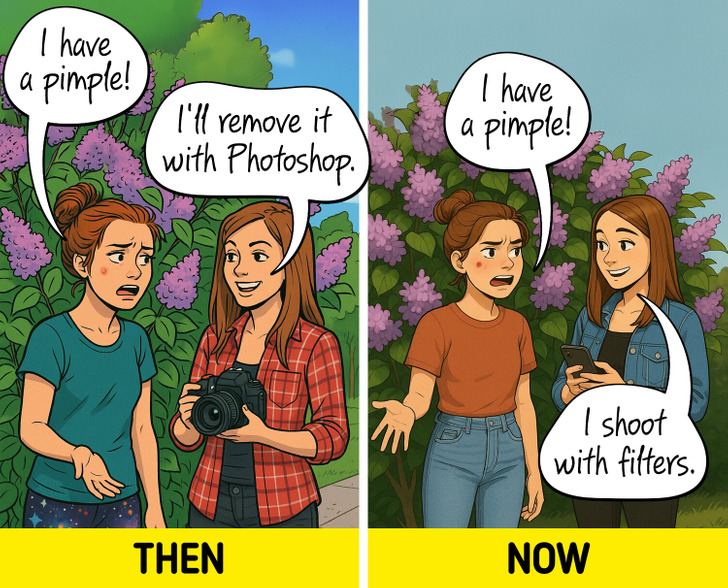
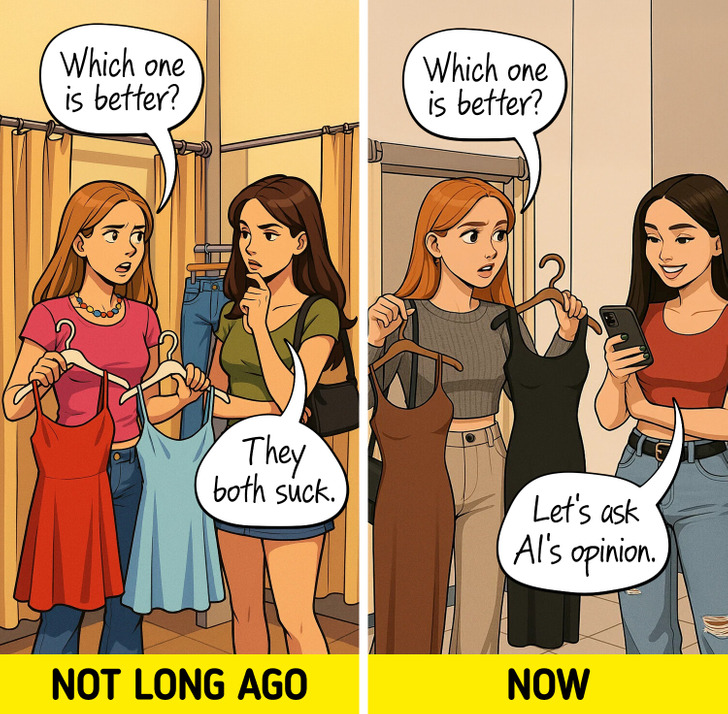
You can turn for advice not only to a friend, but also to AI now.
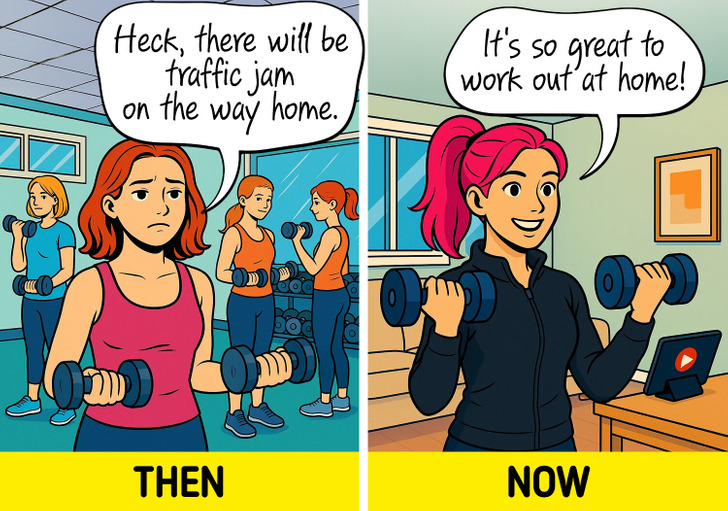
You no longer have to go to the gym to work out with an instructor. You can buy a subscription and work out online at home.
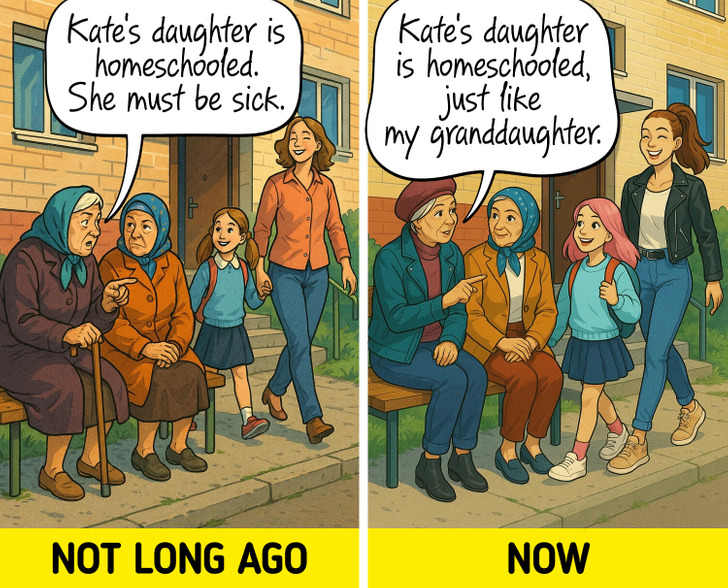
Not so long ago, homeschooling was something unusual. Nowadays, it is no surprise to anyone.
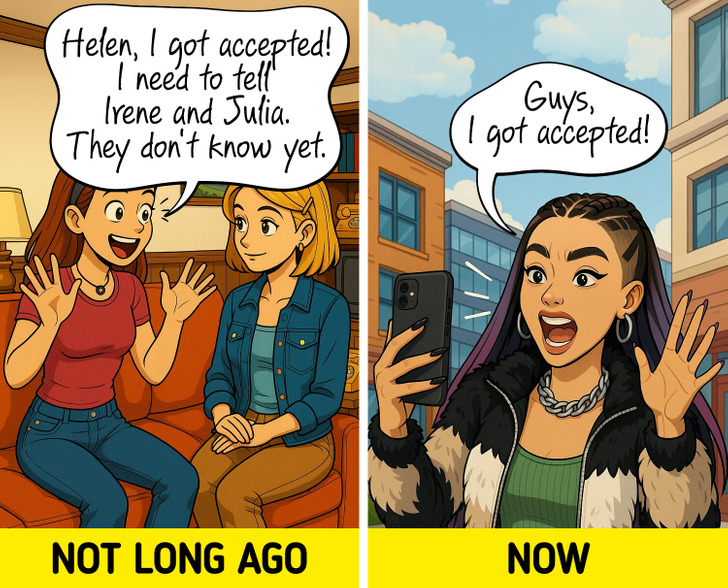
In the past, news had to be communicated to each person individually. Now, thanks to social media, all your friends will know about everything interesting in your life at once.
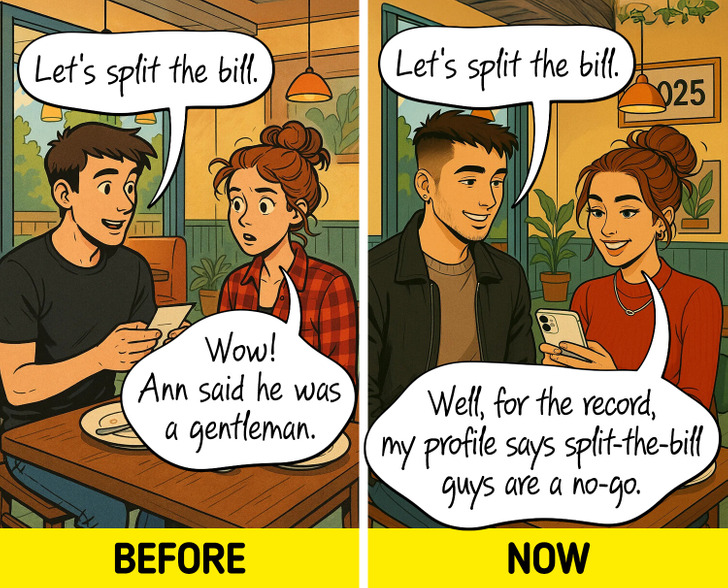
In the questionnaires on dating sites, you can immediately specify your preferences and expectations. Although surprises still happen.
15 Years Is Not That Long — So Why Does Everything Feel Different?
Fifteen years sounds long until you try to remember it. Think back to the early 2010s. Smartphones existed, but they did not run our lives. We printed directions, waited for films on DVD, and phoned people without wondering whether they would prefer a text. In so many small, ordinary ways, life has changed beyond recognition.
No single invention did this. Instead, hundreds of small upgrades quietly replaced old habits. Each one felt minor at the time. Together, they rebuilt daily life.
How Life Has Changed in Photos and Memories
Photography used to be an occasion. You carried a camera, took a limited number of pictures, and hoped some turned out well. You waited to see them, kept the best in an album, and forgot the rest. Today the camera is always in your pocket and the limit has gone. We take dozens of pictures of one dinner or one sunset, then pick the best in seconds.
Sharing has changed even more than taking. A photograph once travelled slowly, from a developed print to a frame on the wall. Now it travels around the world in a second, with a caption, a filter, and a location tag. In that sense, life has changed not only in what we capture, but in why we capture it.
How Life Has Changed in How We Talk and Meet People
Conversation once meant being in the same place, or at least on the phone at the same time. If you missed someone, you missed them. You left a voicemail and waited. Now we live in a constant, low-level conversation with dozens of people at once. Messages, voice notes, photos, and video calls overlap all day.
Meeting people has shifted too. It once depended on luck, location, and timing. You had to be in the right place and brave enough to speak. Now introductions often happen through screens, profiles, and shared interests before anyone meets face to face. It can also feel strangely transactional.
How We Shop, Pay, and Get Around Now
Shopping used to be a trip. You went to the shop, compared what was on the shelf, and carried your purchases home. Now shopping happens in bed, on the bus, or mid-task. Paying has become almost invisible too. Cash and long queues have given way to taps, scans, and one-click checkouts. In everyday errands, life has changed from effort to ease.
Getting around has changed just as much. We no longer memorise routes, unfold paper maps, or ask strangers for directions. A voice in our pocket tells us where to turn, warns us about traffic, and finds the nearest café. For a reminder that ordinary things can still surprise us, these fun facts are a good place to start.
Entertainment: From Ownership to Streaming
We used to own our entertainment. We bought CDs, DVDs, and books, and kept them on shelves like trophies. Now we rent access to almost everything. Millions of songs, films, and shows sit behind a monthly subscription, ready in seconds. We have never had more choice, and we have never owned less of it.
That abundance has changed how we pay attention. When a film was a rare treat, we watched it carefully from start to finish. When ten more are always waiting, we skip, pause, and half-watch while scrolling. According to Pew Research Center research on how technology shapes daily life, our habits around devices and media keep shifting as new tools arrive. The result is proof that life has changed in how we relax, too.
Nostalgia vs Progress: What We Gained and What We Miss
It is tempting to say everything was better before, or everything is better now. Neither is true. Progress has given us safety, convenience, and connection on a scale our grandparents could not have imagined. The truth is that life has changed in both directions at once, and holding both truths is the honest way to look at it.
- What we gained: instant information, easy navigation, cheaper communication, endless entertainment, and closeness to people far away.
- What we lost: patience, privacy, boredom, handwritten letters, and the pleasure of being truly unreachable for a while.
- What we miss most: not the old technology, but the slower feeling of life that came with it.
Just as power washing transformations reveal how much a familiar surface can change, small before-and-after moments reveal how much we have changed without noticing. Even celebrity culture shows it, as in Paris Jackson’s red carpet look and the instant global reaction it drew.
FAQ
Why does life feel so different after only 15 years?
Because the changes were small, frequent, and cumulative. Phones, apps, streaming, and online shopping each replaced one habit at a time until almost every routine looked different.
Has technology made life better or worse?
It has done both. It has made life easier, safer, and more connected, but also faster, more distracted, and less private. Most people feel grateful for the gains and nostalgic for the slower pace at the same time.
What do people miss most about life before smartphones?
Usually, it is not the old devices themselves. It is the feeling of being present, bored, or unreachable without guilt. People miss full attention and conversations that did not compete with a screen. In short, life has changed most in the quiet moments we no longer protect.
credit by: brightside.me