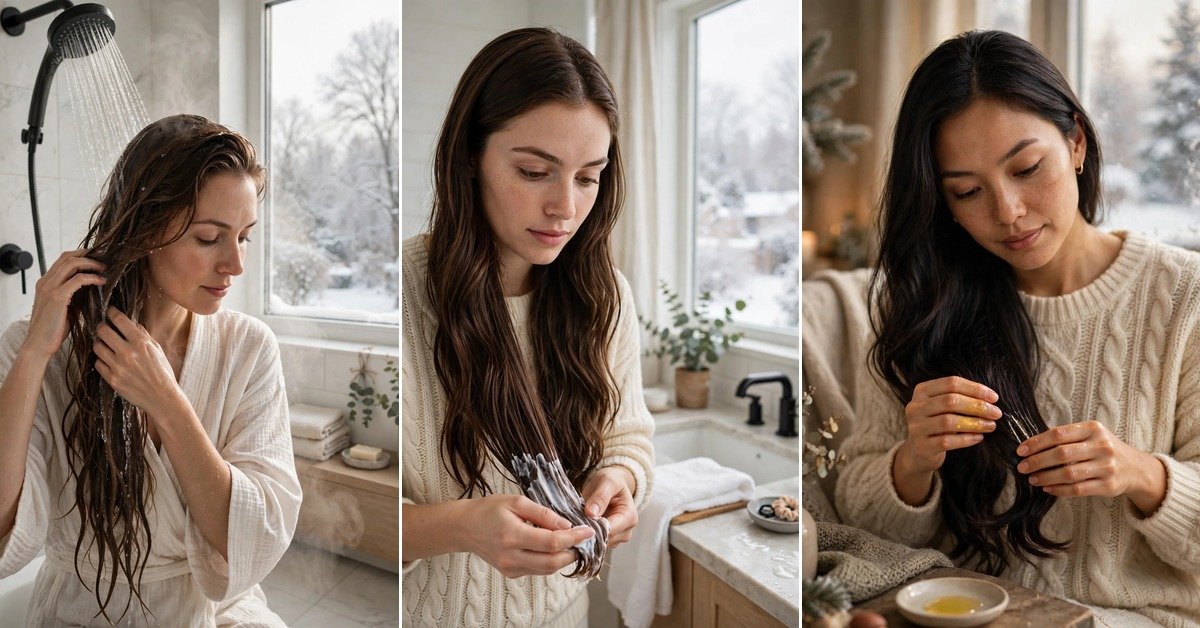
Winter is beautiful — snow on the windows, cosy jumpers, hot chocolate by the fire — but your hair does not always agree. Cold air outside, dry heated air inside, hats, scarves, static and endless hot showers can leave even the healthiest hair dry, dull, frizzy and full of split ends by February. The good news is that winter hair damage is almost entirely preventable, and you do not need an expensive salon routine to fix it. These 15 winter hair care tips 2026 are simple, practical habits that protect your hair through the coldest months, whether your hair is fine, curly, thick or colour-treated.
From washing less often and turning down the water temperature to weekly deep masks, satin pillowcases and the right way to beat hat hair, every tip below is easy to start today. Pick three or four that fit your routine, stick with them for a few weeks, and you will notice softer, shinier, healthier hair — even in the middle of winter.
Planning the rest of your cold-weather look? You will love our 25 winter hairstyles for styles that work with winter hair, our winter skincare routine for the skin side of the season, and our Christmas hairstyles for festive party hair.
1. Wash Less Often, and Use Lukewarm Water
The single biggest winter hair mistake is overwashing. Every wash strips away the natural oils that protect your hair from cold, dry air, and in winter your scalp produces less oil to begin with. Most hair types only need washing two or three times a week in winter — fine hair can stretch to every other day, while curly and coarse hair often does fine with once or twice a week.
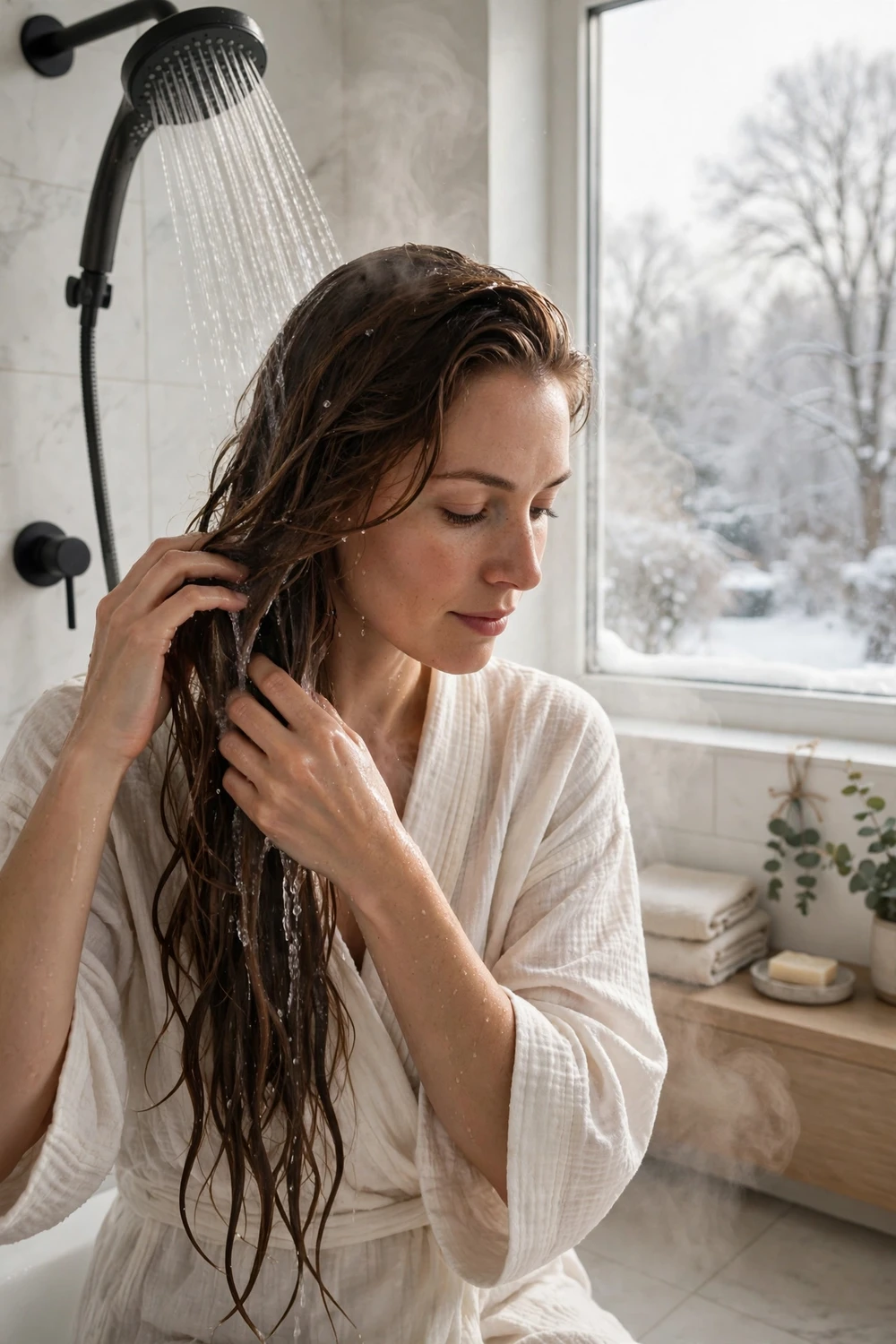
Just as important is the water temperature. A steaming hot shower feels wonderful on a freezing morning, but hot water lifts the hair cuticle, lets moisture escape and leaves hair rough and frizzy. Lukewarm water cleans just as well and is far kinder to your strands. Save the hot water for your body, keep the rinse lukewarm, and finish with a quick cool rinse if you can stand it — it smooths the cuticle and adds instant shine.
2. Never Skip Conditioner in Winter
If you skip conditioner in summer and get away with it, winter will catch you out. Cold air pulls moisture out of your hair all day long, and conditioner is the simplest way to put it back. It smooths the cuticle, seals in moisture, reduces tangles and makes your hair far easier to brush without breakage.
Apply conditioner from the mid-lengths to the ends — that is where hair is oldest and driest — and leave it on for two to three minutes before rinsing. If your hair is very fine and gets weighed down easily, use a lightweight conditioner and keep it off the roots. For thick, curly or colour-treated hair, a richer, creamier conditioner is worth every penny in winter.

3. Add a Weekly Deep-Conditioning Mask
A weekly hair mask is the winter upgrade your hair will thank you for. Think of it as a deep drink of moisture after a week of cold wind and indoor heating. A good mask with ingredients like shea butter, argan oil, avocado or keratin can repair the surface of the hair, reduce breakage and bring back softness and shine in a single use.
Apply the mask to damp, towel-dried hair, comb it through with a wide-tooth comb, and leave it on for ten to twenty minutes — longer if your hair is very dry or damaged. For an extra boost, wrap your hair in a warm towel while the mask works. Rinse thoroughly and style as usual. Once a week is enough for most hair; very dry or curly hair can handle twice a week.

4. Leave-In Conditioner Is Your Winter Best Friend
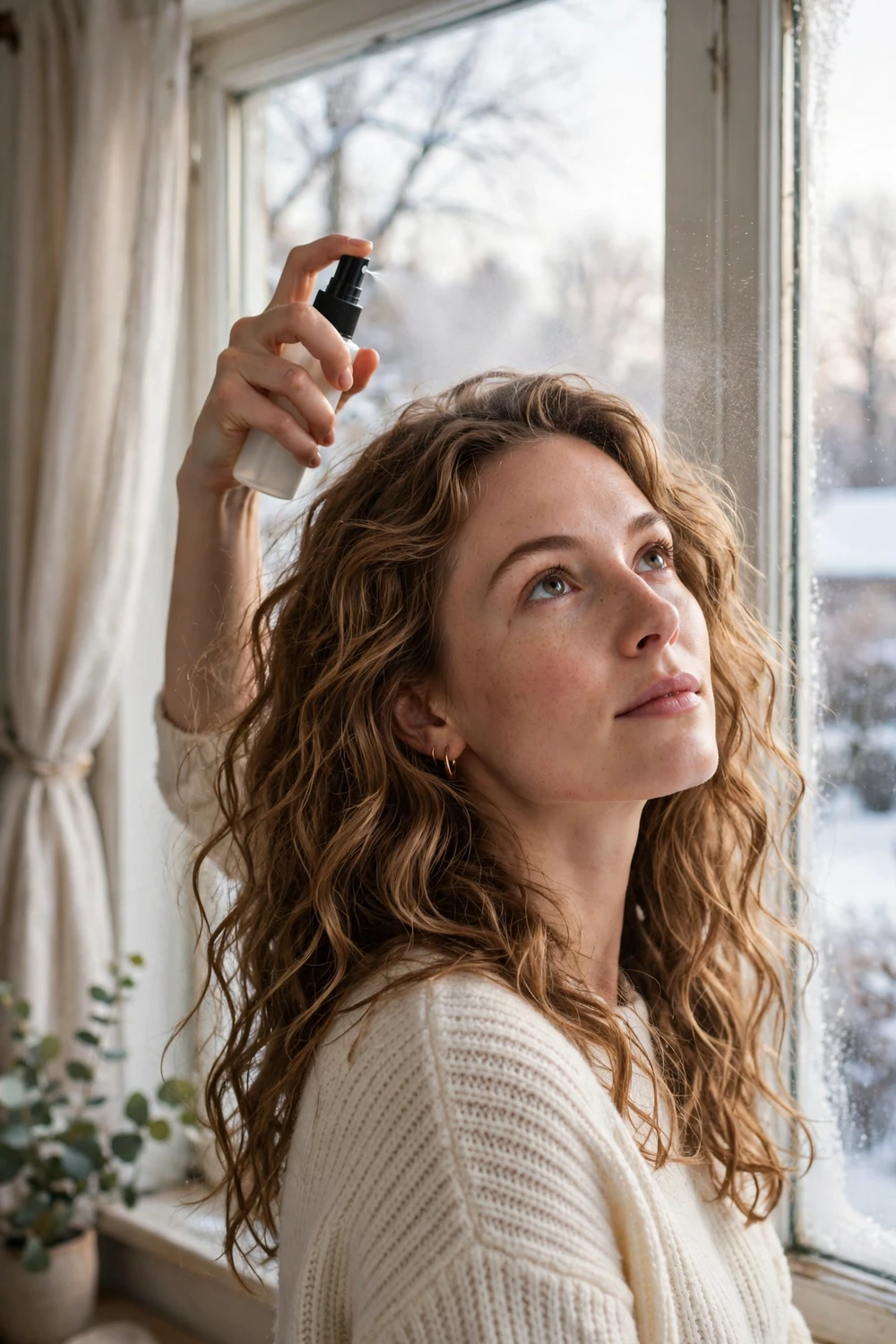
Leave-in conditioner is the one product that earns its place in every winter routine. Unlike rinse-out conditioner, it keeps working all day — shielding your hair from cold wind, reducing static, detangling knots and adding a soft, healthy shine. It is especially helpful for curly, wavy and long hair, which dries out fastest in winter.
After washing, towel-dry gently and smooth a small amount of leave-in conditioner through the mid-lengths and ends. Start with less than you think you need — a coin-sized amount for medium hair — and add more only if your hair still feels dry. A cream leave-in suits thick or curly hair, while a lightweight spray works better for fine hair that gets weighed down easily.
5. Oil the Ends Before They Split
Split ends are winter’s signature damage. When hair is dry, the oldest part — the ends — frays and splits, and once a split starts, it travels upward. A drop or two of hair oil on the ends is the easiest prevention there is. Argan oil, jojoba oil, sweet almond oil and coconut oil all work beautifully; choose the one your hair likes best.
Warm a couple of drops between your palms and smooth them over the last few inches of your hair, morning and night if needed. The oil seals the cuticle, locks in moisture and gives your ends a healthy, polished finish. Use it sparingly — too much oil makes hair look greasy — and keep it away from the roots. If your ends are already badly split, oil will not glue them back together, but it will stop them getting worse until your next trim.

6. Turn Down the Heat Tools (and Always Use Heat Protectant)
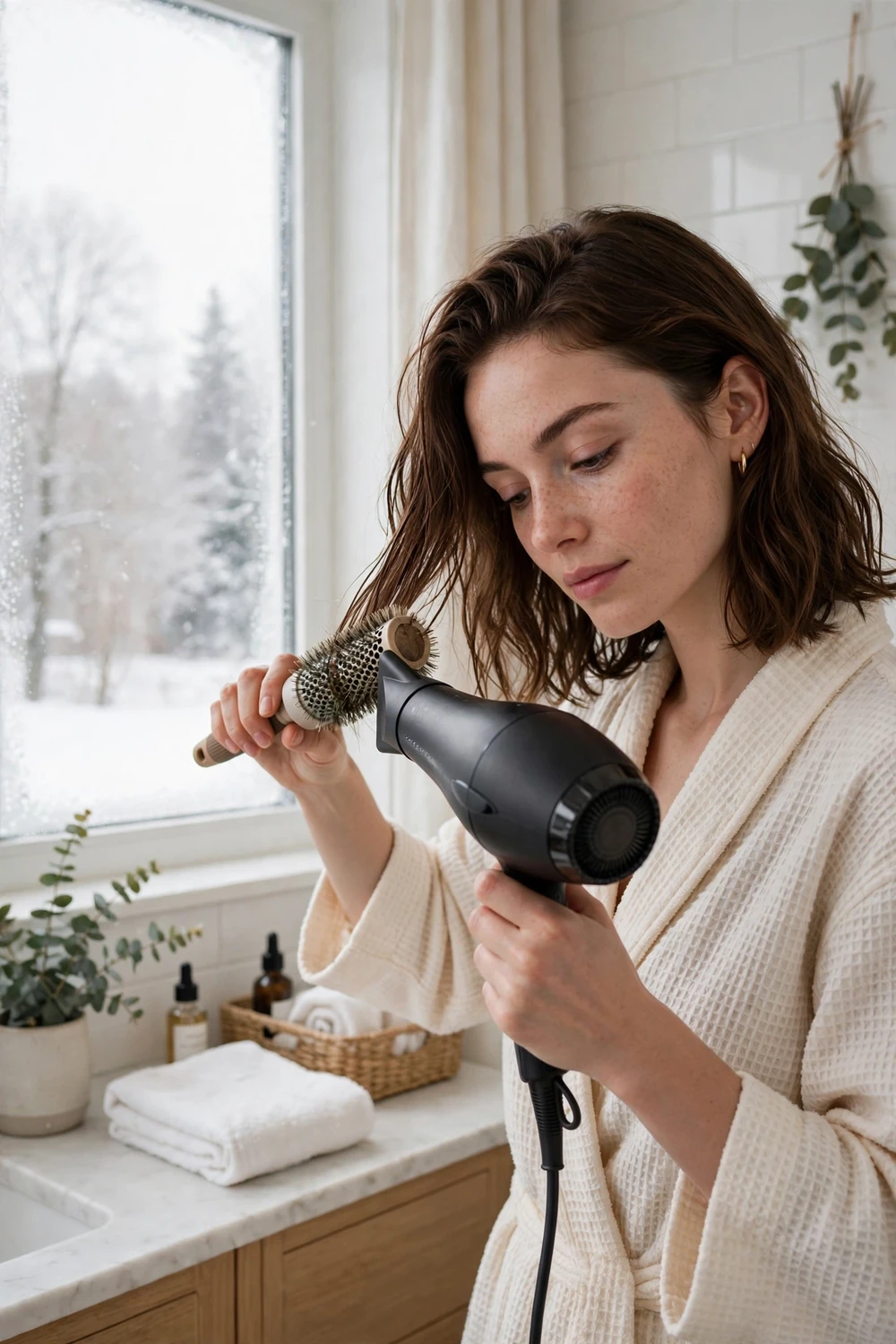
Blow dryers, straighteners and curling irons are hard on hair at the best of times, and in winter — when hair is already dry — they do double damage. You do not have to give them up, but turning the heat down makes a real difference. Most styling tools do not need their highest setting; medium heat with a little more patience gives you the same result with far less harm.
Whatever you do, never use a hot tool on unprotected hair in winter. A heat protectant spray or cream creates a barrier between the heat and your hair, cutting damage dramatically. Spray it evenly through damp hair before blow drying, and again on dry hair before straightening or curling. And whenever you can, let your hair air-dry at least part of the way before you reach for the dryer.
7. Try Pre-Wash Oiling on Wash Day
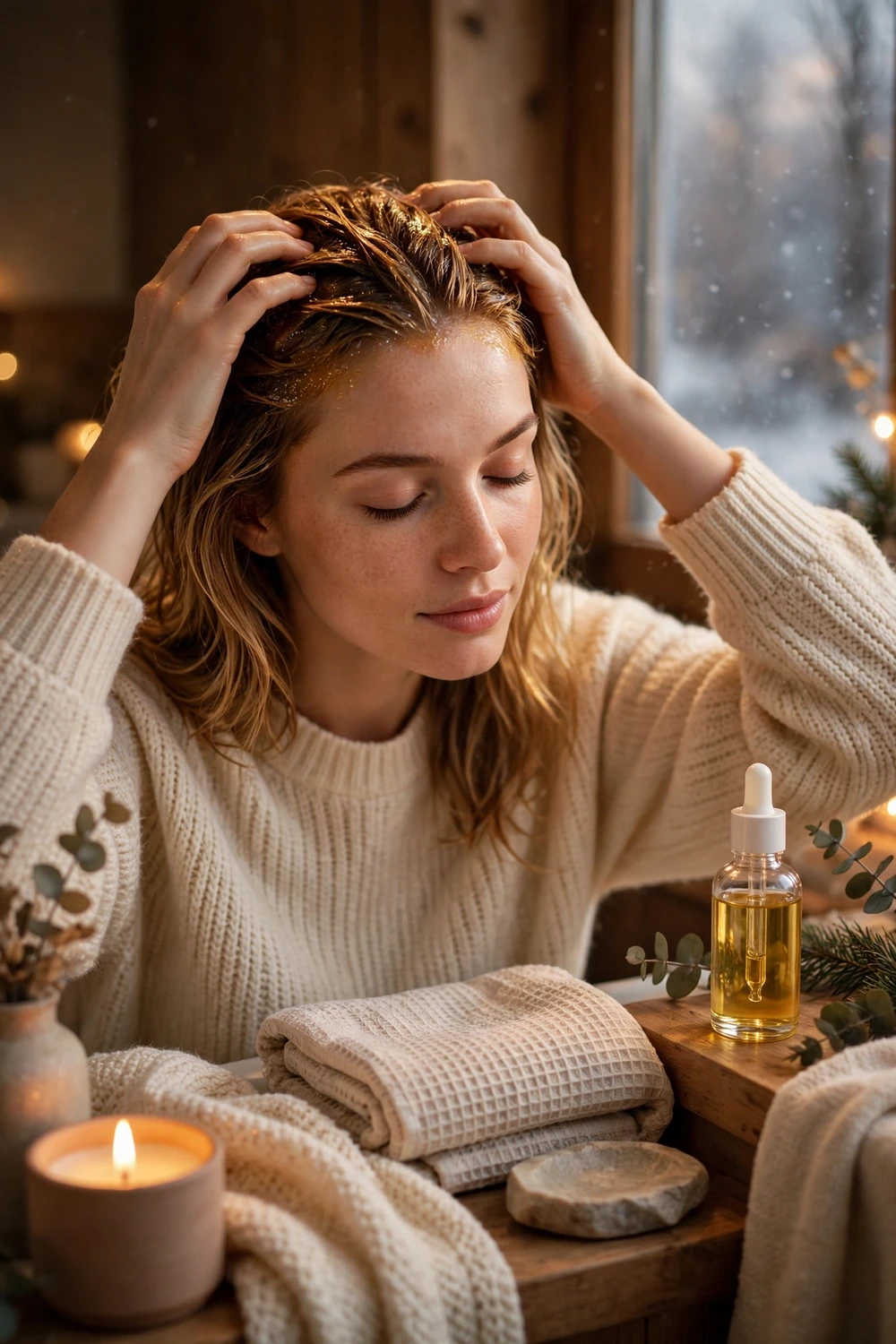
Pre-wash oiling — sometimes called a pre-poo — is an old habit that works wonders in winter. Massaging oil into your hair and scalp thirty minutes before you wash protects your strands from losing too much moisture during shampooing, and it leaves hair noticeably softer and easier to manage afterwards.
Warm a tablespoon of coconut, olive or argan oil, work it through the lengths and ends, and massage a little into your scalp. Leave it for at least thirty minutes — or overnight under a shower cap if your hair is very dry — then wash as usual. You may need to shampoo twice to get all the oil out, and that is fine. Once a week is plenty, and it pairs beautifully with your weekly mask.
8. Fix Hat Hair Without Rewashing
Hats and beanies are non-negotiable in winter, but hat hair — flat on top, frizzy at the sides, with a strange dent across the forehead — is the price we pay. The good news is that you can fix it in two minutes without washing your hair again.
First, choose your hat wisely: a satin or silk-lined beanie causes far less friction and frizz than rough wool. Second, style your hair with a little volume at the roots before you put the hat on — a quick blast of dry shampoo at the roots absorbs oil and lifts the hair back up when the hat comes off. To fix the dreaded hat line, mist the dented section lightly with water, scrunch or smooth it with your fingers, and give it a ten-second blast with the dryer.

9. Beat Winter Static for Good
Few things are more annoying than winter static — hair flying up, clinging to your face and crackling every time you take off a jumper. Static happens because cold, dry air lets electric charge build up in your hair, and dry hair holds that charge far longer than moisturised hair.
The fix starts with moisture: well-conditioned hair holds less static, so tips two, three and four already help a lot. Add a leave-in conditioner or a tiny drop of hair oil on the worst days, and switch from a plastic brush to a wooden or natural-bristle brush, which creates far less static. A quick trick for emergencies: smooth a used dryer sheet lightly over your hair, or rub a tiny bit of hand lotion between your palms and pat it over the flyaways.

10. Run a Humidifier Indoors
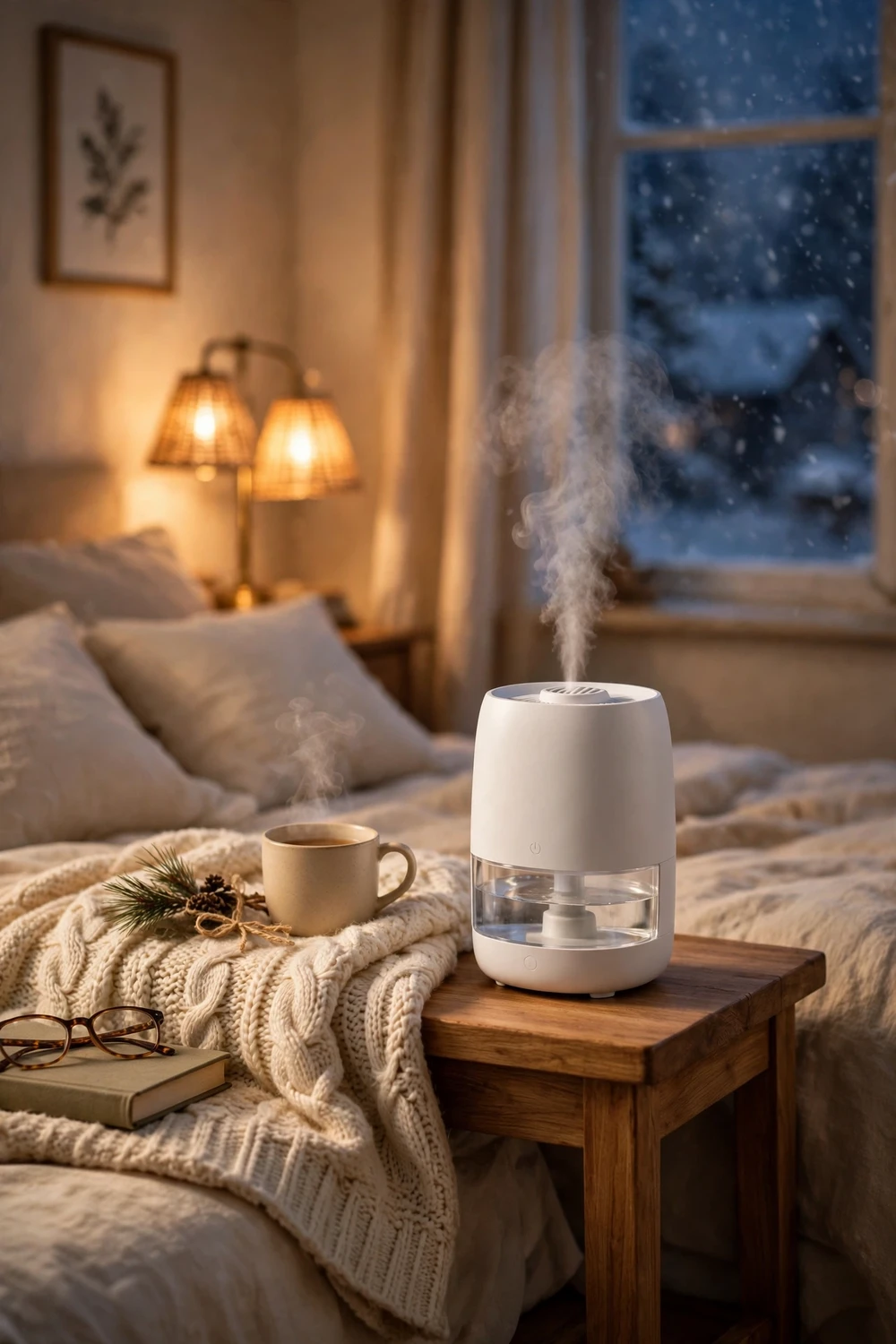
Your hair is not the only thing suffering from dry indoor air — your skin, your throat and your sinuses feel it too. Central heating drops indoor humidity to desert levels, and your hair loses moisture to the air all day and all night. A humidifier is one of the simplest winter investments you can make for your whole body.
Run a small humidifier in your bedroom at night, aiming for indoor humidity around 40 to 50 percent. Your hair will wake up softer and less frizzy, your skin will feel less tight, and you may even sleep better. Clean the humidifier regularly according to the instructions, and do not overdo it — too much humidity can cause condensation on cold windows.
11. Switch to a Satin Pillowcase
You spend roughly a third of your life with your head on a pillow, so the fabric matters more than you think. Cotton pillowcases absorb moisture from your hair and create friction as you move in your sleep — a recipe for frizz, tangles and breakage, especially in dry winter air. A satin or silk pillowcase lets your hair glide smoothly instead.
The difference is noticeable within a week: less morning frizz, fewer tangles, smoother curls and waves that hold their shape better overnight. Satin is the budget-friendly option and works almost as well as silk; silk is the luxury version and also feels wonderful on your skin. If a new pillowcase is not in the budget right now, a satin sleep bonnet or a loose silk scarf wrapped around your hair does the same job.

12. Soothe a Dry, Itchy Winter Scalp
A dry, itchy scalp is one of winter’s most common complaints, and scratching only makes it worse. Cold air dries out the scalp, hot showers strip its natural oils, and the result is tightness, flakes and itching. The first step is to stop overwashing and to rinse with lukewarm water — both help more than any product.
Once a week, massage a few drops of jojoba or tea tree oil into your scalp before washing, or use a gentle scalp scrub to remove buildup. Avoid heavy styling products sitting on the scalp, and brush gently with a soft brush to distribute natural oils. If itching, redness or heavy flaking does not improve after a few weeks, it is worth asking a dermatologist — some scalp conditions look like dryness but need specific treatment.

13. Book a Trim Every 8 to 12 Weeks
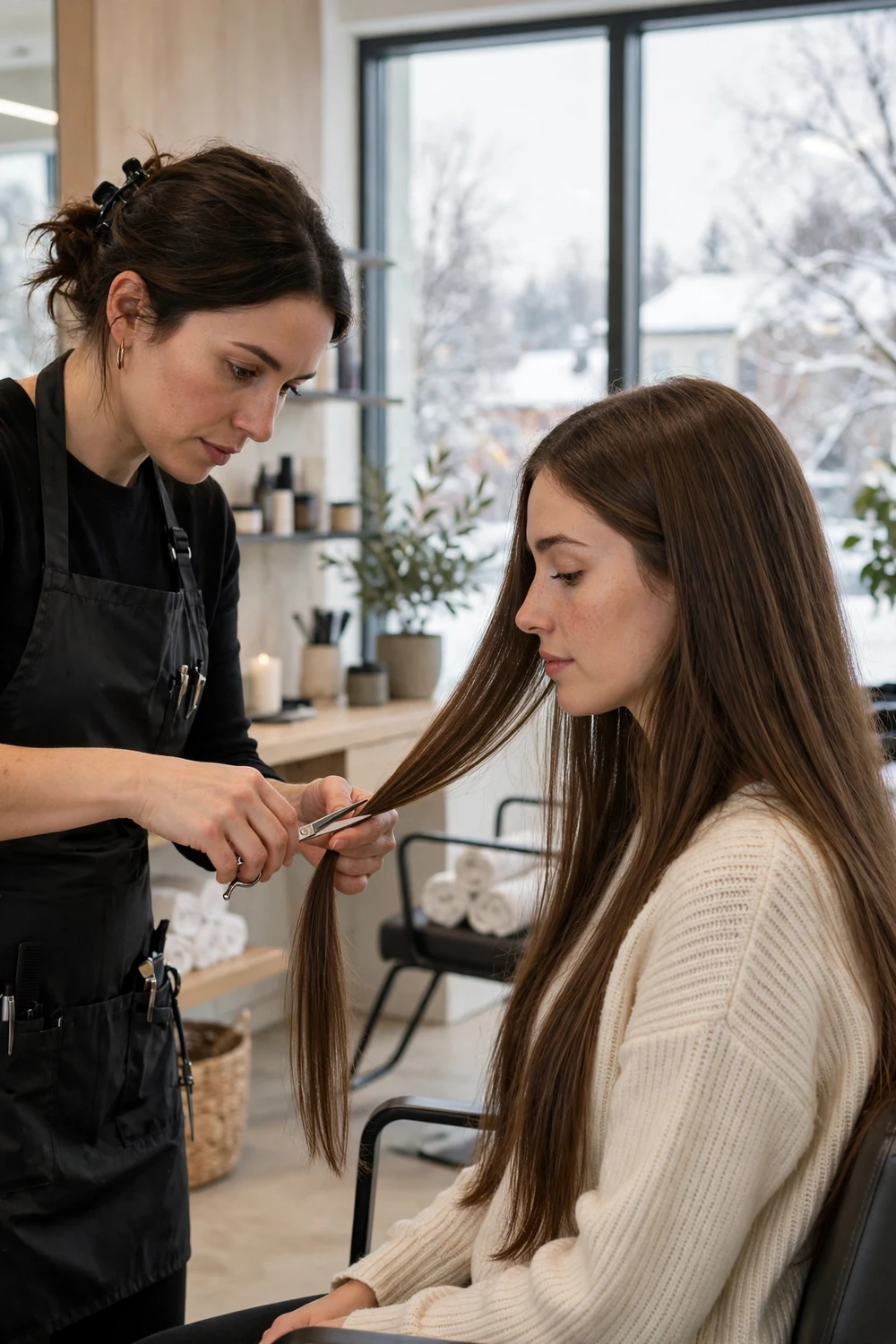
It sounds counterintuitive when you are trying to grow your hair, but regular trims are essential in winter. Dry air makes split ends worse, and a split end that is left alone will keep splitting upward, forcing you to cut off far more later. A small trim every eight to twelve weeks removes the damage before it spreads and keeps your hair looking healthy and full.
You do not need a dramatic cut — half an inch is usually enough to tidy the ends and refresh the shape. Winter is also a good time to ask your stylist about a gloss treatment or a deep-conditioning service, which can add shine and protection for the coldest weeks. Book your trim before the holidays, and your hair will look its best in every festive photo.
14. Adjust Your Routine to Your Hair Type
There is no single winter routine that works for everyone, because different hair types lose moisture in different ways. Fine hair gets weighed down easily, so it needs lightweight leave-ins, less oil and washing every other day with a gentle shampoo. Curly and coily hair is naturally drier, so it needs richer creams, more frequent deep masks and protective styles like braids or buns under a hat.
Colour-treated hair is the most vulnerable of all in winter — the colour process already lifts the cuticle, and cold air makes fading and dryness worse. Use a colour-safe, sulphate-free shampoo, wash in cooler water, and add a weekly mask without fail. Whatever your hair type, pay attention to what your hair is telling you: if it feels straw-like, it needs moisture; if it feels limp, it needs less product and a clarifying wash.

15. Eat and Drink for Healthy Winter Hair
Healthy hair is built from the inside out, and winter is when your diet matters most. Hair is mostly protein, so make sure you are eating enough of it — eggs, fish, chicken, lentils, beans and Greek yoghurt all help. Omega-3 fatty acids from salmon, walnuts and flaxseeds keep the scalp healthy and add natural shine, while iron, zinc and biotin from leafy greens, nuts and whole grains support strong growth.
Do not forget water. It is easy to drink less in winter because you feel less thirsty, but dehydration shows up in your hair as dryness and dullness. Keep a bottle nearby and sip through the day, and enjoy herbal teas if plain water feels boring in the cold. Good food and enough water will not fix split ends overnight, but over a few weeks they make a visible difference to shine, strength and growth.

Your Winter Hair Care Routine at a Glance
If all fifteen tips feel like a lot, here is the simple version to stick on your bathroom mirror. Wash two to three times a week with lukewarm water. Condition every wash, mask once a week, and use a leave-in every day. Oil the ends, protect from heat, and wear a satin-lined hat. Sleep on satin, run a humidifier, and trim every eight to twelve weeks. That is the whole routine — everything else on this list is a bonus that makes it work even better.
Start with the three changes that are easiest for you, add one more each week, and by the time the coldest weather arrives your hair will already be ready for it.
Winter Hair Care FAQs
How often should I wash my hair in winter?
Two to three times a week suits most people. Fine hair may need every other day, while curly or coarse hair can often go once or twice a week. If your scalp feels oily or itchy, wash — do not suffer through a schedule that does not suit you.
Can I use a hair dryer every day in winter?
You can, as long as you use a heat protectant every time and keep the heat on medium. Let your hair air-dry part of the way first, and give it at least one or two dryer-free days a week if you can.
Why does my hair get so static-y in winter?
Cold, dry air lets static charge build up, and dry hair holds that charge. Moisturised hair, a wooden brush and a little leave-in conditioner or hair oil are the best fixes.
Does cold weather actually damage hair?
Yes — cold air dries hair out, and wet hair in freezing temperatures can become brittle and snap. Never go outside with soaking wet hair in freezing weather, and always protect your hair under a hat or scarf.
What is the best oil for winter hair?
Argan oil suits almost everyone, jojoba is closest to your scalp’s natural oil, coconut oil is best for very dry or thick hair, and sweet almond oil is a light option for fine hair. A couple of drops on the ends is all you need.
Final Thoughts
Winter does not have to mean months of dry, dull, unhappy hair. With a few small changes — washing less, conditioning more, protecting your hair from heat and cold, and giving it a weekly mask — your hair can look soft, shiny and healthy right through to spring. Start with the tips that feel easiest, be patient for a few weeks, and let your hair show you what it needs.
Which of these winter hair care tips 2026 will you try first? Tell us in the comments, and share this list with a friend whose hair is struggling this winter — she will thank you for it.