There is a quiet kind of magic in walking into a home that looks expensive — calm light, thoughtful details, furniture that seems chosen rather than collected. Most people assume it took a fortune. It rarely did. What makes a space feel high-end is not the price of the sofa but the care behind the small decisions around it.
That is the good news: a luxury look is mostly a design look, and design choices are free or cheap. With a handful of clever, affordable upgrades, you can give your home that polished, put-together feel without touching your savings. These eleven ideas cost little, take a weekend at most, and each one punches far above its price. The affordable upgrades below prove that a luxury look is mostly a design look.
1. Hang Oversized Mirrors to Bounce Light
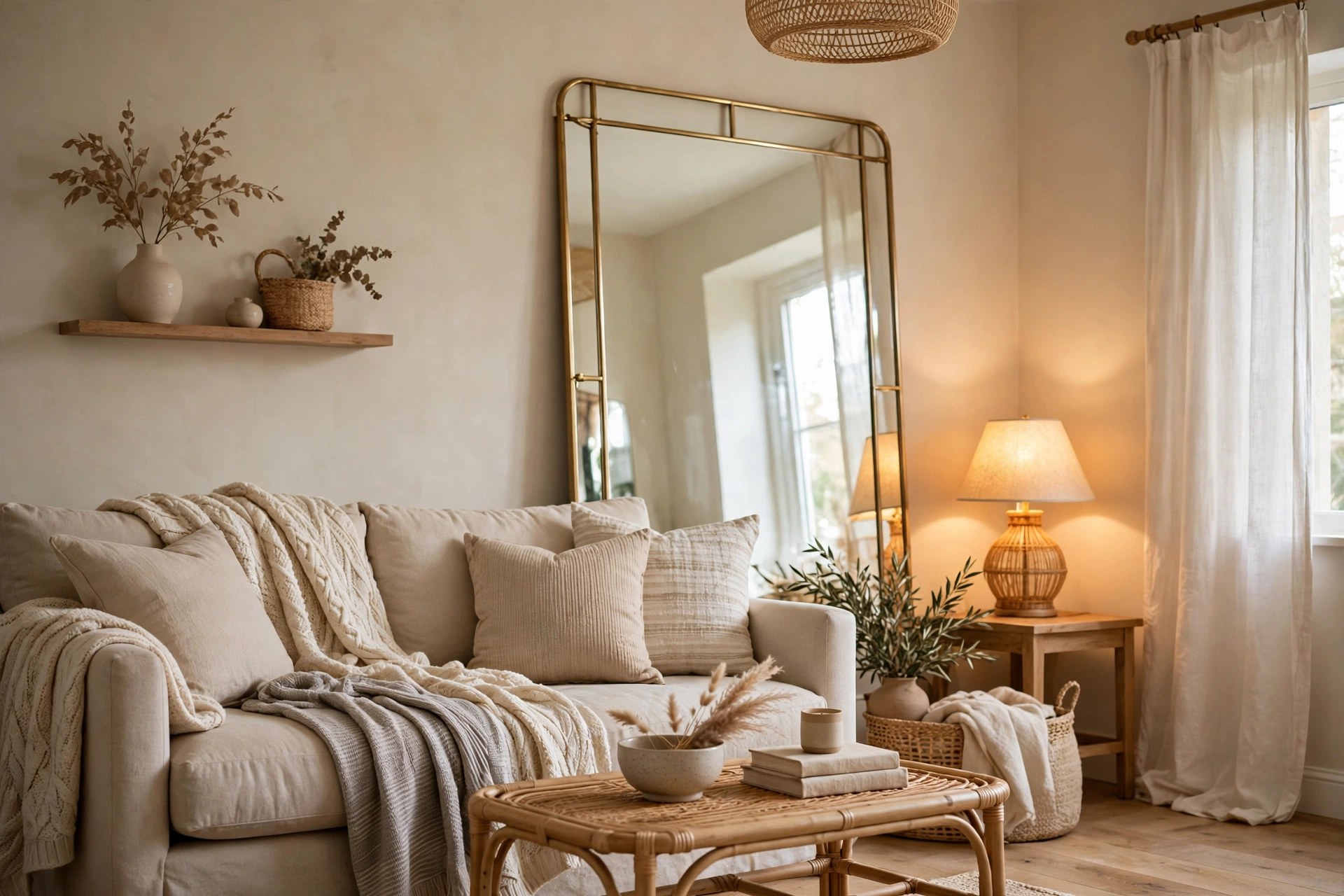
Nothing opens up a room like a large mirror. It doubles the natural light, adds depth, and gives even a modest space the airy feel of a designer loft. Lean a big, simple-framed mirror against the wall in the living room or hallway, and position it so it reflects a window. Thrift shops and discount home stores are full of them for the price of a pizza — and one of the most common common interior design mistakes is leaving walls bare when a single large mirror could transform them. Of all affordable upgrades, an oversized mirror delivers the most transformation per pound spent.
2. Give Each Room One Statement Piece
Expensive-looking homes rarely shout from every corner; they whisper through one or two confident pieces. Pick a single item per room to be the star — a bold pendant light over the dining table, a striking armchair, an oversized piece of art in the entryway — and keep everything else calm and simple around it. That contrast is exactly what makes designer rooms feel intentional rather than cluttered.
3. Swap Out Tired Lighting Fixtures
Builders’ standard flush-mount lights do no one any favours. Replacing them with simple modern pendants, a sculptural semi-flush light, or even a pair of wall sconces instantly updates a room’s character. Look for clean-lined designs in brass, black, or brushed nickel from budget retailers; many look identical to fixtures costing five times more.
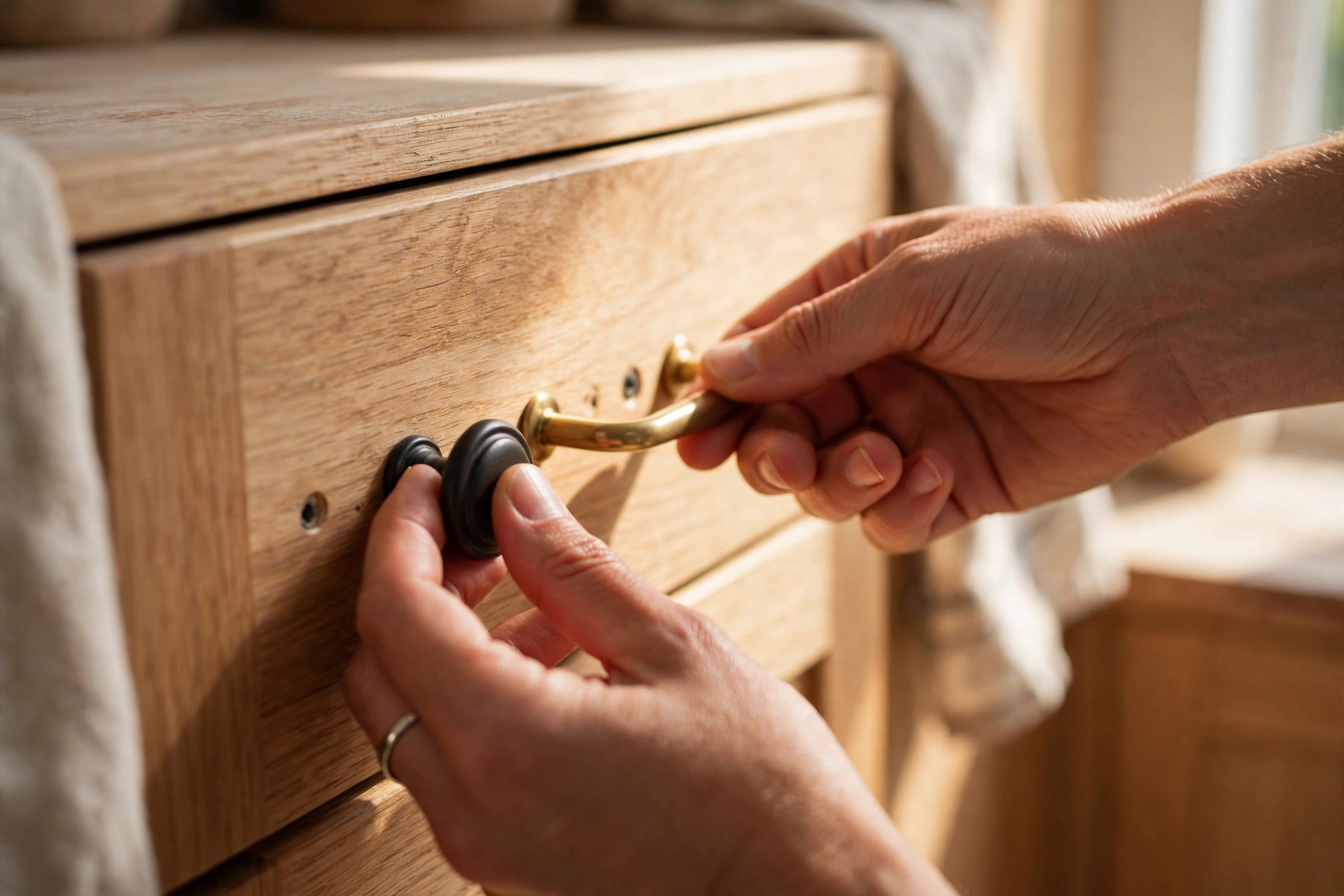
4. Upgrade Cabinet Hardware in the Kitchen and Bath
Kitchen cabinets are the biggest visual surface in most kitchens, yet changing the hardware takes an afternoon and a screwdriver. Swap dated knobs for slim brass bars or matte black handles, and the whole kitchen reads as custom. Swapping hardware is the classic example of affordable upgrades that punch above their price. While you are at it, change the bathroom cabinet pulls and the tap to match — hardware sets for an entire bathroom cost less than a single night out.
5. Layer Your Lighting for Warmth
High-end rooms almost never rely on a single overhead light. Layer three levels instead: ambient (a ceiling fixture or floor lamp), task (a reading lamp or under-cabinet strip), and accent (candles, fairy lights, or a small picture light). Use warm-white bulbs — around 2700K — throughout. The result feels rich and inviting, like the glow of a boutique hotel lobby. Layered lighting is one of those affordable upgrades guests notice without knowing why the room feels richer.
6. Hang Floor-to-Ceiling Curtains
Short, narrow curtains make windows — and ceilings — look smaller. Mount the rod close to the ceiling and extend it well past the window frame, then use long, flowing panels that just kiss the floor. Linen-look or sheer panels are inexpensive and instantly make a room feel taller, softer, and more tailored.
7. Roll Out a Plush Area Rug
A rug grounds a room the way a frame grounds a painting: it defines the space, adds texture, and muffles echo. Choose one large enough that the front legs of your sofa or chairs sit on it — a rug that is too small is one of the quickest ways to cheapen a room. Faux wool and low-pile rugs with rich patterns look luxurious at a fraction of the price.
8. Fake Luxe Materials on a Budget
Peel-and-stick marble tile behind the stove, faux-marble contact paper on a desk top, engineered wood flooring, quartz-look laminate counters — today’s imitation materials are remarkably convincing at a glance. Use them strategically on small areas where the eye grazes rather than stares, such as a backsplash, a tabletop, or a hallway runner. Faux luxe materials are affordable upgrades best used where the eye grazes rather than stares. The eye registers “marble” long before it registers the price tag.
9. Keep the Palette Calm and Neutral
Luxury spaces lean on restraint: warm whites, soft greys, beiges, and muted earth tones that flow from room to room. A cohesive neutral base makes everything look more expensive because the space feels considered rather than accidental. The secret ingredient is texture — boucle throws, velvet cushions, woven baskets, a jute rug — so the neutral scheme stays warm and layered instead of flat. And a home that looks calm usually looks tidy too; borrow some stylish organisation ideas for a neat space to keep clutter from ruining the effect.
10. Bring in Greenery and Fresh Flowers
A tall olive tree, a fiddle-leaf fig, or even a simple trailing pothos adds life, colour, and movement that no piece of furniture can. Real plants are best, but good-quality faux ones have become so realistic that guests rarely notice — dust them regularly to keep the illusion. One small bunch of fresh flowers on the coffee table or bathroom counter is a classic designer touch that costs almost nothing yet signals real care. Greenery might be the simplest of all affordable upgrades — one tall plant changes a room’s energy instantly.
11. Add Scent and Finishing Details
Luxury is multi-sensory. A candle, reed diffuser, or linen spray in a warm, simple scent makes a home feel cared for the moment someone steps inside. Then finish with the small styling details: a chic tray grouping candles and a vase on the coffee table, matching glass soap dispensers in the bathroom, folded throws draped just so. These before-and-after home makeovers show how much finishing touches change a room — none of them cost much, and together they create that unmistakable “designer” feeling.
You do not need a renovation budget to love how your home looks — you need a handful of smart choices and one free weekend. Start with the upgrade that costs least in your house, whether that is a mirror, new cabinet pulls, or simply rearranging what you already own. Pick two or three of these affordable upgrades to start, then build from there. Small changes stack up fast, and before long your home will have that high-end feel you have been admiring in magazines. The best part? You will know exactly how little it cost.
Frequently Asked Questions
What is the cheapest way to make a room look expensive?
Lighting and mirrors. Warm-toned layered lighting plus one large mirror costs very little, takes an afternoon, and transforms how a room feels more dramatically than new furniture ever could.
Can I get a luxury look without replacing my furniture?
Absolutely. Most affordable upgrades — mirrors, curtains, hardware, rugs, plants, scent — work around the furniture you already have. Changing what surrounds the big pieces changes how the big pieces look.
Which room should I upgrade first?
Start with the living room, since it sets the tone for the whole home and is where guests form their impression. One statement piece, layered light, and a large rug there will shift the feel of the entire house.