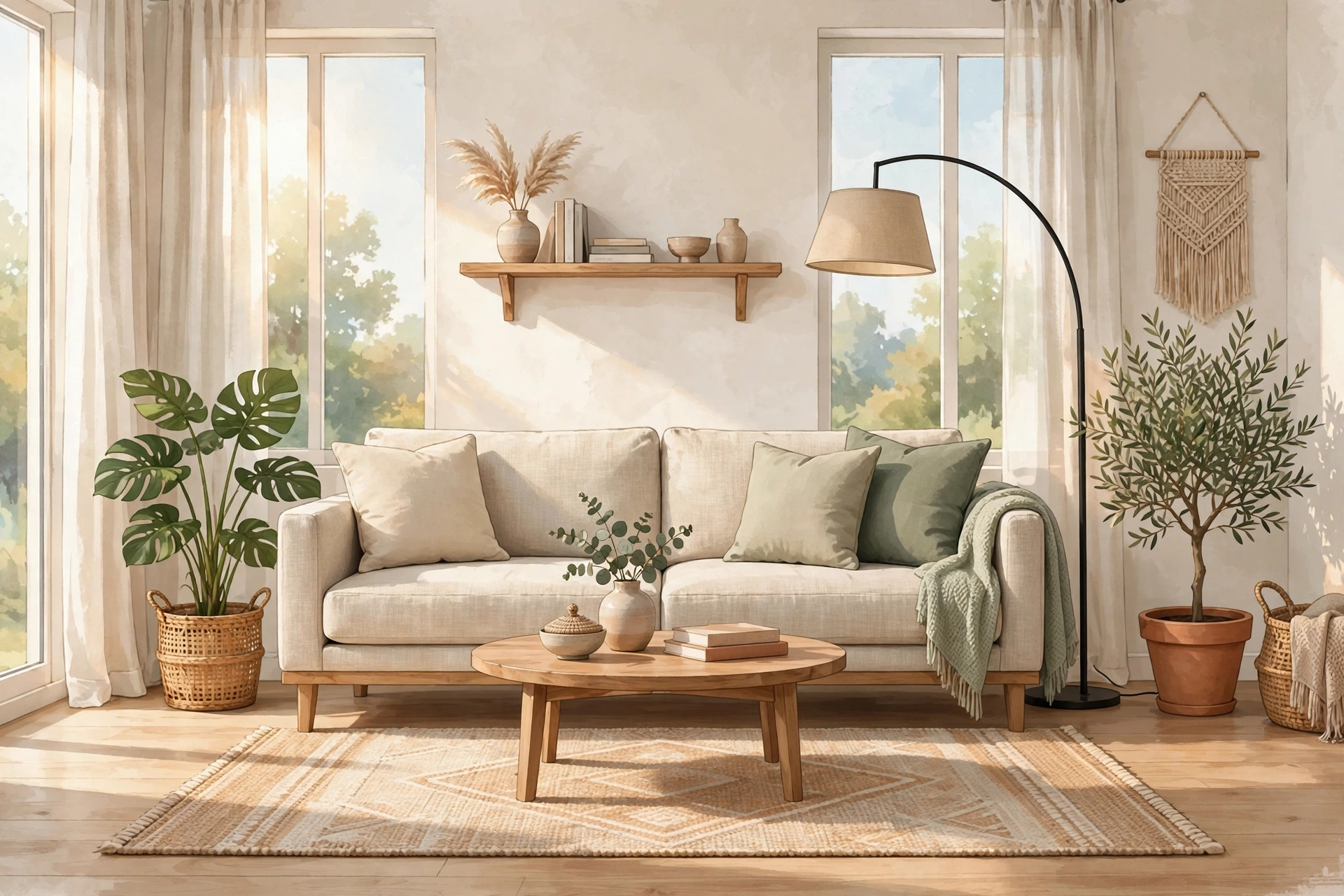
Many interior design mistakes have nothing to do with budget. A room can be full of expensive pieces and still feel cheap, cluttered, or unfinished, while a modest room with the right proportions, light, and balance can feel calm and polished. The difference is rarely one big purchase. It is usually a handful of small decisions about scale, contrast, and cohesion.
This guide covers six of the most common mistakes, explains why each one makes a room feel off, and gives practical fixes you can apply with what you already own. You do not need a renovation. You need a clearer eye for balance.
1. Mixing too many styles or patterns
It is easy to fall in love with many styles at once: modern, rustic, bohemian, industrial, and classic. When all of them meet in one room, the result often feels chaotic rather than curated. Too many competing patterns, colours, and textures leave the eye with no place to rest.
Use the 70/30 rule as a guide. Let about 70% of the room follow one main style, and use the remaining 30% for contrast. Keep patterns in the same colour family, repeat one or two materials, and leave some surfaces calm. A room needs a quiet background before a bold accent can shine.
2. Curtains that are too short, too narrow, or hung too low
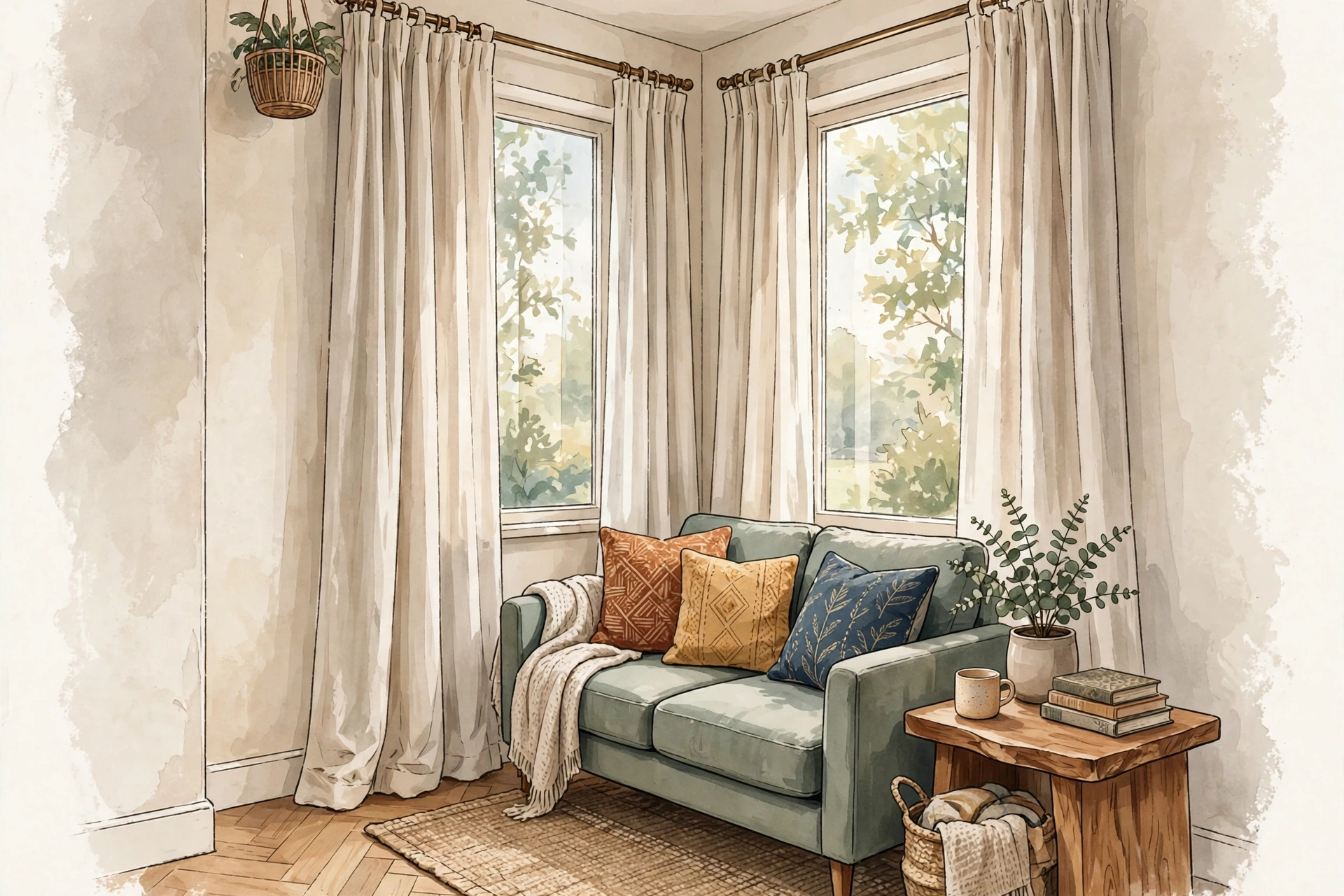
Curtains shape how tall and finished a room feels. Curtains that stop well above the floor can make ceilings look lower and windows look smaller. Curtains that are too narrow look stretched and unfinished, even when the fabric is beautiful.
Hang the rod close to the ceiling rather than just above the window frame, and let curtains fall to the floor or just kiss it. Choose panels wide enough to look full when closed, even if you usually keep them open. Good measurements matter more than expensive fabric.
3. A room with no contrast
A room in a single neutral tone can feel calm, but without any contrast it can also feel flat and forgettable. When walls, sofa, rug, and cushions all blend into the same shade, nothing stands out and the room loses depth.
Add contrast in small, deliberate ways. A dark cushion on a light sofa, a patterned rug, a black frame, a wooden tray, or a plant can give the room shape. You do not need bright colour. Even a shift in texture — linen against wood, matte against gloss — creates visual interest without overwhelming the space.
4. Buying a full matching furniture set
A matching set feels safe and easy to buy, but it often makes a room look like a showroom. Every piece has the same finish, the same shape, and the same height, so the room has no personality or story.
Mix pieces with different shapes, materials, and ages. Pair a modern sofa with a vintage side table, a wooden chair with a fabric bench, or a new lamp with an older rug. Keep one or two elements consistent — such as wood tone or colour palette — so the mix feels intentional rather than random.
5. Furniture in the wrong scale
Scale is about how pieces relate to each other and to the room. An oversized sofa beside a tiny side table looks unbalanced. A small rug under a large sofa makes the seating area feel disconnected. A huge artwork on a narrow wall can crowd the room, while a tiny artwork on a large wall disappears.
Measure before you buy, and think in relationships. A coffee table should sit close enough to reach from the sofa. A rug should be large enough to anchor the front legs of the main seating. A console should feel proportionate to what sits above or beside it. When in doubt, tape the outline on the floor first and live with it for a day.
6. A TV console that is too small for the TV
A TV that overhangs its console looks unstable and cheap, even when both pieces are good quality. The eye notices the imbalance immediately, and the wall feels unfinished.
Choose a console slightly wider than the TV. If a new console is not in the budget, combine two smaller pieces side by side to create a wider base, or mount the TV and use a low, wide bench below it. Keep cables tidy, leave breathing space around the TV, and avoid crowding the console with too many small objects.
Quick fixes that lift almost any room
Start with light. Open curtains fully in the day, clean windows, and use warm, layered lighting in the evening instead of one harsh overhead light. Next, clear surfaces: remove half of the small objects on tables and shelves, then put back only the ones you love. Clutter hides good design faster than any colour mistake.
Then check balance. Step back and look at the room as a whole. Is one side heavy and the other empty? Is there a focal point, such as a sofa, a fireplace, or a piece of art? Move one piece at a time and photograph the room after each change. Photos reveal imbalance that the eye misses when you are standing inside the room.
A simple room-by-room checklist
For the living room, check seating, rug, lighting, and the TV wall. For the bedroom, check bedding, bedside tables, and curtain height. For a dining area, check table scale, chair comfort, and light height. In every room, ask three questions: does the scale feel right, is there enough contrast, and does the room have one clear focal point? If any answer is no, fix that first before buying anything new.
Good design is not about following trends. It is about making a room feel comfortable, balanced, and personal. A few thoughtful adjustments — better curtains, a wider console, a mixed set of pieces, and a little contrast — can make a home feel more expensive without spending like it.
Frequently asked questions
Can I mix styles without making a mess? Yes. Keep one main style dominant, repeat colours and materials, and limit bold patterns to one or two places. Cohesion comes from repetition, not from matching everything.
What is the cheapest way to make a room look better? Declutter surfaces, improve lighting, hang curtains higher, and rearrange furniture for better balance. These cost little and often change the room more than new decor.
How big should a rug be? In a living room, it should be large enough for the front legs of the sofa and chairs to sit on it. A rug that is too small makes the seating area feel scattered.
For more home and lifestyle ideas, see 10 Genius Home Tricks to Save Time and Money, 17 Before-and-After Houses That Whisper Stories Through Every Corner, and 101 Fun Facts That Will Blow Your Mind.