Children do not need a special occasion to be kind. They notice a sad face across the room, a lonely child at the edge of the playground, or a grown-up struggling with heavy bags, and they simply act. There is no planning, no audience, and no expectation of a reward. That is what makes the beauty of kindness in childhood feel so honest and so easy to recognise.
Adults often talk about kindness as a big idea, something we should practise or teach in lessons. Children show us something simpler. For them, the beauty of kindness is a small, practical choice made in the moment: share what you have, sit beside someone who feels alone, or offer help before anyone asks. These everyday choices may look tiny, but they change how a whole day feels for another person.
The Beauty of Kindness in Everyday Childhood
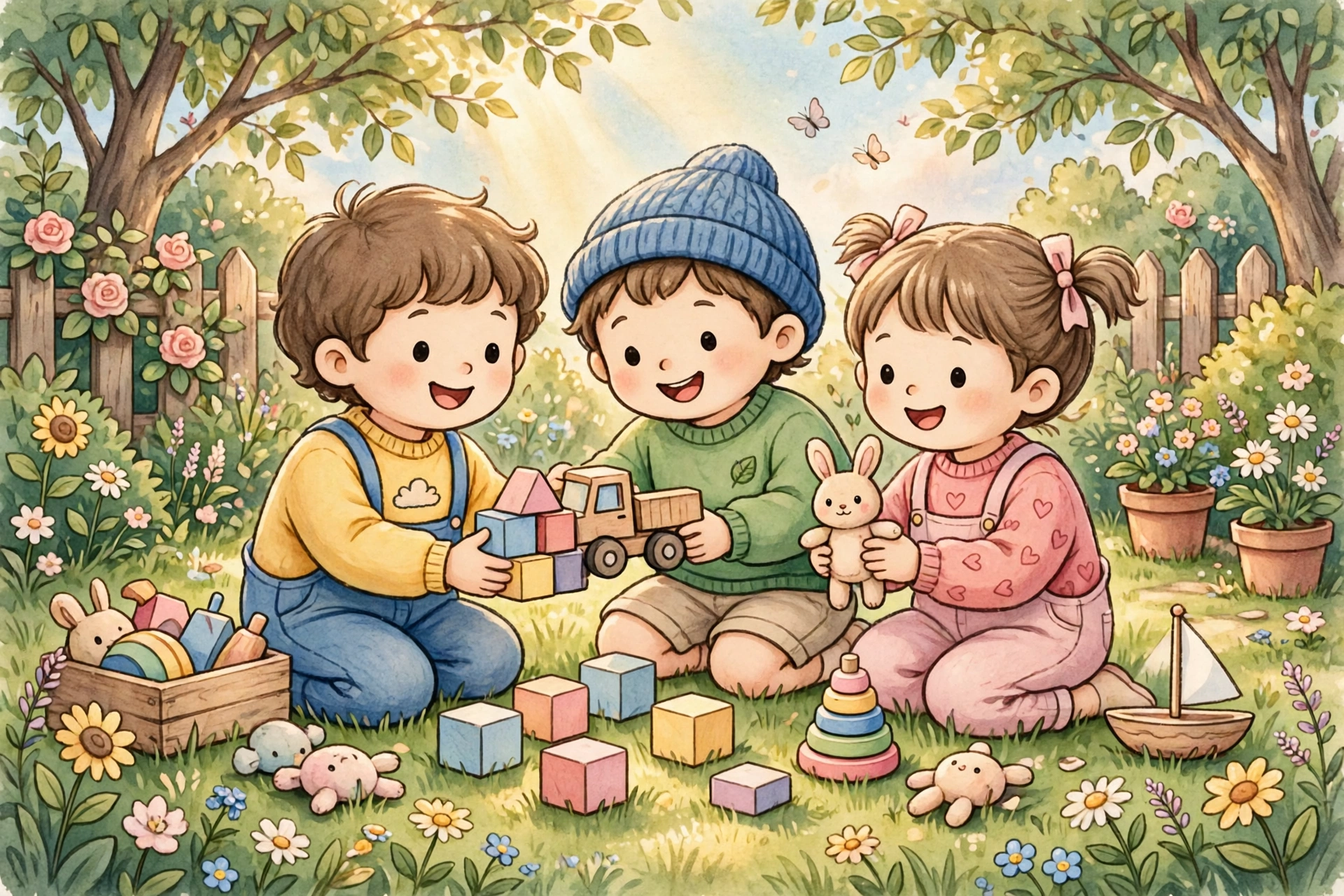
Moment one: a child in a playroom holds out a favourite toy to a younger visitor who has nothing to play with yet. There is no bargain and no condition. The toy is offered freely, simply because sharing feels better than playing alone. In that one gesture, a shy visitor becomes part of the game, and a new friendship has a chance to begin.
Moment two: a child notices a friend crying quietly after a disappointing morning at school. Instead of walking past or offering quick advice, the child sits nearby, listens, and stays. Sometimes the kindest thing is not a clever answer. It is the quiet message that someone is not facing a hard feeling alone. That quiet presence shows the beauty of kindness better than any grand gesture.
Moment three: a new pupil stands alone in the school hall, unsure where to sit at lunchtime. Another child waves, makes room at the table, and starts a friendly conversation about games, books, and favourite foods. That small invitation can turn a nervous first day into a day that feels welcoming. It costs nothing, yet it is remembered for a long time.
Moment four: an elderly neighbour is carrying shopping bags up the steps to the front door. A child runs over, takes the lighter bag, and walks slowly beside them. The child does not rush ahead or make a fuss. The neighbour smiles, the load feels lighter, and an ordinary afternoon becomes a little warmer for both of them.
Moment five: a child spends the afternoon drawing a bright picture of flowers, sunshine, and a smiling family. Instead of keeping it, the child gives it to a friend who has had a difficult week. The picture is not perfect, and that is exactly why it matters. It says, in colour and crayon, that someone was thinking of you.
Moment six: a younger brother or sister is struggling with a puzzle, and the pieces will not fit. An older child does not take over or laugh. Instead, the older child sits down, turns the pieces slowly, and encourages the younger one to try again. Patience like this teaches a child that learning is safe, and that mistakes are part of getting better. That patience is the beauty of kindness in action.
Moment seven: a group of children is choosing teams for a game in the park. One child notices that the same quiet child is always picked last, so they suggest a fairer way to choose. Everyone gets a turn, everyone gets to play, and the game becomes more fun because nobody is left standing alone on the sidelines.
Moment eight: a child says something unkind in a moment of frustration, then realises it hurt a friend. Instead of pretending it did not happen, the child apologises sincerely and asks how to make it right. A genuine apology takes courage, especially for a young child, and it repairs trust far better than silence ever could.
Moment nine: at lunchtime, one child has forgotten a snack while another has an extra piece of fruit. Without a second thought, the fruit is shared, and both children eat happily together. This is the beauty of kindness in its simplest form: noticing a need and meeting it without making the other person feel embarrassed.
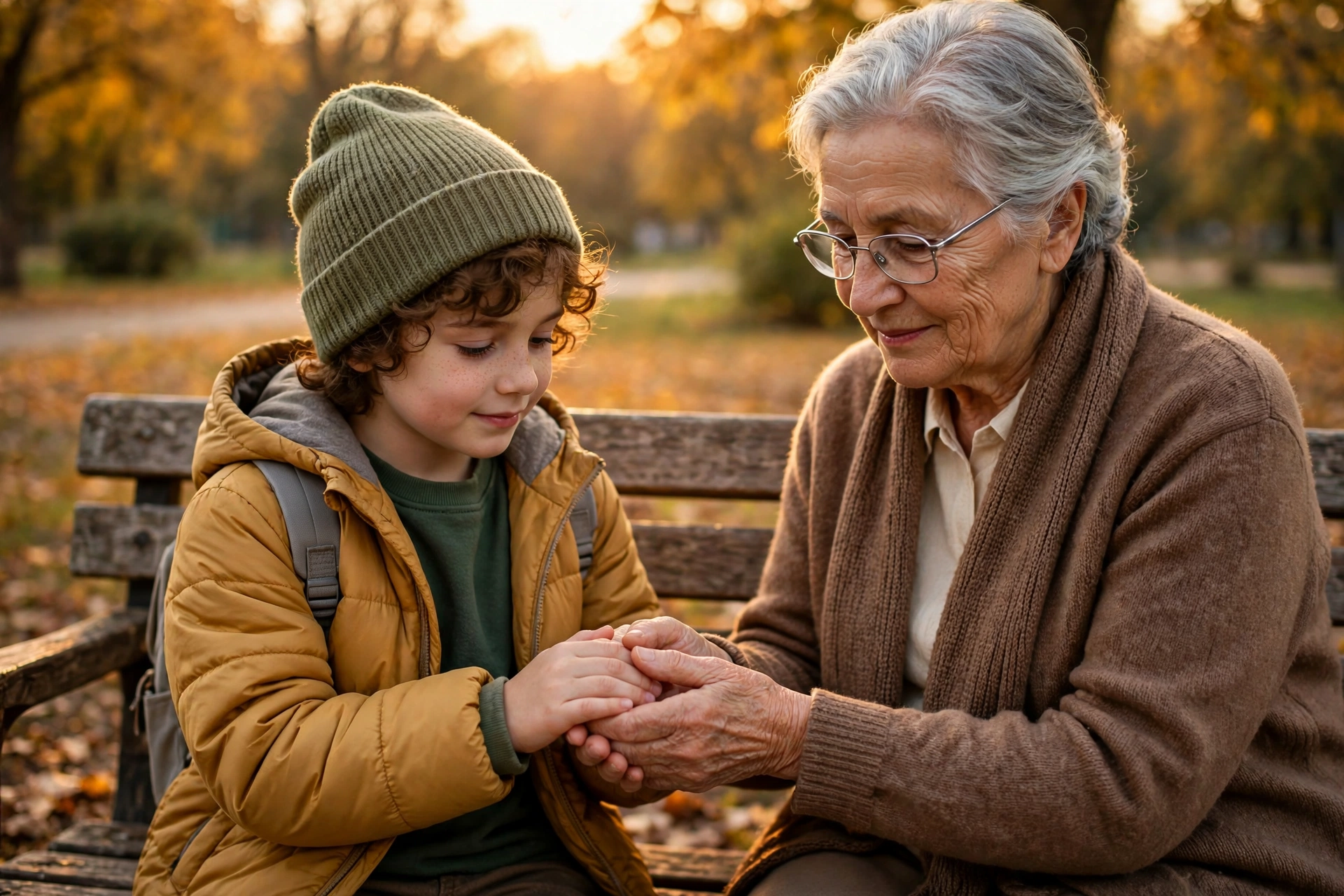
Moment ten: a child sits on a park bench beside an older person who looks lonely, and gently holds their hand for a while. There is no rush and no long speech. Just quiet company on a sunny afternoon, and the feeling that someone cares. Small moments of companionship like this can brighten an entire day.
What Adults Can Learn from These Small Moments
Children remind us that the beauty of kindness does not have to be grand to be meaningful. We do not need a perfect plan, a large donation, or a dramatic gesture. We need attention. When we slow down enough to notice the people around us, we find dozens of chances to help, include, comfort, and encourage, just as children do every day.
Children also teach us to act without overthinking. Adults often hesitate, worrying about saying the wrong thing or looking foolish. Children simply offer the toy, the seat, the snack, or the hand. Their example encourages us to be brave in small ways: to speak to the new colleague, to check on the neighbour, or to say thank you to someone who rarely hears it. If you enjoy stories about quiet generosity in adult life, you may also like strangers who turned an ordinary day into a lesson in quiet kindness.
Another lesson is generosity without keeping score. Children rarely help because they expect something back. They help because it feels right. When adults let go of the need for thanks or recognition, kindness becomes lighter and more joyful. It stops being a duty and becomes a habit, something woven naturally into ordinary days. For more on gentle, everyday compassion, read about moments that prove compassion and empathy are a quiet love language.
A Closing Reflection
Long after the toys are put away and the school day ends, these small moments stay with us. A shared snack, a saved seat, a sincere apology, or a quiet hand held on a bench may seem ordinary, but together they shape how children see the world. They learn that people can be trusted, that help is nearby, and that they, too, can make someone else’s day better. Each one carries the beauty of kindness forward into the next day.
The beauty of kindness is not found in perfection. It is found in ordinary children choosing, again and again, to be gentle, fair, and thoughtful. If we watch closely and follow their example, we may find that our own days become warmer, kinder, and a little more hopeful too. And just as a first pet can teach a child about love and responsibility, these early lessons in caring stay with us for life, much like first pet memories that prove their love shapes us more than we realise.