Grand gestures get the applause, but quiet kindness does the real work. A held door, a patient ear, a neighbour who notices before anyone asks — these are the moments that prove compassion and empathy are the quietest and most powerful love language. They cost almost nothing, yet people remember them for years.
Compassion is feeling moved by someone else’s difficulty. Empathy is understanding what that difficulty feels like from inside their world. Together, compassion and empathy turn ordinary days into something warmer — not through speeches or gifts, but through small, attentive choices. Here are eleven such moments, and what each one teaches about loving people well.
11 Moments That Prove Compassion and Empathy
1. The neighbour who carries the bags. An elderly woman is struggling with heavy shopping bags outside her building. Without being asked, a neighbour takes half the load and walks her to her door. No drama, no audience — just the simple recognition that someone needed help, offered before pride had to ask for it.
2. The stranger who holds the door. A parent pushing a stroller approaches a heavy glass door. A stranger steps ahead, holds it open, and waits until everyone is safely through. It takes four seconds. It also tells a tired parent that the world is not entirely in a rush.
3. The friend who simply listens. A friend calls, upset about a bad day. Instead of rushing to fix the problem or share a similar story, the listener stays quiet, asks gentle questions, and lets the caller finish. Compassion and empathy often look like this: full attention, freely given.
4. The coworker who covers the shift. A colleague is dealing with a family emergency and cannot face asking for cover. A coworker notices, volunteers to swap shifts, and never mentions it again. The kindness is not the shift itself — it is the removal of the burden of asking.
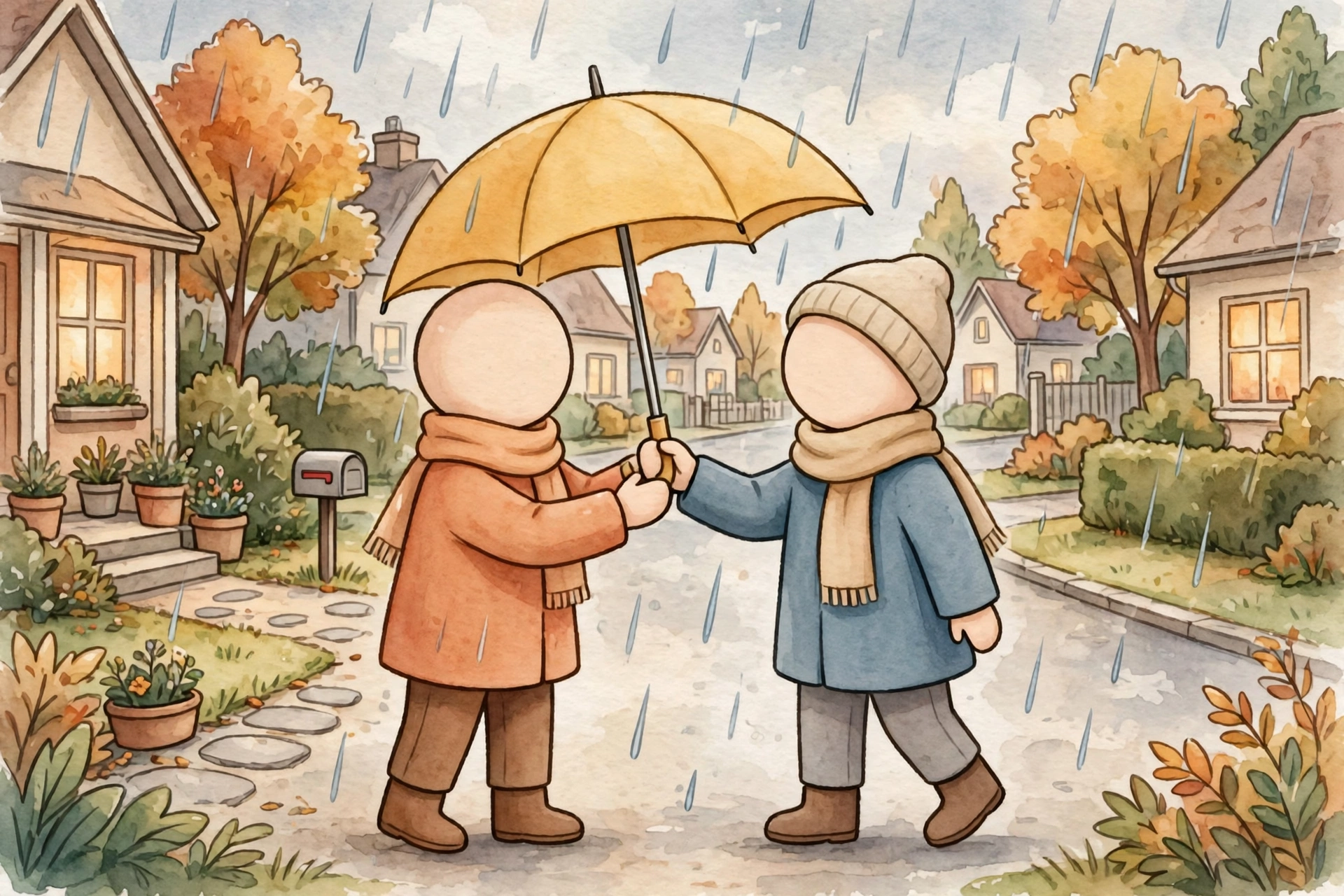
5. The child who shares the umbrella. Caught in sudden rain, a schoolchild opens an umbrella and, without a second thought, holds it so a classmate stays dry too. Children often understand compassion and empathy before adults complicate it: if someone is getting wet, you share.
6. The driver who waits. A bus driver sees an older passenger hurrying toward the stop and waits a few extra seconds. The passenger boards, breathless and grateful. Schedules matter, but so does the dignity of not being left behind.
7. The nurse who explains slowly. In a busy hospital corridor, a nurse notices a worried patient who has not understood the instructions. She stops, sits down, and explains everything again in plain words, without a hint of impatience. In frightening moments, patience is a form of love.
8. The teacher who notices the quiet pupil. A usually lively student has gone quiet. Instead of scolding the silence, the teacher quietly asks whether everything is all right — and listens to the answer. That single question can change the course of a young person’s week.
9. The apology that asks for nothing. After a careless remark, someone returns and says, simply, “I was wrong, and I am sorry.” There is no excuse, no “but,” no request for forgiveness. Compassion and empathy include owning the harm we cause, even when it is uncomfortable.
10. The donation with no name on it. A family going through a hard month finds a bag of groceries on their doorstep, with no note and no name. Anonymous kindness carries a special power: it says someone cared enough to help, and humble enough not to need thanks.
11. The call that checks in. Weeks after a loss, when everyone else has moved on, a friend calls just to ask how things really are. Grief does not follow a calendar, and the people who remember that — who check in after the flowers have faded — practise compassion and empathy at its most faithful.

Why Small Acts Matter So Much
Psychologists and researchers have long noted that kindness is contagious: witnessing a kind act makes people more likely to be kind themselves. That is why small moments matter more than grand gestures. A single act of compassion and empathy can ripple through a whole day — the person who was helped helps someone else, who helps someone else again. You rarely see the end of the chain you start.
Small acts also build trust. Communities where neighbours know each other’s names, where strangers hold doors and drivers wait, feel safer and more connected. Nobody can fix the whole world in an afternoon, but anyone can make one street, one office, or one bus stop a kinder place. The Greater Good Science Center at UC Berkeley (https://greatergood.berkeley.edu/topic/empathy) collects research on empathy and kindness for readers who want to go deeper into the science behind these everyday moments.
How to Practise Compassion and Empathy Daily
Start by slowing down enough to notice. Most kind acts begin with attention: seeing the bags, hearing the tiredness in a voice, noticing the quiet pupil. Put the phone away in conversations, make eye contact, and ask one more question before offering advice. Listening is often more useful than solving.
Then act small and act soon. Send the message today, not next week. Hold the door now. Offer the umbrella while it is still raining. Small, immediate kindness beats grand, postponed kindness every time. If you enjoy stories about human nature, our collection of fun facts (https://timezango.com/101-fun-facts-that-will-blow-your-mind/) is a lighter next read, and the before-and-after home stories (https://timezango.com/17-before-and-after-houses-that-whisper-stories-through-every-corner/) show how care and attention transform places as well as people. And because caring for others starts with caring for yourself, our guide to body signals worth noticing (https://timezango.com/5-alarming-ways-your-body-might-be-signaling-health-problems/) is a useful companion piece.
Frequently Asked Questions
What is the difference between compassion and empathy? Empathy is understanding what someone else feels. Compassion is empathy plus the urge to help. Empathy says “I understand.” Compassion says “I understand, and I am here.”
Can compassion and empathy be learned? Yes. Listening carefully, imagining another person’s perspective, and practising small kind acts all strengthen both qualities. Like muscles, they grow with use.
Why is quiet kindness called a love language? Because actions speak where words fall short. A held door or a patient ear can communicate care more honestly than a grand declaration — especially to people who find words difficult.
Do small acts really make a difference? They do. Research and everyday experience both show that witnessed kindness spreads, lifting the mood and behaviour of people who were not even involved.
Conclusion
Compassion and empathy rarely make headlines, and that is precisely their power. They work in the quiet moments — the held door, the shared umbrella, the call that comes weeks later — and they change ordinary days in ways people never forget. You do not need wealth, status, or a stage to practise them. You only need to notice, to care, and to act. Start with one small moment today, and let it be the first link in a chain you may never see the end of.