30 Mind-Blowing Space Facts That Will Change How You See the Universe
Have you ever looked up at the night sky and felt wonderfully, thrillingly small? The universe is so strange that even the wildest science-fiction films cannot keep up with reality. These 30 space facts are hand-picked to do one thing: blow your mind. From a planet that would float in water to a quasar holding 140 trillion oceans’ worth of water, every single one of these space facts reveals just how little we truly know about the cosmos above us. And the best part? Some of them are happening right now — this October, the night sky is putting on a special show. So grab a warm drink, step outside after dark, and prepare to see the universe completely differently.
We have grouped our favourites into easy themes: this week’s skywatching highlights, the planets, the Sun and Moon, deep-space wonders, and the truly extreme stuff. Whether you are prepping for a quiz night or just love learning something new, something here will make you gasp.
Look Up This Week: October 2026 Sky Highlights
Before we dive into the deep universe, here is something special: three of these space facts are happening in the sky right now. October 2026 is a brilliant month for stargazers.
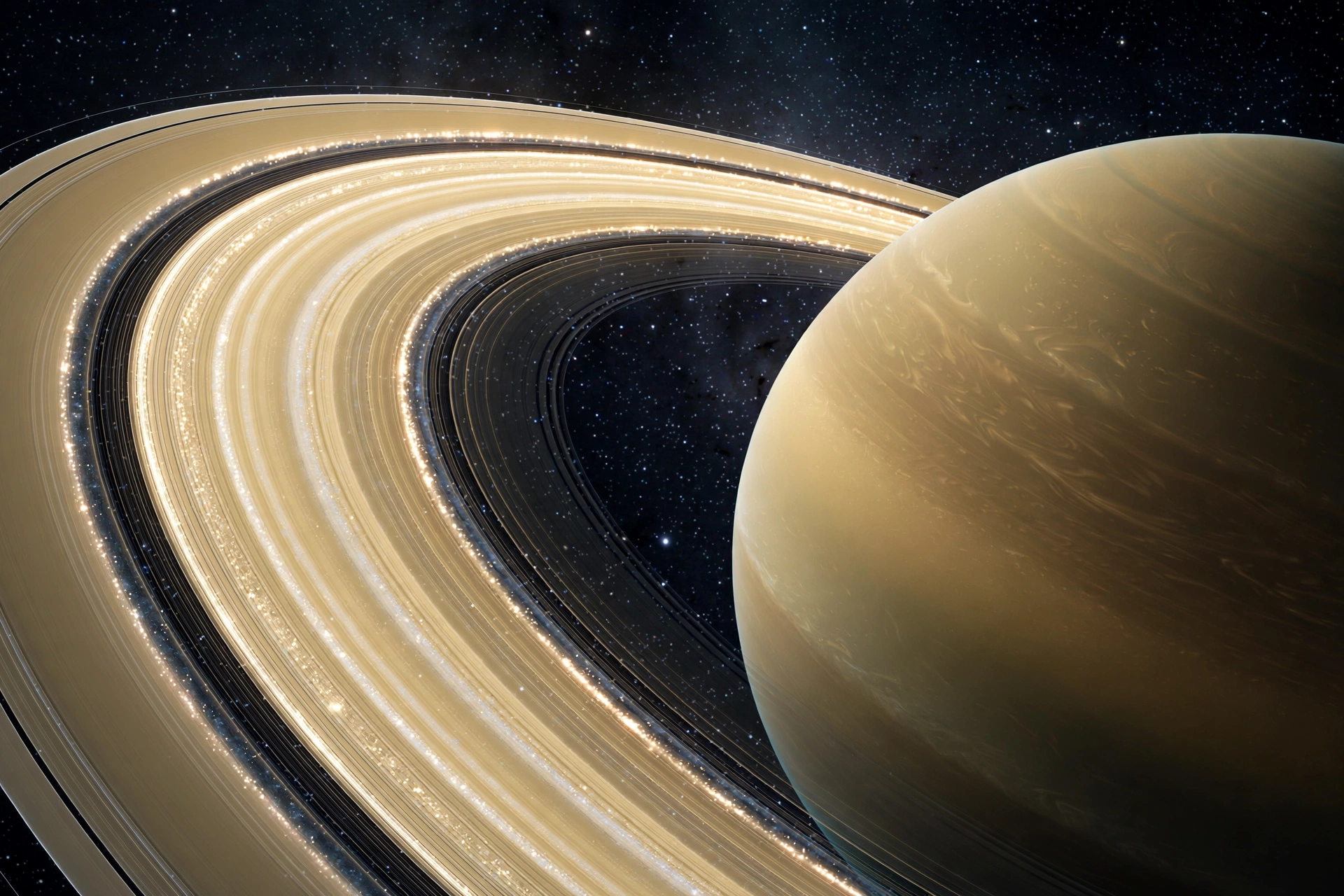
1. The Orionid Meteor Shower Peaks on October 21–22
Every October, Earth drives straight through a river of debris left behind by the most famous comet of all: Halley’s Comet. When those tiny grains of dust slam into our atmosphere at around 66 kilometres per second, they burn up as the Orionid meteor shower — up to 20 shooting stars an hour at its peak on the nights of October 21–22. The meteors appear to radiate from near Orion’s club, but they streak across the whole sky. For the best view, head somewhere dark after midnight, give your eyes 20 minutes to adjust, and simply look up. No telescope needed.
2. The Moon Cosies Up to the Pleiades on October 27–28
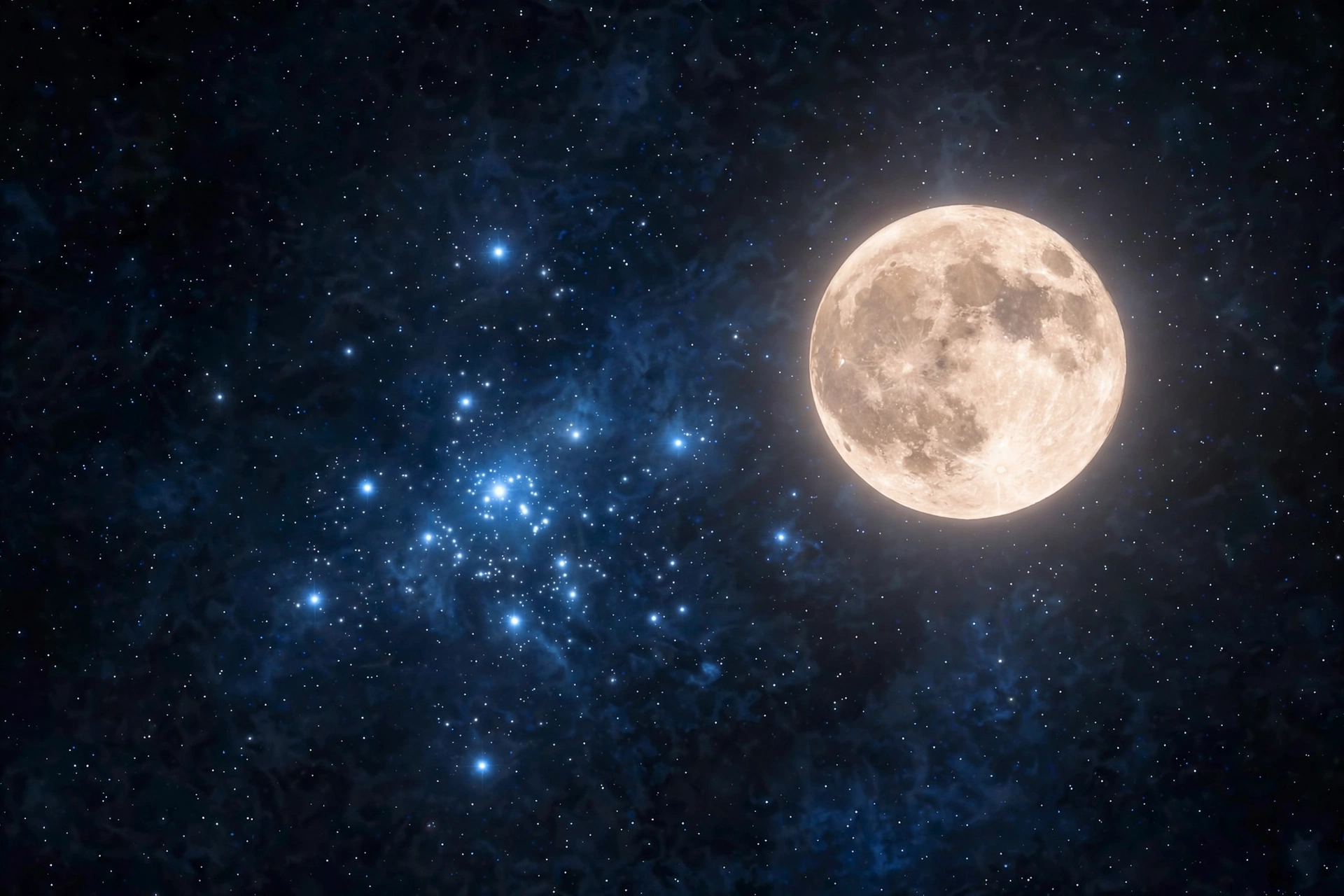
A few nights later, the waning gibbous Moon will glide right past the Pleiades — the glittering little star cluster also known as the Seven Sisters. On October 27–28, look east after dark and you will spot the bright Moon hanging just beside that tiny, dipper-shaped bunch of blue stars in the constellation Taurus. The Pleiades sit roughly 444 light-years away, which means the starlight you are seeing left those stars around the time Shakespeare was writing his plays. Pair your stargazing with our list of spooky Halloween facts you didn’t know for the perfect eerie autumn evening.
3. Saturn Has Just Revealed a Brand-New South-Pole Wave
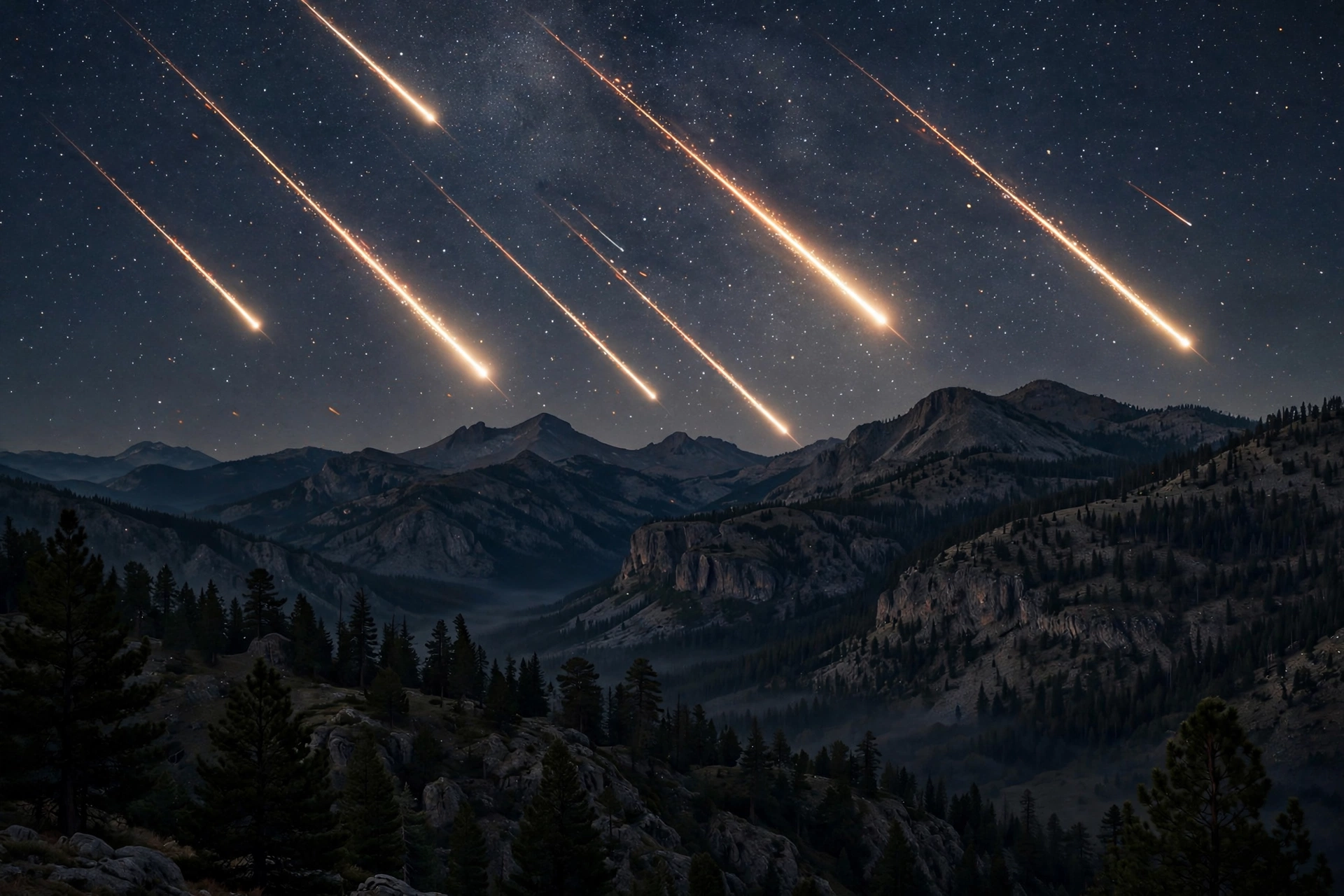
Saturn’s north pole famously hosts a giant hexagonal storm — a six-sided jet stream wider than Earth that has baffled scientists for decades. Now astronomers have recently spotted a new wave-like ripple churning through the atmosphere around Saturn’s south pole as well. Because Saturn is tilted and takes nearly 30 years to circle the Sun, each of its poles experiences years-long seasons, and these waves may be part of how the giant planet’s atmosphere responds as the seasons change. Even planets we have studied for centuries still have secrets to share.
Mind-Bending Space Facts About the Planets
Our own solar system is packed with weirdness. These space facts about the planets will make you rethink everything you learned in school.
4. On Venus, a Day Is Longer Than a Year
Venus spins backwards so slowly that a single rotation takes 243 Earth days. It only needs 225 Earth days to travel all the way around the Sun. That means if you somehow lived on Venus, your birthday would arrive before your day had even finished. It is the only planet in our solar system with days longer than its years.
5. Saturn Would Float in a Giant Bathtub
Saturn’s average density is lower than water — about 0.687 grams per cubic centimetre. In a big enough ocean, the ringed giant would bob along like a beach ball. One of the most delightful space facts to picture.
6. A Year on Neptune Lasts 165 Earth Years
Neptune, the most distant planet from the Sun, takes a staggering 165 Earth years to complete a single orbit. It was discovered in 1846, which means it only finished its first fully observed lap around the Sun in 2011. If you lived there, you would never see your second birthday.
7. Venus — Not Mercury — Is the Hottest Planet
You would expect Mercury, the closest planet to the Sun, to be the hottest. But Venus wins with surface temperatures around 465°C — hot enough to melt lead. The culprit is a runaway greenhouse effect: Venus’s thick carbon-dioxide atmosphere traps heat relentlessly, while airless Mercury simply radiates its heat back into space.
8. Sunsets on Mars Are Blue
On Earth, sunsets glow orange and red. On Mars, they are blue. Fine dust in the Martian atmosphere scatters blue light near the Sun at dusk, creating an eerie blue glow around the setting Sun while the rest of the sky stays dusty pink. Rovers have photographed it — and it looks utterly alien.
9. Olympus Mons Is Two and a Half Times the Height of Everest
Mars hosts the largest volcano in the solar system: Olympus Mons, standing roughly 22 kilometres tall — about two and a half times the height of Mount Everest. It is also about 600 kilometres wide, roughly the size of France. Mars’s low gravity and lack of moving tectonic plates let the volcano keep growing in one spot for billions of years.
10. Jupiter’s Great Red Spot Is a Storm Bigger Than Earth
The Great Red Spot is a colossal hurricane on Jupiter that is wider than our entire planet, with winds reaching around 425 kilometres per hour. Astronomers have watched it raging for at least 300 years — it may have been churning since the 1600s. It has shrunk a little in recent decades, but it is still going strong.
11. Uranus Rolls Around the Sun on Its Side
Uranus is tilted at a jaw-dropping 98 degrees, so it essentially rolls around the Sun like a ball. Its poles point almost directly at the Sun, giving each pole about 21 years of continuous sunlight followed by 21 years of darkness. Scientists suspect an ancient collision with an Earth-sized object knocked it over long ago.
12. Mercury Is Slowly Shrinking
As Mercury’s enormous iron core cools, the whole planet is contracting — its diameter has shrunk by roughly 14 kilometres over billions of years. The surface is wrinkled with cliff-like ridges called lobate scarps, like the skin of a slowly deflating apple — planets are alive in their own slow way.
The Sun, the Moon and Earth: Surprising Space Facts Close to Home
Some of the most astonishing space facts are about the bodies nearest to us — the star we orbit and the Moon that lights our nights.
13. A Million Earths Could Fit Inside the Sun
The Sun is so enormous that roughly 1.3 million Earths could fit inside it by volume. It holds 99.86% of all the mass in the solar system — every planet, moon, asteroid and comet combined is barely a rounding error next to it. And yet, by stellar standards, our Sun is a fairly average, middle-aged star.
14. The Sunlight Hitting Your Face Is 8 Minutes Old
Light travels fast, but space is vast. Sunlight takes about 8 minutes and 20 seconds to cross the 150 million kilometres to Earth, which means you never see the Sun as it is now — only as it was eight minutes ago. If the Sun vanished, we would blissfully carry on for eight minutes before noticing.
15. The Moon Is Drifting Away From Us
The Moon moves about 3.8 centimetres further from Earth every year — roughly the speed your fingernails grow. In about 600 million years, it will be too far away for total solar eclipses to happen at all. Meanwhile, because the Moon has no wind or water, the Apollo astronauts’ footprints could survive there for millions of years.
16. Every Planet Could Fit Between the Earth and the Moon
The average distance between Earth and the Moon is about 384,400 kilometres. Line up Mercury, Venus, Mars, Jupiter, Saturn, Uranus and Neptune side by side, and their combined diameters come to roughly 380,000 kilometres — they would all squeeze into the gap with room to spare. Space is mostly emptiness, even close to home.
17. A Single Day on the Moon Lasts Nearly a Month
A lunar day — one full cycle of daylight and darkness — lasts about 29.5 Earth days. That means roughly two weeks of blazing daylight followed by two weeks of pitch-black night, with temperatures swinging by hundreds of degrees between the two. No wonder future Moon bases will need serious heating and cooling.
Stars, Galaxies and the Deep Unknown
Now we are leaving the neighbourhood. These deep-space facts deal with numbers so large they stop feeling real.
18. There Are More Stars Than Grains of Sand on Earth’s Beaches
Astronomers estimate the observable universe holds around 200 sextillion stars — that is 200,000,000,000,000,000,000,000. Compare that with roughly 7.5 quintillion grains of sand on all of Earth’s beaches and deserts, and the stars win by an absurd margin. Every one of those stars is a sun, and many likely have planets.
19. Some of the Stars You See Are Already Dead
Starlight takes time to travel. The light from Betelgeuse, the red giant in Orion’s shoulder, left about 640 years ago — it may have already exploded and we simply do not know it yet. When you look at the night sky, you are looking back in time, and some of what you see no longer exists.
20. A Teaspoon of Neutron Star Would Weigh a Billion Tonnes
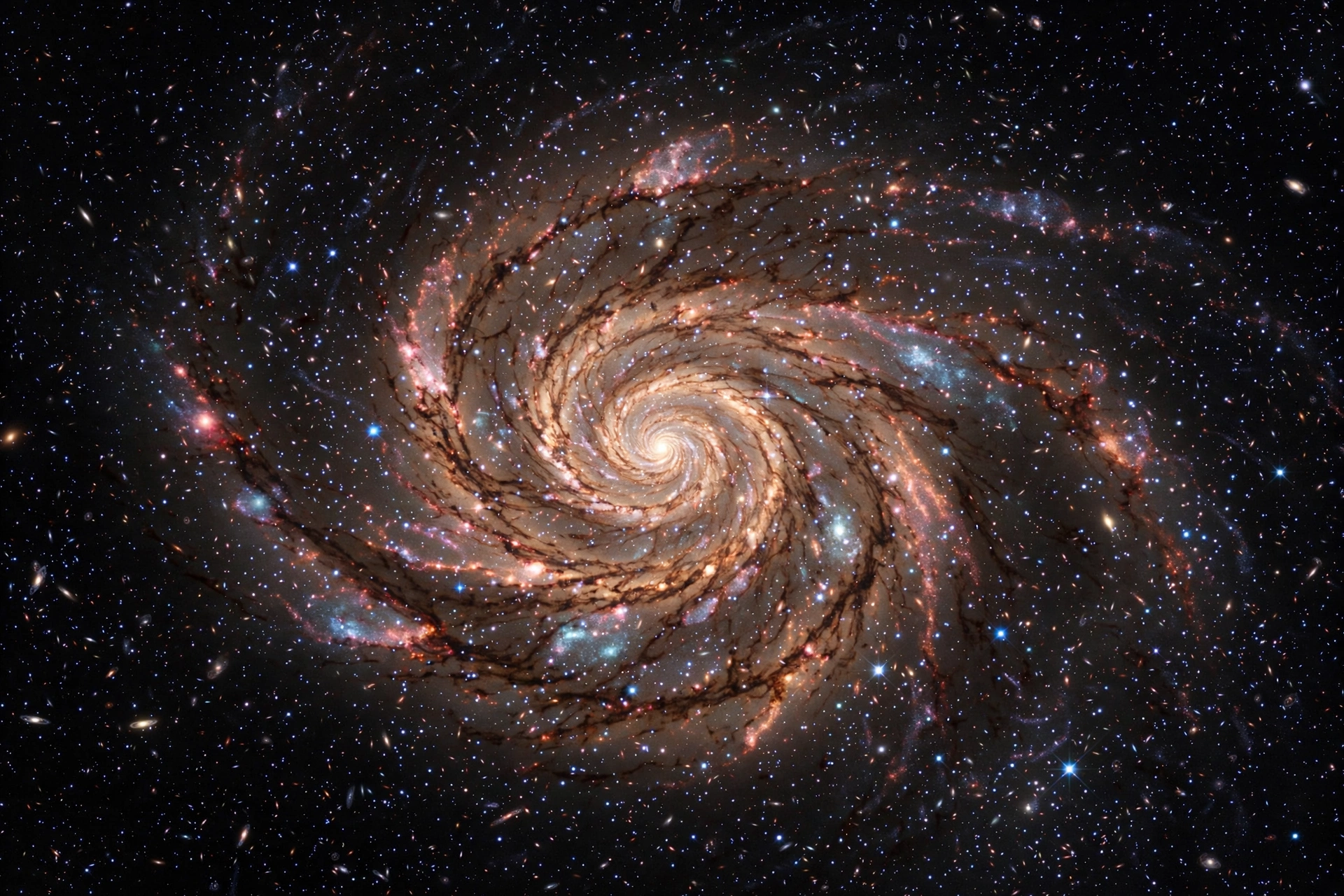
When a massive star dies, its core can collapse into a neutron star — a city-sized ball of matter so dense that a single teaspoon would weigh around a billion tonnes. These stellar corpses also spin dizzyingly fast, some rotating hundreds of times per second, sweeping beams of radiation across space like cosmic lighthouses.
21. The Biggest Stars Would Swallow Our Entire Solar System
Stars like UY Scuti and Stephenson 2-18 are among the largest known, with radii more than a thousand times that of our Sun. Placed at the centre of our solar system, one of these red hypergiants would stretch past the orbit of Jupiter — some estimates say past Saturn. Our whole planetary neighbourhood would fit inside a single star.
22. A Distant Quasar Holds 140 Trillion Times Earth’s Ocean Water
Around a quasar called APM 08279+5255, more than 12 billion light-years away, astronomers found the largest known reservoir of water in the universe — containing about 140 trillion times all the water in Earth’s oceans. It shows that the ingredients for life are scattered across the cosmos in almost unimaginable quantities.
23. It Might Rain Diamonds on Neptune and Uranus
Deep inside Neptune and Uranus, the pressure is so extreme that scientists believe carbon crystallises into diamonds, which then sink slowly toward the core as glittering “diamond rain”. Laboratory experiments recreating those crushing conditions suggest the idea is plausible — meaning the most beautiful weather in the solar system may be happening where no one can see it.
24. There Is a Planet That May Be Stuffed With Diamonds
The exoplanet 55 Cancri e is about twice the size of Earth and orbits a Sun-like star 41 light-years away. Because it is extremely carbon-rich, astronomers suspect that as much as a third of the planet’s mass could be diamond. Still a hypothesis — but one of the most glamorous space facts in the exoplanet catalogue.
Extreme Space Facts That Break Your Brain
Save these for last — they are the ones that genuinely mess with your sense of reality.
25. Space Is Completely Silent
There is no air in space, and sound needs air (or some other medium) to travel through. That means explosions, collisions and rocket engines are all utterly silent out there. Every dramatic boom in a sci-fi film is pure artistic licence — real space is the quietest place imaginable.
26. Time Itself Moves Slower in Stronger Gravity
Einstein’s general relativity predicts — and experiments confirm — that clocks tick more slowly where gravity is stronger. This is called gravitational time dilation, and it is not just theory: GPS satellites have to correct for it constantly, or your sat-nav would drift by kilometres every single day. Time is not the steady metronome we imagine.
27. The Coldest Known Place Is Colder Than Space Itself
Deep space sits at about −270°C, but the Boomerang Nebula manages −272°C — just a whisper above absolute zero, the coldest temperature physics allows. Expanding gas from the dying star at its centre cools it below the background temperature of the universe. It is the coldest natural place we have ever found.
28. Voyager 1 Is the Farthest Human-Made Object Ever
Launched in 1977, Voyager 1 has travelled more than 24 billion kilometres from Earth — it is now in interstellar space, beyond the influence of our Sun’s wind. It still phones home with a signal weaker than a billionth of a billionth of a watt, and it carries the Golden Record: greetings, music and images from Earth, just in case someone out there finds it.
29. Comet Tails Always Point Away From the Sun
A comet’s glowing tail is not a trail left behind like smoke from a plane. It is dust and gas being blasted away from the Sun by solar wind and radiation — so when a comet travels back out of the inner solar system, it actually flies tail-first. Direction of travel means nothing to a comet’s tail.
30. Astronauts Say Space Smells Like Burnt Metal
After spacewalks, astronauts returning to the airlock report that their suits carry a strange odour — described as seared steak, hot metal, welding fumes or gunpowder. Scientists think high-energy particles reacting with the suit materials may be responsible. You cannot smell space directly (your lungs would not enjoy the vacuum), but second-hand, it apparently smells like a barbecue gone wrong.
Quick-Fire Space Facts for Your Next Quiz Night
- A day on Jupiter lasts just under 10 hours — it spins faster than any other planet.
- Jupiter’s moon Europa may hide a subsurface ocean containing twice the water of all Earth’s oceans.
- Saturn’s rings are made almost entirely of water ice, from dust grains to chunks the size of houses.
- The Milky Way is on a collision course with the Andromeda galaxy in about 4.5 billion years.
- Space officially begins 100 kilometres up, at the Kármán line.
- A single light-year is about 9.46 trillion kilometres.
- Blue stars are the hottest; red stars are the coolest.
- Most large galaxies, including ours, host a supermassive black hole at their centre — ours is called Sagittarius A*.
- The Milky Way alone contains an estimated 100 to 400 billion stars.
- Venus spins backwards compared to most other planets.
Frequently Asked Questions About Space Facts
Are these space facts really true?
Yes. Every fact in this list is based on observations and measurements from space agencies like NASA and ESA, or on widely accepted physics. Where something is still a scientific hypothesis — like diamond rain on Neptune or the diamond-rich interior of 55 Cancri e — we have said so clearly.
What is the closest star to Earth?
The Sun, at about 150 million kilometres away. The next closest is Proxima Centauri, a red dwarf roughly 4.24 light-years away — so far that light from it takes more than four years to reach us.
How can I watch the Orionid meteor shower this October?
Find the darkest sky you can on the nights of October 21–22, 2026, look up after midnight, and give your eyes at least 20 minutes to adjust to the dark. No equipment needed — just patience and warm clothes.
How many planets are in our solar system?
Eight: Mercury, Venus, Earth, Mars, Jupiter, Saturn, Uranus and Neptune. Pluto was reclassified as a dwarf planet in 2006, which is why school textbooks had to be rewritten.
The Universe Is Stranger Than Fiction
From blue sunsets on Mars to a quasar holding 140 trillion oceans, these 30 space facts are only a taste of how gloriously weird the cosmos really is. The next time the sky is clear, step outside and look up — you will be staring at dead stars, drifting moons and diamond rain, all at once. If this list left you hungry for more mind-benders, dive into our 101 fun facts that will blow your mind, or bring them up with friends using our 150 questions to get to know someone — nothing sparks a great conversation like the fact that space smells faintly of burnt steak.
Which of these space facts shocked you the most? Tell us in the comments — and share this list with the biggest space nerd you know.